






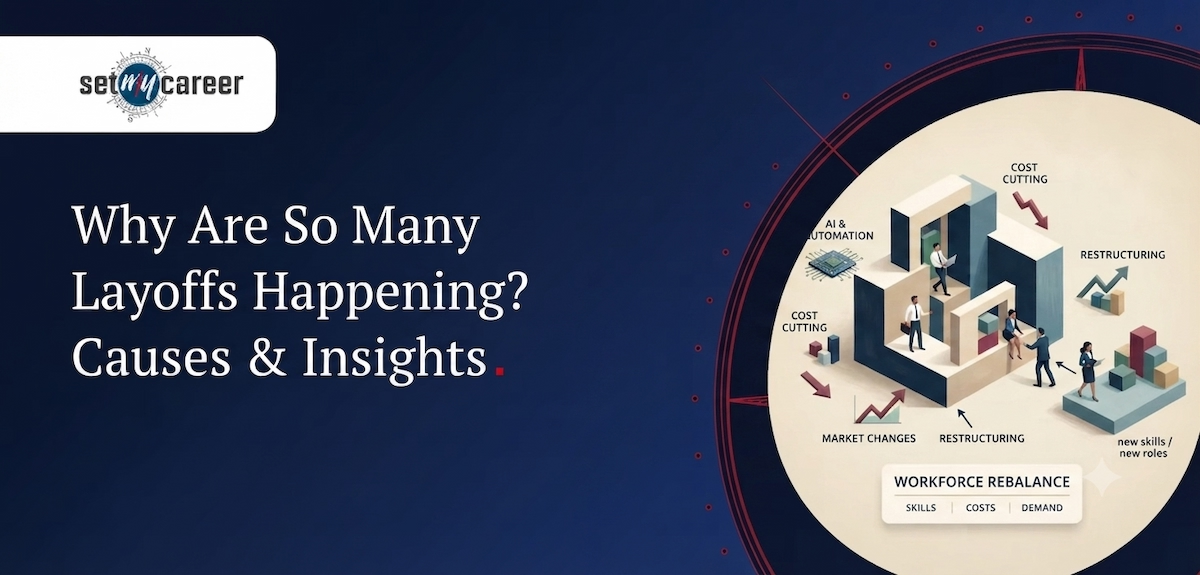
In recent months, headlines around the world have been dominated by news of layoffs, especially in the tech sector. Companies that once seemed unstoppable are suddenly laying off employees by the thousands. This trend has left professionals, students, and job seekers questioning their own career security. Understanding the causes behind job layoffs isn’t just about reading the news it’s about preparing yourself for a rapidly evolving job market. By exploring why so many organizations are laying off staff, you can better adapt, upskill, and make confident career decisions for the future.
10 Causes & Insights Behind Layoffs
Over-Hiring During the Boom
Economic Slowdown
Shifts in Consumer Behavior
Automation & AI Adoption
Pressure from Investors
Rising Operational Costs
Failed Expansions or Projects
Mergers & Acquisitions
Shifting to Remote or Hybrid Models
Global Market Uncertainty
Many companies, especially in the technology sector, hired aggressively during the pandemic when digital demand surged. As market conditions stabilized, they found themselves with more employees than necessary, leading to widespread tech layoffs.
Global inflation, rising interest rates, and uncertain market conditions have forced businesses to cut costs. Jobs layoffs become one of the quickest ways for companies to stabilize their financials when revenue growth slows.
Customer preferences are changing faster than ever. Businesses that fail to adapt to these shifts often end up laying off staff to restructure operations. For instance, e-commerce demand skyrocketed in 2020 but later normalized, impacting workforce requirements.
With AI tools now capable of replacing certain job functions, companies are restructuring roles. While this reduces expenses, it also means employees in repetitive roles may face layoffs unless they reskill into areas where humans still add unique value.
Publicly traded companies often prioritize shareholder value. When profits drop, leadership may respond by laying off employees to boost short-term financial results, even if long-term strategies remain strong.
From rent to raw materials, business expenses have been climbing. To offset these higher costs, companies sometimes reduce staff. Such jobs layoffs are less about performance and more about balancing budgets.
When ambitious new ventures or global expansions don’t succeed, organizations pull back. This retrenchment often includes laying off staff tied to those projects, reminding employees of the risks associated with fast growth.
When two companies merge, overlapping departments create redundancies. To streamline operations, leadership frequently resorts to layoffs, particularly in HR, finance, and administration functions.
As businesses adopt new work models, some roles become unnecessary or are outsourced to lower-cost regions. This restructuring has contributed to certain tech layoffs, especially in support and operations roles.
Geopolitical tensions, supply chain disruptions, and unpredictable global events (such as pandemics or wars) force companies into survival mode. Often, this includes laying off employees to conserve resources during uncertain times.
Additional Insights Professionals Should Know
Seasonal Workforce Adjustments
Skill Mismatch in the Workforce
Digital Transformation Gaps
Global Outsourcing Trends
Declining Product Demand
Compliance & Regulation Costs
Shift Toward Freelancers & Gig Economy
Crisis Management Decisions
Leadership Changes
Preventive Cost-Cutting
Industries like retail and hospitality regularly hire temporary workers for peak seasons. Afterward, layoffs follow as part of a planned cycle rather than unexpected cuts.
Sometimes employees are not laid off due to lack of performance, but because their skillsets don’t match future company needs. This makes upskilling essential for long-term job security.
Organizations trying to move toward digital-first operations may restructure entire teams. Employees resistant to change or without new skills are often the first to face layoffs.
Outsourcing work to countries with lower labor costs remains a key driver of laying off staff in expensive markets. This creates opportunities in some regions but challenges in others.
When a product or service loses relevance in the market, the team behind it is often downsized. Such jobs layoffs highlight how crucial adaptability is in every career path.
Stricter regulations can raise compliance expenses. To handle these costs, organizations sometimes reduce headcount, indirectly leading to layoffs even when business demand remains steady.
Many companies now prefer hiring freelancers over full-time staff to maintain flexibility. This shift contributes to laying off employees as permanent roles are replaced by contract-based ones.
In times of crisis, companies often take immediate actions without long-term planning. Unfortunately, this can include mass tech layoffs, sometimes announced overnight.
When a new CEO or leadership team steps in, they often restructure departments to align with their vision. This transition frequently results in layoffs to make room for new strategies.
Some organizations implement layoffs not because they are failing but as a precautionary measure to stay ahead of possible downturns. While frustrating for employees, it reflects how proactive companies manage risks.
Conclusion
While the reasons for layoffs, tech layoffs, and jobs layoffs are complex, the message for professionals is clear: the job market is evolving, and adaptation is key. Companies will continue laying off staff when market realities demand it, but that doesn’t mean your career has to suffer. By staying updated on industry trends, investing in continuous learning, and building future-ready skills, you can remain competitive no matter how the economy shifts. Remember, being adaptable isn’t just a survival skill—it’s the foundation of long-term career growth.