






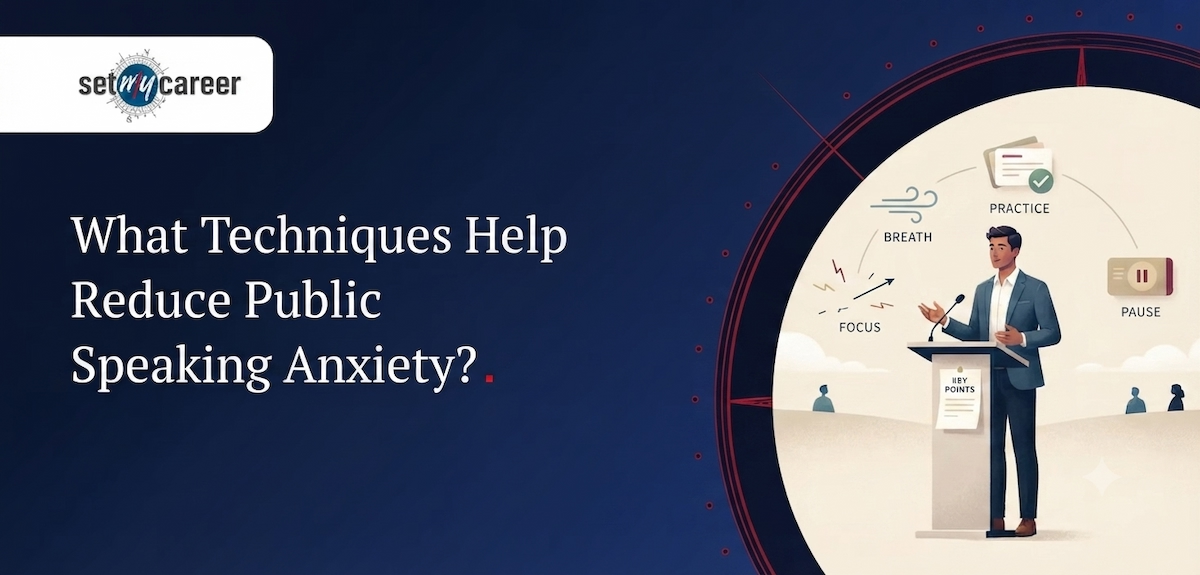
Public speaking anxiety—clinically known as glossophobia—ranks among the most common fears worldwide, often surpassing the fear of heights, spiders, or even flight in various psychological surveys. Whether you are preparing for a high-stakes academic presentation, pitching a project in a corporate boardroom, or giving a toast at a wedding, the dread of being judged or stumbling over your words can feel paralyzing.
Career coaching offers techniques to reduce public speaking anxiety for professional presentations.
Fortunately, stage fright is not a permanent trait. By applying targeted, evidence-based strategies, you can learn to manage your nerves, regulate your physiological responses, and deliver your message with authority. So, what techniques actually help reduce public speaking anxiety? Let’s break down the most effective methods to transform your apprehension into quiet confidence.
1. Master Your Material: Why Preparation is Key
Nothing calms a racing mind quite like deep, thorough preparation. When you know your content inside and out, you significantly reduce the cognitive load on your brain during the actual presentation. This allows you to focus on connecting with your audience rather than desperately scrambling to remember your next point.
How to Prepare Effectively:
- Outline your key points clearly: Avoid scripting every single word. Instead, build a roadmap of your main ideas so you can speak conversationally.
- Create a logical structure: Craft a magnetic opening, a cohesive body, and a memorable conclusion that reinforces your core message.
- Anticipate audience questions: Think critically about where your listeners might push back or need clarification, and prepare concise answers in advance.
- Use visual aids or cue cards strategically: Lean on well-designed slides or discreet notes to keep you on track without becoming a crutch.
2. Rehearse Out Loud to Build Muscle Memory
Reading your notes silently at your desk is a common trap, but it does very little to prepare you for the physical act of speaking. Formulating thoughts in your head is entirely different from articulating them vocally. Speaking your words aloud helps you internalize the material, refine your pacing, and smooth out awkward transitions.
Ways to Practice Your Delivery:
- Record yourself: Use your smartphone to record a run-through. Watching the playback is the fastest way to identify nervous pacing, filler words, or distracting body language.
- Rehearse in front of a trusted audience: Run your presentation past a friend, family member, or supportive colleague to get comfortable having eyes on you.
- Simulate the speaking environment: If possible, practice in the actual room where you will be presenting. Familiarity with the space naturally lowers environmental anxiety.
- Practice in a mirror: While old-fashioned, watching your own facial expressions helps you maintain an open, engaging demeanor.
3. Regulate Your Nervous System Through Deep Breathing
When public speaking anxiety kicks in, your body enters a "fight or flight" state. Adrenaline spikes, and your breathing tends to become shallow and rapid, which deprives your brain of oxygen and tricks your body into feeling even more panicked. Purposeful, deep breathing acts as a manual override, resetting your nervous system and bringing your heart rate back to a baseline rhythm.
A Practical Breathing Technique:
Try the 4-7-8 method, a proven technique for immediate stress reduction:
- Inhale quietly through your nose for a count of 4 seconds.
- Hold your breath for 7 seconds.
- Exhale completely through your mouth, making a gentle whoosh sound, for 8 seconds.
Repeat this cycle three to four times in the green room, at your desk, or right before you step up to the microphone.
4. Visualize a Positive Outcome Before You Speak
Visualization is a powerful mental rehearsal technique utilized by elite athletes, stage performers, and seasoned public speakers. Your brain struggles to distinguish between a vividly imagined event and a real one, meaning you can train your mind to feel successful before you even say your first word.
What to Visualize:
- Picture yourself walking to the front of the room with a tall, confident posture.
- Imagine the audience making eye contact, nodding in agreement, and smiling at your insights.
- Hear yourself speaking clearly, maintaining a steady pace, and recovering smoothly from any minor slip-ups.
- Feel the sense of relief and pride as you deliver your closing statement and hear the applause.
5. Use Exposure Therapy: Start Small and Scale Up
If the thought of addressing a crowd of fifty people feels insurmountable, you do not have to start there. Confidence is built incrementally. By exposing yourself to low-pressure speaking situations, you can gradually desensitize yourself to the fear of being the center of attention.
Ideas to Start Small:
- Speak up earlier in routine team meetings or group discussions to break the ice.
- Offer to give a quick, five-minute project update to a small group of familiar coworkers.
- Join a local book club, hobby group, or community board where you can share your thoughts in an informal, low-stakes setting.
Every time you speak—no matter how small the audience—you are reinforcing the psychological evidence that you are capable and safe.
6. Shift Your Focus from Performance to Value
Stage fright is often fueled by the "spotlight effect"—the cognitive bias that makes us believe everyone is hyper-focused on our flaws. The reality is that public speaking isn't about you or your ego; it is entirely about the message you are delivering and the value it brings to your listeners.
How to Shift Your Focus:
- Concentrate entirely on what your audience needs to learn, understand, or take away from your presentation.
- Frame your talk as an act of service. You are there to help, inspire, educate, or entertain them.
- Remind yourself that the goal is effective communication, not flawless perfection.
When you prioritize the audience's experience over your own insecurities, your anxiety naturally loses its grip on you.
7. Harness the Power of Pauses and Silence
Many novice speakers are terrified of "dead air" and will rush through their material or rely on filler words like "um" and "ah" to bridge gaps. In truth, silence is not the enemy—it is one of the most authoritative tools in a speaker's arsenal.
Why Pausing Works:
- It aids your breathing: A two-second pause gives you the physical space to take a deep breath and center your thoughts.
- It aids comprehension: Your audience needs brief moments of silence to digest complex information and transition between ideas.
- It commands attention: Pausing right before or immediately after a critical point adds dramatic emphasis and projects immense confidence.
Give yourself permission to slow down. Embracing the space between your sentences shows control, poise, and mastery of the room.
8. Accelerate Growth by Joining a Public Speaking Group
Practicing alone is highly beneficial, but guided practice coupled with constructive feedback is the fastest route to improvement. Surrounding yourself with individuals who share the same goal can demystify the speaking process and provide a safe space to fail and learn.
Great Options Include:
- Joining organizations like Toastmasters International, which provides a structured, supportive environment for developing communication and leadership skills.
- Enrolling in local communication workshops, acting classes, or professional presentation training programs.
- Forming an informal peer-review group within your own company to practice upcoming pitches.
You will learn just as much from analyzing other people’s speeches and identifying what works as you will from delivering your own.
9. Reframe Nervousness as Performance Energy
Even the most seasoned keynote speakers, actors, and politicians experience pre-speech jitters. The goal is not to eliminate nerves entirely—that is biologically nearly impossible. The goal is to manage that physiological arousal and channel it into your delivery.
Mindset Shifts That Help:
- Reappraise the emotion: Physiologically, anxiety and excitement are nearly identical (rapid heart rate, adrenaline). Tell yourself, "I am excited to share this," rather than, "I am terrified."
- Assume positive intent: The audience is on your side. They want you to succeed, be interesting, and do well. They are not waiting for you to fail.
- Normalize the stumbles: Accept that a missed word, a slight stutter, or losing your place for a second is completely human. The audience rarely notices, and if they do, they will instantly forgive you if you just keep moving forward.
10. Seek Professional Support for Severe Speech Anxiety
For some individuals, public speaking anxiety goes beyond standard jitters and borders on a phobia that actively damages their career progression or mental health. If your anxiety feels entirely unmanageable, there is no shame in seeking expert intervention.
Options for Extra Support:
- Executive speech coaches: These professionals offer one-on-one, tailored guidance to help you craft your narrative and refine your physical delivery.
- Cognitive Behavioral Therapists (CBT): A licensed therapist can help you identify and dismantle the deep-rooted negative thought patterns that trigger your stage fright.
Having a dedicated professional in your corner can provide the exact tools you need to break through a lifelong communication barrier.
Final Thoughts on Overcoming Public Speaking Fear
Navigating public speaking anxiety is a universal professional challenge, but it is also a highly manageable one. By prioritizing deep preparation, practicing aloud, utilizing breathwork, and shifting your focus away from your own ego and onto your audience, you can steadily transform your fear into an engaging, confident presence.
Remember to focus on progress rather than perfection. Everyone starts somewhere, and even the most magnetic speakers on the circuit today once felt the exact same nervous flutter in their chest. Treat every speech, meeting, and presentation as a valuable opportunity to refine your skills. Take a deep breath, trust your preparation, and step up to the microphone—your voice and your ideas deserve to be heard.