






You have excellent grades, a solid set of skills, and the ambition to succeed. But when you are competing for a coveted spot in a top-tier university or a highly sought-after job, thousands of other applicants share that exact same profile. So, what actually sets you apart from the rest of the pile?
Understanding how to write a strong LOR enhances career options after graduation for further studies.
The answer is often a Letter of Recommendation (LOR). Far more than a simple administrative formality, a well-crafted LOR acts as a powerful testament to your character, work ethic, and future potential. It gives admissions committees and hiring managers a glimpse into who you are beyond your GPA and resume bullet points.
But what exactly goes into a highly effective LOR? Who should you ask to write it? And how can you ensure it highlights your absolute best qualities? Let’s break down everything you need to know about securing a recommendation that gets you noticed.
What Is a Letter of Recommendation (LOR)?
A Letter of Recommendation (LOR) is a formal document written by an academic professional, employer, or mentor that vouches for your qualifications, character, and overall capabilities. Universities, scholarship committees, and prospective employers rely on these letters to evaluate candidates holistically.
While your resume lists what you have done, the LOR explains how you do it. It provides qualitative context to your quantitative achievements, offering decision-makers a trustworthy, third-party perspective on what it is actually like to teach, manage, or work alongside you.
Why Is an LOR Important for Your Application?
A strong recommendation letter plays a pivotal role in shaping your academic and professional future. It bridges the gap between your self-reported achievements and reality. Here is why an LOR carries so much weight in the selection process:
- Adds crucial credibility: A third-party endorsement from a respected professional validates your skills. It proves that your resume claims are accurate and recognized by leadership.
- Highlights essential soft skills: Transcripts and CVs rarely capture emotional intelligence. An LOR shines a spotlight on vital, intangible qualities like leadership capability, adaptability, teamwork, and problem-solving under pressure.
- Distinguishes you from the competition: When decision-makers are choosing between two candidates with identical grades or experience, a personalized narrative about your exceptional work ethic can easily tip the scales in your favor.
- Demonstrates a trajectory of growth: A good recommender will often discuss how you have evolved over time, showing committees that you respond well to feedback and possess a strong capacity for continued professional development.
- Builds immediate trust: Organizations rely heavily on LORs to verify a candidate’s integrity and character. A sincere endorsement from a credible source immediately lowers the perceived risk of accepting or hiring you.
Primary Types of LORs
Recommendation letters generally fall into three distinct categories, depending on your current career stage and the requirements of the program or position you are pursuing:
- Academic LOR: Written by professors, academic advisors, or research mentors. This type is heavily focused on your intellectual curiosity, classroom participation, analytical skills, and academic rigor. It is standard for undergraduate, MS, and PhD admissions.
- Professional LOR: Provided by former or current employers, direct supervisors, or clients. This letter emphasizes your practical industry skills, leadership potential, reliability, and ability to execute projects in a workplace environment. It is typically required for job applications and MBA programs.
- Character Reference (Personal LOR): Drafted by mentors, coaches, or community leaders. Rather than focusing on academics or job performance, this letter highlights your ethical values, community involvement, and overall personality traits.
How to Write (or Request) an Impactful LOR
Whether you are drafting a recommendation for a colleague or guiding a mentor on what to include in yours, a compelling LOR requires strategy. Follow these steps to ensure the final document leaves a lasting impression:
1. Understand the Core Purpose
Before a single word is written, clarify the objective of the letter. Is it tailored for a highly technical master’s program, a creative scholarship, or a corporate leadership role? The qualities highlighted in the letter must align directly with what the specific selection committee is looking for.
2. Choose the Right Recommender
This is arguably the most critical step. Select someone who knows your work intimately and can provide highly specific insights. A detailed, enthusiastic letter from a direct manager will always outperform a generic, two-paragraph letter from a company CEO who barely knows your name.
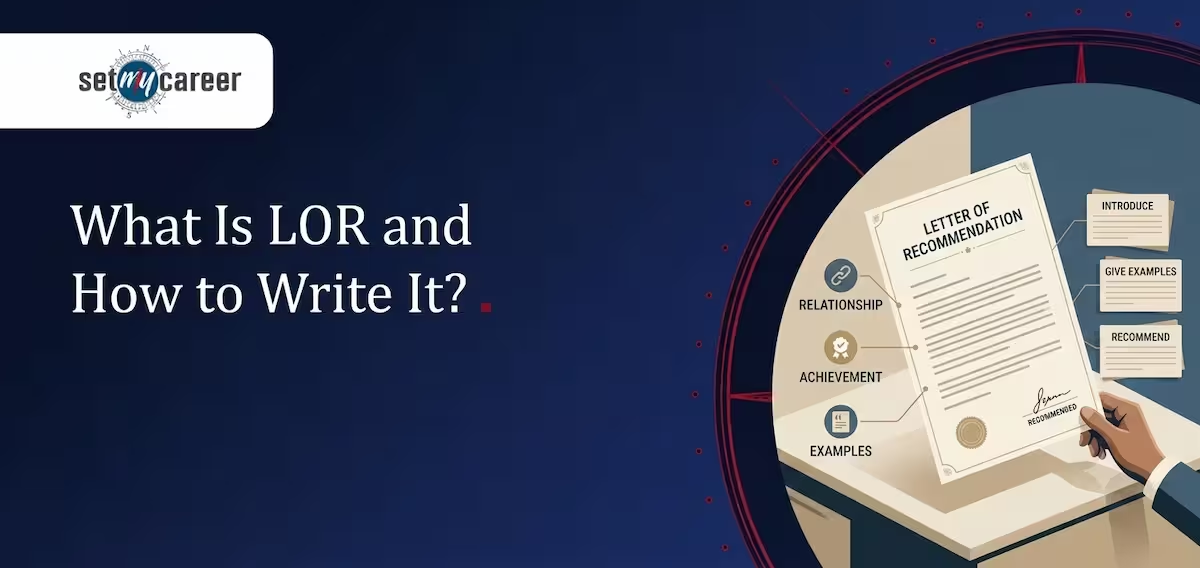
3. Follow a Clear, Professional Structure
A well-organized letter is easy for admissions officers to read and digest. Ensure it includes:
- Introduction: The recommender should state exactly who they are, their title, how long they have known the candidate, and in what capacity.
- Body Paragraphs: This section should focus on two to three specific traits or skills, backed up by real-world examples and metrics.
- Conclusion: A definitive, strong endorsement of the candidate, along with the recommender’s contact information for any follow-up questions.
4. Use Specific, Quantifiable Examples
Vague praise is instantly forgettable. Instead of making blanket statements like "She is a great leader," a strong LOR provides concrete proof: "During her summer internship, she took the initiative to lead a team of five junior interns, successfully completing the market research project two weeks ahead of the primary deadline. This demonstrated exceptional leadership and time management."
5. Maintain an Authentic Tone
Avoid overly formal, archaic, or robotic language. The most persuasive letters read naturally and sound like a genuine professional endorsing someone they truly respect. Keep it engaging, honest, and direct.
6. Ensure Clarity and Conciseness
Selection committees read thousands of applications. Keep the LOR to a single, well-formatted page (ideally between 400 and 600 words). Use precise language, eliminate unnecessary jargon, and get straight to the point.
Common Mistakes to Avoid
Even well-intentioned recommendation letters can inadvertently harm an application if they fall into these common traps:
- Using a generic, recycled template: Personalization is non-negotiable. A one-size-fits-all letter feels lazy and unconvincing. The LOR must explicitly mention the target university or company to show genuine intent.
- Regurgitating the resume: A recommendation letter should not just list the applicant's grades or job duties in paragraph form. It needs to provide the "behind-the-scenes" context of those achievements—focusing heavily on soft skills, attitude, and work ethic.
- Exaggerating facts or hyperbole: Keep the praise grounded and realistic. Claiming a junior student is "the greatest mind of the century" damages credibility. Authenticity and measured, specific praise build far more trust.
- Ignoring basic formatting rules: A letter riddled with typos, strange spacing, or informal fonts creates a terrible first impression. The document must be meticulously proofread, printed on official letterhead (if applicable), and professionally formatted.
Example of a Strong LOR Snippet
Notice how the following excerpt uses a specific scenario to highlight both technical ability and character:
“I had the pleasure of mentoring Raj during his final year capstone project, where he consistently displayed outstanding analytical skills and creativity. Rather than accepting the standard parameters of the assignment, his ability to think outside the box helped him develop an innovative software solution that was later recognized at a national coding competition. I am absolutely confident that his dedication, intellectual curiosity, and problem-solving abilities will make him a highly valuable asset to your graduate program.”
Conclusion
A carefully crafted Letter of Recommendation can be the ultimate game-changer in your academic or professional journey. It brings your resume to life, providing decision-makers with the confidence they need to select you over other qualified candidates. Whether you are formally requesting a letter or writing one for a deserving colleague, prioritizing specific examples, professional formatting, and genuine insight will ensure the document hits the mark.
Navigating university applications and securing the right documentation can feel overwhelming, but you do not have to do it alone. Need expert help identifying the right recommenders or drafting a winning study abroad application? SetMyCareer is here to guide you through your study abroad journey at every single step of the way.