






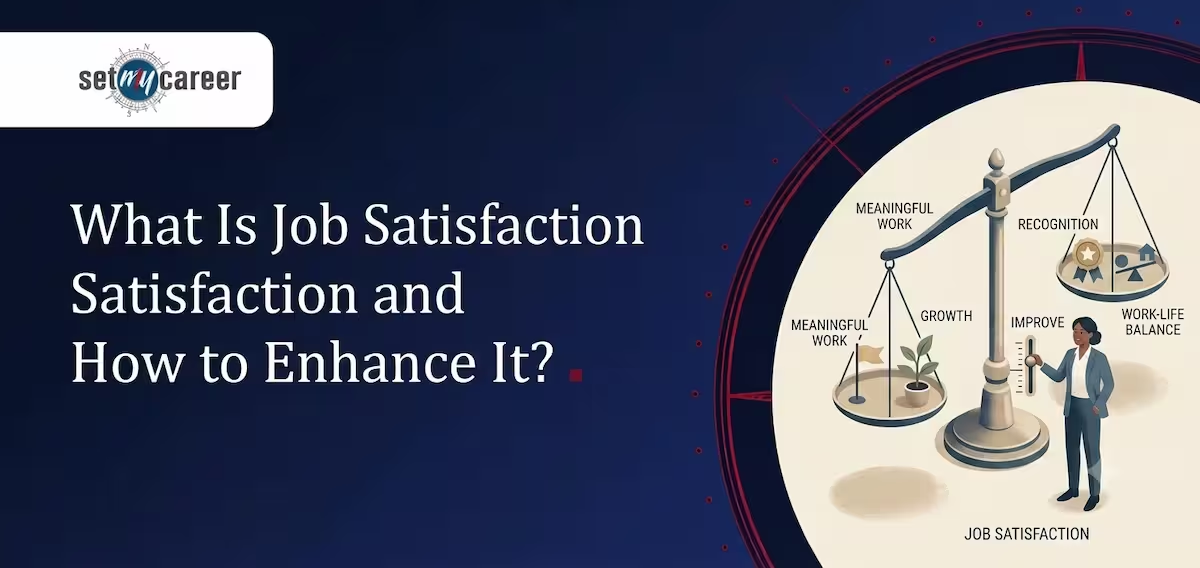
Job satisfaction is a critical ingredient for both individual well-being and organizational success—yet it remains elusive for a massive segment of the global workforce. According to Gallup’s ongoing workplace research, a concerning 15% of employees worldwide feel genuinely engaged at work. This means they find actual purpose and meaning in their daily roles.
Understanding job satisfaction is crucial when considering a career change.
The flip side of that statistic is alarming: 85% of employees are experiencing some degree of dissatisfaction. For businesses, this translates to severe drops in productivity, crippled creativity, high turnover rates, and shrinking profit margins. For individuals, it means spending the majority of their waking hours feeling frustrated, exhausted, or apathetic.
The modern workplace requires a fundamental shift. We need to foster human-centered environments where professionals feel valued, adequately supported, and empowered to do their best work.
This comprehensive guide breaks down the true definition of job satisfaction, explores the core factors that drive it, and highlights why talented people ultimately quit. Most importantly, it provides actionable, proven strategies that both individuals and leaders can use to cultivate a more fulfilling professional life.
What is Job Satisfaction?
At its core, job satisfaction is the sense of motivation, psychological safety, and fulfillment an employee experiences regarding their work. It isn't just about tolerating a job to collect a paycheck; it is a holistic measure of how a person's role aligns with their values, goals, and emotional needs.
This feeling stems from a complex mix of daily responsibilities, the quality of professional relationships, access to career growth, and alignment with company culture. Compensation, management support, and work-life boundaries also play massive roles in this equation.
Satisfied employees generally look forward to their workday. They feel a sense of ownership over their projects, believe their unique contributions matter, and possess the energy required to tackle complex problems. They can see how their daily effort directly impacts the organization’s larger vision.
Dissatisfied employees experience the exact opposite. They dread logging on or commuting, feel chronically undervalued, and view their efforts as pointless. Their primary focus shifts from producing quality work to simply watching the clock until the day ends.
A 5-Step Toolkit for Discovering Your Professional Passions
It is nearly impossible to find job satisfaction if you are in a career that directly conflicts with your natural interests. Finding fulfilling work requires structured self-examination. Use this five-step toolkit to pinpoint where your passions and professional viability intersect:
1. Keep a Passions and Energy Journal
Start documenting the specific activities, subjects, and skills that effortlessly capture your attention. Whether it involves writing, analyzing data, or building physical products, record the moments when you become fully immersed in a task. Pay close attention to the projects that give you energy rather than drain it. These daily observations hold critical clues about your ideal vocational path.
2. Catalogue Your Innate Strengths
Take inventory of the talents that come easily to you. This could range from complex coding and project management to public speaking and empathetic listening. Innate abilities that naturally draw praise from others translate directly into career advantages. Acknowledging your strengths isn't arrogant; it is a necessary step in finding a role where you will naturally excel and stand apart from your peers.
3. Profile Your Personality and Work Style
Assess the environments where you thrive. Do you prefer the autonomy of remote work, or do you draw energy from bustling, collaborative office settings? Connecting your personal preferences to specific job requirements helps you build a profile of highly compatible roles. If you want a deeper, data-driven look at your working style, utilizing tools like SetMyCareer’s psychometric assessments can provide incredible clarity.
4. Research Connected Career Pathways
Once you have a clear picture of your strengths and interests, start searching for matching vocations. Look for intersections. For example, if you are energized by the culinary arts, scientific methodology, and project management, you might explore niche roles like a research chef or a food scientist. Utilize robust databases like the Occupational Information Network (O*NET) to discover emerging careers that require your specific blend of traits.
5. Gain Real-World Exposure
Theoretical research can only take you so far. You must test your assumptions in the real world. Seek firsthand exposure through job shadowing, specialized classes, or freelance projects. Reach out to professionals in your target industry and ask for a 15-minute informational interview. By actively testing the waters, your final career selection becomes a decision based on practical reality rather than guesswork.
Core Factors Affecting Job Satisfaction
Job satisfaction doesn't happen by accident. It is actively cultivated through several foundational pillars within a workplace.
Meaningful Work and Autonomy
The single most impactful factor in employee engagement is the sense of purpose derived from day-to-day tasks. Satisfying roles provide intellectual variety, healthy challenges, and the autonomy to see a project through from conception to completion. Conversely, hyper-micromanaged environments or highly repetitive, mundane tasks are fast tracks to severe burnout.
Psychological Safety and Team Dynamics
Positive professional relationships profoundly impact an employee's daily outlook. Feeling like an accepted member of a cohesive team—where you are valued for your contributions and supported during setbacks—creates an enormously affirmative environment. A culture rooted in mutual respect and psychological safety allows people to do their best work without fear of unnecessary workplace politics.
Clear Pathways for Growth and Advancement
Ambitious professionals require visible opportunities to develop their skills and advance their careers. If an employee feels they have hit an unbreakable ceiling, their motivation will immediately plummet. Organizations that actively invest in stretch assignments, formal mentorships, and transparent promotion tracks benefit from vastly higher retention rates.
Equitable Compensation and Comprehensive Benefits
While money is rarely the sole driver of deep fulfillment, unfair compensation will completely destroy job satisfaction. Employees expect their salaries to align with market conditions and reflect their actual output. Beyond base pay, comprehensive benefits—covering healthcare, retirement matching, and generous paid time off—signal that a company genuinely cares about its workforce's long-term well-being.
Inclusive Cultures and Healthy Environments
Feeling respected and able to thrive regardless of gender, age, ethnicity, or disability status is non-negotiable for a healthy workplace. Toxic cultures that permit bias, subtle discrimination, or favoritism will drive top talent away almost immediately. Furthermore, the physical or digital workspace matters; ergonomic equipment, flexible remote options, and human-centric policies heavily influence daily satisfaction.
The Root Causes of Employee Unhappiness
When highly capable employees grow disengaged and eventually quit, the root cause usually boils down to feeling undervalued or psychologically unsafe. The most common triggers for workplace unhappiness include:
- A lack of meaningful work: Being assigned tasks that feel entirely disconnected from the company's broader goals.
- Stagnation: Working in an environment with zero upward mobility or investment in employee upskilling.
- Unfair compensation practices: Discovering significant pay disparities among peers doing the exact same work, or enduring years without cost-of-living adjustments.
- Toxic leadership: Dealing with managers who take credit for team successes, refuse to offer recognition, or lead through fear and intimidation.
- Poor work-life boundaries: Being expected to answer emails late at night or work through weekends, leading to chronic physical and mental exhaustion.
Why Job Satisfaction is Critical for Organizational Success
Elevating employee morale is not just an HR initiative; it is a core business strategy. Organizations that prioritize satisfaction gain massive competitive advantages.
Increased Productivity and High-Performance Output
Data consistently shows that happy employees channel far more discretionary effort into their roles. Engaged workers make fewer careless mistakes, exercise superior judgment, and complete complex projects faster. When people care about their company, the quality of their output naturally rises.
Reduced Turnover and Recruitment Costs
Replacing valued talent is shockingly expensive. Factoring in recruitment fees, onboarding time, lost institutional knowledge, and the inevitable errors made during a transition, losing a great employee can cost a company up to twice that person's annual salary. Satisfied workers stay longer and naturally act as brand ambassadors, attracting other high-tier talent to the organization.
Stronger Customer Loyalty
Nothing earns customer loyalty faster than interacting with an enthusiastic, highly competent employee. When staff members genuinely believe in their company’s services, their authenticity shines through every interaction. They solve problems proactively, leaving memorable brand impressions that keep clients coming back.
A Culture of Continuous Innovation
Engaged teams do not shy away from pointing out inefficiencies or suggesting bold improvements. Because they feel psychologically safe, they are willing to take the calculated risks necessary for innovation. They continuously envision how internal workflows and customer offerings can evolve to meet tomorrow's challenges.
5 Actionable Ways to Improve Your Own Job Satisfaction
While companies bear a massive responsibility for workplace culture, employees also hold the agency to improve their daily experience. If you are feeling stuck, try implementing these strategies to regain control of your professional narrative.
1. Proactively Seek Growth Opportunities
If you feel unchallenged, do not wait for your manager to hand you a new project. Proactively identify skills you want to acquire or cross-departmental teams you want to shadow. Have a candid conversation with leadership about your desire to take on more complex assignments. Frame your request around how your new capabilities will directly benefit the organization's bottom line.
2. Cultivate Positive Workplace Relationships
Never underestimate the power of basic human connection in the office. Build trust through small, consistent gestures: listening intently without interrupting, publicly congratulating a peer's win, and offering genuine assistance when a teammate is overwhelmed. Strive to be the kind of professional that others actively want to collaborate with.
3. Practice Open, Constructive Communication
Avoid letting minor frustrations fester into deep resentment. Set recurring one-on-one appointments with your manager to discuss roadblocks, pitch creative workarounds, and ask for specific feedback. If a professional relationship is strained, address the issue objectively. Focus on specific workflows and communication gaps rather than making personal accusations.
4. Firmly Model Work-Life Balance
When you answer emails at 11:00 PM, you inadvertently create an expectation that your peers must do the same. Protect your personal time fiercely. By responsibly unplugging during evenings and weekends—and actually taking your paid vacation days—you prevent burnout and return to your desk with sharper focus. Strong boundaries command professional respect.
5. Adopt a Solutions-Oriented Mindset
Instead of merely complaining about broken processes, become the person who proposes the fix. Document exactly what makes a specific workflow frustrating, and then pitch a streamlined alternative. Whether it involves adopting a new software tool or eliminating a redundant weekly meeting, taking the initiative to fix daily pain points vastly improves your immediate environment.
Conclusion
Nurturing genuine job satisfaction requires a dedicated, ongoing commitment from both organizational leaders and individual professionals. When companies focus heavily on transparency, equitable growth, inclusive policies, and protecting work-life boundaries, they naturally cultivate an environment where top talent thrives.
For professionals, remember that you have the agency to shape your career. If you are feeling chronically dissatisfied or disengaged, do not accept it as the inescapable reality of working life. Explore new directions, establish firmer boundaries, and seek out organizations that actively align with your core values.
Services like SetMyCareer can provide the structured guidance needed to match your unique strengths and interests with highly meaningful roles. Do not settle for a career that merely pays the bills while draining your energy. Taking small, calculated steps today can completely shift your trajectory toward a professional life defined by purpose, impact, and authentic joy.