






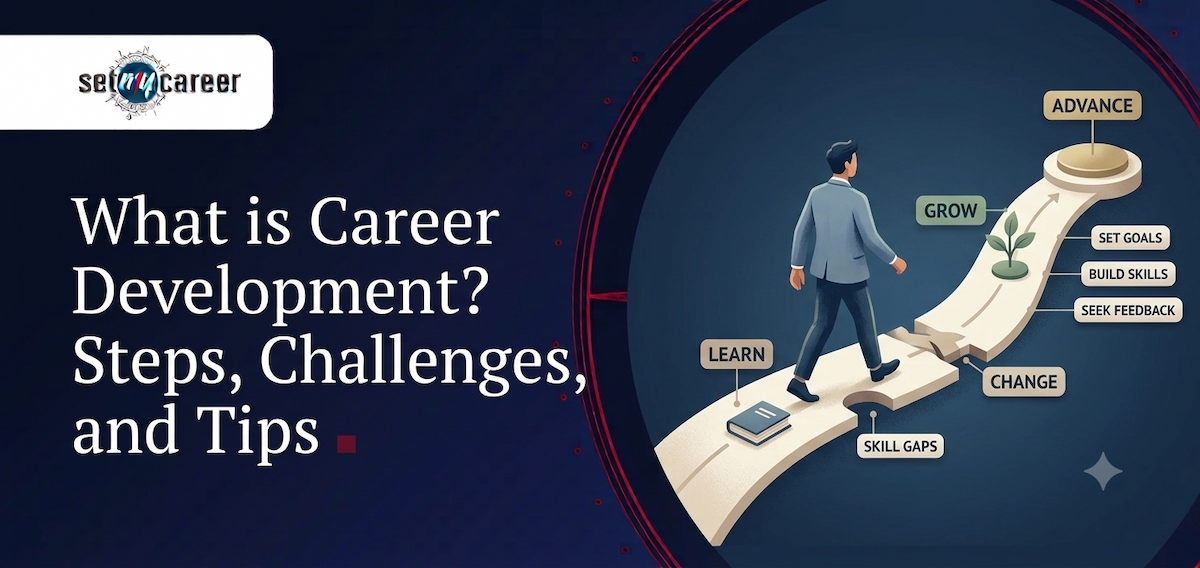
Career development is an essential aspect of every individual's professional journey. Rather than simply moving from one job to another, career development represents the intentional, continuous process of managing and planning one's career trajectory to achieve long-term professional and personal goals.
career coaching can accelerate your career development by providing personalized strategies for growth.
Understanding career development is easier with guidance from experienced career counselling professionals.
Whether you are a recent college graduate stepping into the workforce or an experienced professional looking to transition or advance into leadership, understanding the significance of career development is the key to a fulfilling and successful future.
While the process of managing a career can seem overwhelming given the complexities of the modern job market, it is highly manageable when approached systematically. We have broken down the career development lifecycle into five distinct, actionable steps:
- Self-Evaluation
- Goal Setting
- Action Planning
- Execution
- Refinement
What Exactly is Career Development?
Career development refers to the proactive, lifelong process of managing your work identity, learning, and advancement. It involves setting strategic professional goals, continuously acquiring new skills and industry knowledge, and making calculated decisions that move you closer to your desired career state.
This is not a passive event that happens to you; it is a journey you must actively navigate. A robust career development strategy helps individuals grow, pivot when necessary, and thrive within their chosen professions regardless of economic shifts.
The 5 Stages of Career Development
The renowned psychologist Donald Super developed a widely accepted framework detailing the psychological and practical stages of career development over a lifespan. Understanding where you currently sit within this framework can help contextualize your goals.
| Career Development Stage | Approximate Age | Description & Core Focus |
| Stage 1: Growth | Age 0–14 | The initial development of self-concept, attitudes, personal needs, and a foundational understanding of the general world of work. |
| Stage 2: Exploration | Age 15–24 | Trying out various paths through classes, internships, early work experience, and hobbies. This phase involves making tentative career choices and initial skill development. |
| Stage 3: Establishment | Age 25–44 | Entering the workforce in earnest. This stage focuses on entry-level skill-building, proving competence, and achieving stabilization and early advancement through sustained work experience. |
| Stage 4: Maintenance | Age 45–64 | A continual adjustment process designed to improve your current position, mentor younger professionals, and preserve your professional standing while preparing for eventual transition. |
| Stage 5: Decline (Transition) | Age 65+ | A gradual reduction of output, stepping back from primary career responsibilities, and preparing for retirement or part-time consultation roles. |
Why Strategic Career Development is Crucial
Leaving your career trajectory up to chance is a significant risk. Engaging actively in your professional development offers profound benefits that extend far beyond salary increases.
- Personal Growth and Fulfillment: Engaging in career development forces you to confront and discover your actual strengths, interests, and passions. It enables you to align your daily professional tasks with your core personal values, leading to a deep sense of fulfillment and satisfaction.
- Continuous Skill Enhancement: The job market evolves rapidly. Through dedicated career development, you acquire relevant, cutting-edge skills and knowledge. This continuous learning process keeps you updated on industry trends, making you indispensable to current and future employers.
- Heightened Job Satisfaction: When individuals are actively pursuing their goals and working in roles that match their competencies, burnout rates drop significantly. Job satisfaction is directly correlated to the feeling of forward momentum.
- Accelerated Career Advancement: Strategic development helps you identify internal and external opportunities for growth. It equips you with the exact technical and leadership experience needed to comfortably assume higher-level responsibilities.
- Superior Workplace Performance: Employees who engage in structured career development programs consistently outperform their peers. As they acquire new skills, their confidence grows, leading to massive increases in overall effectiveness and efficiency.
Core Career Development Strategies
Career development strategies are systematic approaches that individuals and organizations deploy to drive professional success. These strategies are specifically designed to bridge the gap between where you are and where you want to be, resulting in higher job satisfaction, lucrative opportunities, and sustainable professional growth.
(For a deeper dive into actionable strategies, consider exploring resources like the eBook "13 Career-Success Strategies" by Dr. Nandkishore Rathi.)
The 5-Step Guide to Developing Your Career
Developing your career is a proactive, cyclical process. Follow this step-by-step guide to take absolute control over your professional future.
Step 1: Self-Evaluation
Effective career planning is impossible without profound self-awareness. Self-evaluation requires taking an honest, critical look at your current skills, genuine interests, core values, and ultimate career aspirations. This introspection helps you understand exactly what you want from your career and highlights the areas where you naturally excel.
How to Conduct an Accurate Self-Evaluation:
- Reflect on Your Holistic Goals: Do not just look at your job title. Understand what you want to achieve across various aspects of your life, including your desired income, necessary work-life balance, and personal development goals.
- Analyze Your Past Performance: Look objectively at your track record. Identify the projects that energized you and the tasks that drained you. Recognize patterns in your successes and your failures.
- Utilize Psychometric Career Tests: Human bias often clouds our self-perception. Utilizing scientifically backed psychometric assessments provides objective data regarding your innate aptitudes, workplace personality, and ideal professional environments.
Step 2: Goal Setting
Once you have a clear picture of your baseline, you must establish specific, achievable targets. These goals must align heavily with the insights gained during your self-evaluation. Your goals should be realistic, highly specific, and bound by a definitive timeframe.
Your primary goal at this stage might fall into one of three categories:
- Career Transition: Pivoting to an entirely new industry or role.
- Career Advancement: Securing a promotion or stepping into management.
- Skill Development: Mastering a new software, methodology, or certification.
Setting clear, documented goals keeps you focused, highly motivated, and personally accountable.
Step 3: Action Planning
A goal without a timeline is merely a wish. An action plan outlines the exact tactical steps and strategies required to bridge the gap between your current reality and your career goals. Break massive, long-term objectives down into small, highly manageable weekly or monthly tasks. A robust action plan clearly defines the required actions, strict deadlines, and the specific resources (financial or educational) needed to accomplish each step.
Step 4: Execution
Execution is where strategy meets reality. This involves putting your documented action plan into practice. This is the phase where you enroll in necessary courses, secure a mentor, aggressively expand your network, and begin applying for new opportunities.
Best Practices for Flawless Execution:
- Ruthlessly Dedicate Time: Block out specific, non-negotiable time slots on your calendar strictly for career development. Treat this time with the same respect you would a meeting with your CEO. Use it for skill-building, networking, or industry research.
- Monitor and Measure Progress: What gets measured gets managed. Document your progress in a journal or digital tracker. If you realize you are deviating from your timeline, pause and strategize ways to recalibrate your efforts.
- Celebrate Your Wins: The journey is long. Take the time to acknowledge your achievements, no matter how small. Whether you finished a tough certification course or successfully negotiated a raise, celebrating builds the psychological momentum needed to keep pushing forward.
Step 5: Refinement
Career paths are rarely perfectly linear. Refinement requires you to regularly review your progress and assess the viability of your goals. As you gain new information, receive critical feedback, or experience unexpected life changes, you must be willing to adjust your action plan. Flexibility and adaptability are just as crucial to your success as rigid discipline.
Navigating the Challenges of Career Development
The path to professional success is fraught with obstacles. Anticipating these challenges allows you to navigate them effectively rather than being derailed by them.
- Uncertainty and Rapid Industry Change: The modern job market is highly volatile, driven by massive technological advancements (like AI) and economic shifts. Setting 10-year goals can be difficult when entire industries transform overnight. Adaptability is your best defense against this uncertainty.
- Lack of Clarity: Many professionals feel stuck because they simply do not know what their true passions are. Without a definitive "North Star," it is nearly impossible to make strategic decisions regarding further education or career pivots.
- The Expanding Skills Gap: The half-life of professional skills is shrinking. Keeping up with evolving technical requirements, especially in fast-paced tech or corporate sectors, is exhausting. This highlights why foundational soft skills (like critical thinking and communication) are vital—they never become obsolete.
- A Hyper-Competitive Job Market: Desirable roles attract fierce competition. Standing out against hundreds of equally qualified candidates requires more than a good resume; it requires personal branding, networking, and a proven track record of execution.
- Managing Work-Life Balance: Attempting to upskill, network, and hunt for new opportunities while working a demanding full-time job and managing family responsibilities often leads to severe burnout.
- Financial Constraints: Meaningful career development—whether it means pursuing an MBA, attending costly industry conferences, or taking unpaid time off to transition—requires capital. Balancing these investments against daily living expenses requires meticulous financial planning.
Pro Tips for an Effective Career Development Process
To maximize your trajectory and minimize friction, integrate these proven tactics into your daily professional life:
- Master Executive Communication: Regardless of your industry, the ability to clearly articulate complex ideas, collaborate seamlessly, and persuade stakeholders is vital. Actively enhance your verbal, written, and interpersonal skills to increase your professional influence.
- Invest Heavily in Education: Your formal education was just the beginning. View continuous learning as a mandatory professional expense. Leverage workshops, online certifications, and industry seminars to ensure your knowledge remains cutting-edge.
- Operate with Intention: Never leave your career to chance. Ensure every lateral move, new project, or job change aligns directly with your overarching, long-term aspirations.
- Build a Dynamic Professional Network: Your network is your safety net and your greatest lever for advancement. Cultivate deep relationships with peers, industry veterans, and potential mentors. A strong network provides access to the "hidden job market" where the best roles are filled before they are ever posted online.
- Take Proactive Initiative: Do not wait for leadership to hand you opportunities. Actively seek out complex challenges and volunteer for cross-functional projects outside of your standard job description. Demonstrating this level of initiative makes you highly visible to decision-makers.
Conclusion
Strategic career development is not a destination; it is an ongoing, lifelong journey of growth, adaptation, and aggressive self-improvement. For professionals feeling stagnant or those aiming for the highest levels of leadership, leveraging the expertise found in career counseling can provide the objective guidance necessary to overcome roadblocks and make highly lucrative career decisions. By investing heavily in your personal and professional development today, you guarantee yourself access to more fulfilling, secure, and rewarding opportunities in the future.