





Have you ever found yourself caught in the repetitive cycle of your daily workload, wondering if there is more to your career than simply checking items off a to-do list? It is incredibly common for working professionals to become so focused on immediate tasks that they lose sight of their long-term trajectory.
Career coaching helps professionals set and achieve meaningful professional development goals.
If you want to intentionally build new skills, make a highly visible impact, and carve out a sustainable path to career success, you cannot rely on tenure alone. You need a deliberate strategy.
Enter professional development goals—the often-underestimated catalysts for both personal evolution and career advancement. In an environment where organizational needs shift rapidly, personal commitments multiply, and burnout is a constant threat, setting targeted growth objectives is how you maintain control over your professional future. Your career is not just a series of routine accomplishments; it is a dynamic journey that requires continuous, intentional learning. Whether you are an entry-level contributor or an experienced leader navigating the C-suite, well-crafted development goals are essential. This guide explores what these goals look like in practice, how to structure them effectively, and concrete examples to help you build your own.
What Are Professional Development Goals?
When you picture your career five years from now, what specific milestones do you envision? Reaching those new heights requires setting meaningful, structured professional development goals.
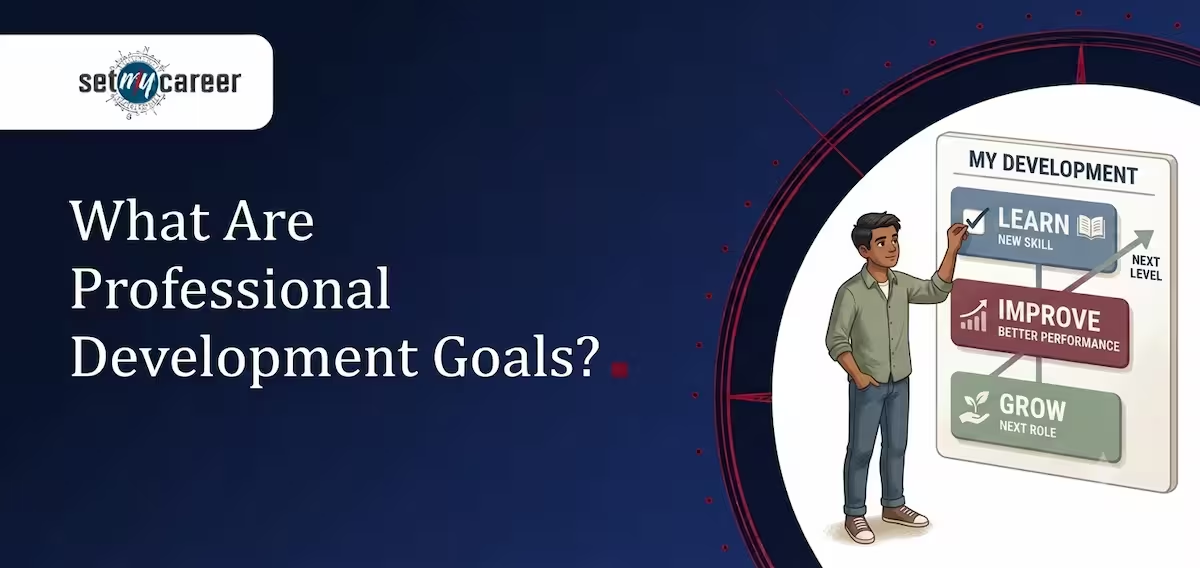
At their core, professional development goals focus entirely on building the distinct knowledge, hard skills, and practical experience you need to advance your career. It is important to distinguish these from standard performance goals. Performance goals are tied to your daily job description—like hitting a quarterly sales quota or launching a specific project. Development goals look at the bigger picture. They are about the person you are becoming professionally and what capabilities you need to acquire to reach the next level.
Are your cross-functional communication skills holding you back? Are you aiming to step into a leadership role within the next twelve months? Do you want to transition from an individual contributor to a high-level strategic consultant? These ambitions form the foundation of your development goals.
Research backs the effectiveness of this approach. A recent Wharton survey found that a majority of employees report significantly higher workplace engagement when they are provided with professional development opportunities that align with their personal ambitions. Furthermore, professionals who receive appropriate training and see a clear path for growth are far less likely to leave their current organizations. Ultimately, these goals outline the exact specializations and capabilities you need to close the gap between where you are today and your ultimate vision of success.
Key Benefits of Setting Professional Development Goals
Investing time in mapping out your professional growth yields compounding returns throughout your career. Here is why prioritizing this process is a non-negotiable step for high achievers:
- Clarifies your career vision: Vague aspirations rarely lead to concrete results. Formalizing your goals transforms abstract dreams into highly defined targets, helping you identify the exact sequential steps required to make active progress.
- Builds in-demand capabilities: The modern job market evolves rapidly, and certain skill sets quickly become baseline requirements. Intentional goal-setting ensures you stay ahead of industry trends through continuous learning, effectively future-proofing your career.
- Increases daily engagement: Professionals who take psychological ownership of their personalized development goals feel deeply empowered. When you see how today's tasks directly fuel your long-term success, your motivation and performance naturally increase.
- Enables mental mobility and agility: Expanding both the breadth and depth of your expertise opens doors within your organization. A versatile skill set equips you for upward promotions, lateral moves into new departments, or seamless transitions across industries.
- Boosts organizational retention: From an employer's perspective, supporting professional growth initiatives is highly practical. Companies that actively invest in their employees' aspirations enjoy significantly higher retention rates, as top talent rarely abandons a company that clearly values their future.
SetMyCareer Expert Tip:
The secret to setting effective professional development goals is to begin with the end in mind. Ask yourself a few foundational questions:
- What specific industry or type of company do you want to be working in?
- What distinct accomplishments do you want attached to your name?
- Where exactly do you want to be positioned in five or ten years?
- What job title or level of authority do you aspire to hold?
By defining your ultimate destination, you can successfully work backward, breaking massive career ambitions into small, actionable goals that you can begin tackling this week.
Examples of Professional Development Goals for Career Success
In a dynamic professional landscape, continuous upskilling is the most reliable way to stay competitive. Setting well-defined parameters around your growth will help you navigate your career path strategically. Here are several categories of professional development goals you can adapt for your own journey.
Technical Proficiency and Hard Skills
In an increasingly digital and data-driven landscape, technical proficiency ensures you remain adaptable. Mastering new tools, software, or methodologies directly enhances your daily productivity and problem-solving capabilities.
- Example Goal: Enroll in a targeted curriculum on platforms like Coursera or LinkedIn Learning to master Python for data analysis, or earn an advanced certification in your company's CRM software by the end of Q3.
Soft Skills and Communication
Soft skills remain the absolute cornerstone of effective collaboration, persuasion, and leadership. Refining how you interact with others fosters a healthier workplace environment and significantly expands your sphere of influence.
- Example Goal: Actively join a professional public speaking group, like Toastmasters, or volunteer to lead monthly cross-departmental meetings to refine your presentation and interpersonal skills.
Time Management and Productivity
Mastering time management does much more than increase your output; it drastically reduces chronic stress and protects your work-life balance. Highly efficient professionals consistently outperform their peers while working fewer hours.
- Example Goal: Implement rigorous calendar blocking and the Pomodoro Technique to eliminate digital distractions during the workday, intentionally carving out 90 minutes of focused "deep work" every morning.
Leadership and Management Development
You do not need a management title to practice leadership. Developing these skills early empowers you to guide teams, foster innovation, and drive organizational success long before you are officially promoted.
- Example Goal: Secure a senior mentor within your organization, volunteer to spearhead a high-visibility, cross-functional project, and ask to shadow executive meetings to gain hands-on strategic experience.
Emotional Intelligence (EQ)
Cultivating emotional intelligence enables professionals to gracefully navigate complex interpersonal dynamics, de-escalate workplace conflicts, and build high-trust relationships with clients and colleagues.
- Example Goal: Practice active listening and deliberate emotional regulation during high-stress project sprints, actively seeking 360-degree feedback on how your communication style impacts team morale.
Diversity, Equity, and Inclusion (DEI)
Embracing and promoting inclusive practices enhances workplace creativity and employee satisfaction. According to Deloitte, companies with highly diverse management teams experience a 22% lower turnover rate compared to organizations lacking diversity.
- Example Goal: Participate in advanced DEI facilitation training and actively audit your own hiring or project-management processes to identify and eliminate unconscious biases.
How to Set Actionable Professional Development Goals
Transforming career aspirations from vague ideas into reality requires a systematic approach. Follow these eight expert-advised steps to craft goals that are both meaningful and highly achievable.
- Connect Goals to Your Big-Picture Vision: Reflect deeply on where you see yourself a decade from now. Do you aim to direct a global department, launch your own agency, or pivot into a completely new field? Outline the exact milestones required to get there, and let that ultimate vision dictate your goals for the next six months.
- Mine Past Feedback for Growth Areas: Your most recent performance reviews likely contain a goldmine of actionable data. Look closely at the constructive criticism and identified skill gaps. If leadership noted that you struggle with delegating tasks, build a specific development goal around improving your delegation framework.
- Utilize the SMART Goals Methodology: Research consistently proves that structured goals produce better outcomes. Ensure every objective is Specific, Measurable, Achievable, Relevant, and Time-bound. Instead of saying, "I want to get better at data," write, "I will complete a 40-hour advanced Excel certification program by November 1st."
- Match Goals to Organizational Objectives: Whenever possible, align your personal development with your company's overarching targets. When your growth directly benefits the business, leadership is far more likely to sponsor your training, grant you dedicated study time, or offer you stretch assignments.
- Build-In Accountability Checkpoints: A goal without a tracking mechanism is easily forgotten. Establish a strict cadence for reviewing your progress. Whether you use a digital tracking chart or schedule a bi-weekly self-audit, monitoring your trajectory allows you to celebrate small wins and maintain momentum.
- Outline Required Development Activities: Be highly specific about the resources you need to close your skill gaps. Detail the exact workshops, mentorships, books, or online courses required. Connect with your company's Learning & Development (L&D) department to uncover internal resources that may be fully funded.
- Anticipate Roadblocks Proactively: Budget freezes, sudden project deadlines, and personal emergencies can easily derail your progress. Identify these potential obstacles before they happen and develop contingency plans. If a training budget is cut, know exactly which free industry webinars or library resources you can leverage instead.
- Remain Flexible and Adaptable: Your career is not static. As organizational priorities pivot or entirely new roles emerge within your industry, you may need to adjust your development plan. Periodic check-ins allow you to course-correct, ensuring your goals remain relevant to your actual environment.
Next Steps for Executing Your Development Plan
You now understand the framework for setting powerful professional goals. To bridge the gap between planning and execution, implement this immediate course of action:
- Document your objectives: Write down your specific targets in a highly visible place you visit daily, such as a dedicated planner or a pinned digital note.
- Deconstruct massive goals: Break intimidating, year-long objectives into monthly and weekly micro-tasks so progress feels immediately attainable.
- Communicate with stakeholders: Share relevant goals with your direct manager or a trusted mentor to secure their support, visibility, and accountability.
- Deploy a tracking system: Use project management software, a simple spreadsheet, or a habit tracker to build visual evidence of your consistency.
- Schedule feedback loops: Maximize your one-on-one meetings with leadership to request unvarnished, constructive feedback on the new skills you are actively practicing.
The Takeaway: Taking Ownership of Your Career
Professional development goals are the strategic engine behind every highly successful career. They provide the necessary focus to upgrade your skills, maintain your motivation, and ensure you are moving deliberately toward the professional life you actually want.
Now it is time to put theory into practice. Outline your ultimate vision, identify your current skill gaps, and begin working systematically toward your new objectives. While you can certainly tackle this process independently or in partnership with a proactive manager, you do not have to navigate your career trajectory alone. If you need expert guidance in mapping out a highly effective, personalized growth strategy, the dedicated Career Counsellors at SetMyCareer stand ready to help you unlock your full professional potential.