






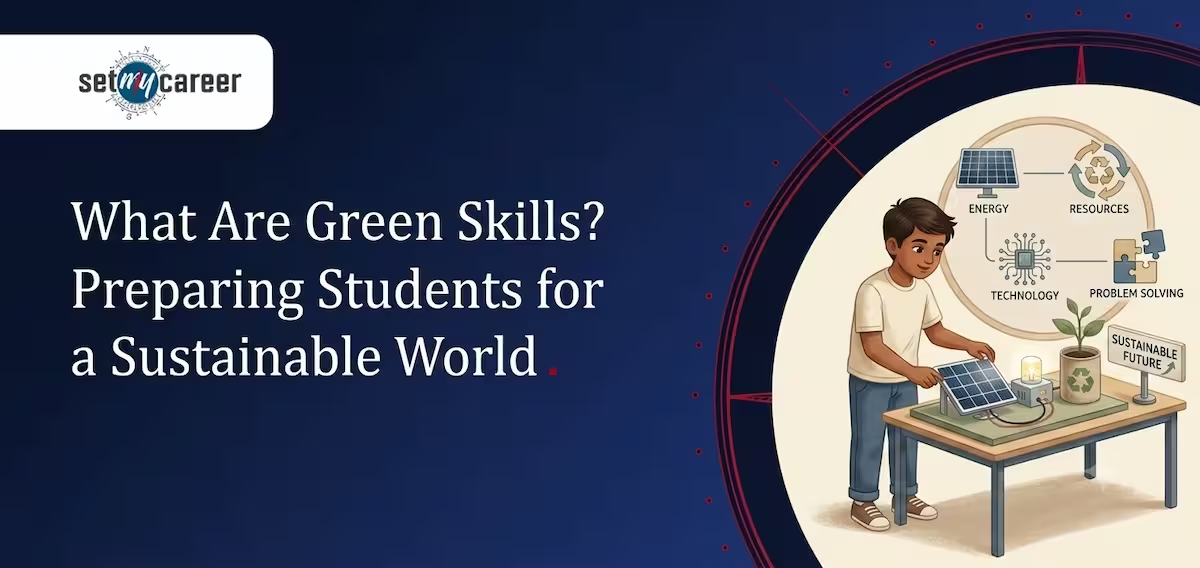
The global job market is undergoing a massive transformation. As corporate sustainability targets shift from optional talking points to strict regulatory requirements, the demand for professionals equipped with environmental expertise is surging across every sector. At the heart of this shift is the growing need for "green skills."
Career guidance for students includes developing green skills for a sustainable future.
Whether you are pursuing a career in engineering, business, fashion, or software development, understanding how to integrate sustainable practices into your daily work is no longer just a bonus—it is a competitive necessity. Equipping students and early-career professionals with this knowledge is critical for both their individual career longevity and the broader push toward a sustainable economy.
Below, we will explore exactly what green skills entail, why they are fundamentally reshaping the workforce, and practical ways students can begin building a future-proof, eco-conscious skill set today.
What Are Green Skills?
At their core, green skills encompass the knowledge, technical abilities, values, and attitudes needed to live in, develop, and support a sustainable and resource-efficient society. These competencies empower individuals to tackle complex environmental challenges like climate change, resource depletion, and industrial pollution.
While many people associate this term strictly with renewable energy or environmental science, green skills actually span a wide spectrum of industries and can be broken down into two main categories:
Technical (Hard) Green Skills
These are the specialized, measurable abilities required to perform specific environmental tasks. Examples include:
- Installing and maintaining solar panels or wind turbines.
- Conducting corporate carbon footprint assessments.
- Designing energy-efficient, LEED-certified buildings.
- Developing sustainable agricultural models to improve soil health.
Transferable (Soft) Green Skills
These are the conceptual frameworks and problem-solving abilities that can be applied to almost any role. Examples include:
- Systems thinking: Understanding how a single business decision impacts the broader environmental ecosystem.
- Sustainable procurement: Sourcing materials that are ethically produced and environmentally safe.
- Environmental compliance: Ensuring organizational practices align with local and global ecological regulations.
Ultimately, green skills are about learning how to align economic growth with environmental stewardship. From agriculture and urban construction to technology and global logistics, these competencies are the building blocks of a cleaner future.
The Importance of Green Skills in a Sustainable Economy
The value of green skills goes far beyond simply "protecting the planet." They are actively solving some of the most complex logistical, economic, and environmental challenges of our time. Here is why prioritizing these competencies is so critical:
- Accelerating Decarbonization and Climate Action: Halting the worst impacts of climate change requires a global shift away from fossil fuels. Professionals trained in clean technology, energy grid optimization, and emissions tracking are the ones actively designing the systems that will lower global greenhouse gas output.
- Preserving and Optimizing Natural Resources: With a rapidly growing global population, the strain on fresh water, arable land, and raw materials is intense. Green skills drive the "circular economy"—a system designed to eliminate waste by continually reusing, repairing, and recycling resources rather than discarding them.
- Driving the "Green Collar" Job Boom: The transition to a sustainable economy is one of the greatest job-creation engines in modern history. Industries dedicated to eco-friendly manufacturing, electric vehicle production, and renewable energy are expanding exponentially, offering high-paying, secure career paths.
- Building Resilient, Eco-Friendly Communities: Urban planners and architects utilizing green skills are transforming how cities operate. By prioritizing smart grids, public transit efficiency, and passive cooling building designs, they create urban environments that consume less energy while improving public health.
- Protecting Global Biodiversity: Unchecked industrial expansion routinely threatens fragile ecosystems. Environmental impact assessors and conservationists use green skills to guide corporate practices, ensuring that business expansion does not come at the cost of marine life, forests, or wildlife habitats.
How Can Students Develop Green Skills for Future Careers?
Building a robust foundation in sustainability requires more than just reading about climate change. It demands a mix of targeted education, practical application, and continuous learning. Here are actionable steps students can take to cultivate these highly sought-after skills:
- Pursue Specialized Coursework and Certifications: You do not necessarily need an environmental science degree to work in this space. Look for elective courses in sustainable business management, environmental economics, or green engineering. Additionally, entry-level certifications (such as the LEED Green Associate or introductory ESG credentials) can make a resume stand out immediately.
- Gain Hands-On Experience Through Internships: Theory only goes so far. Seek out internships with companies that prioritize sustainability, clean tech startups, or environmental non-profits. If a formal internship isn't available, propose a sustainability project at your current school or part-time job, such as conducting a waste-reduction audit.
- Apply a "Green Lens" to Traditional Fields: If you are studying finance, dive into climate risk investment. If you are a marketing major, learn how to spot and avoid "greenwashing" while promoting genuinely sustainable products. Every traditional career path has a sustainable counterpart.
- Stay Current on Environmental Market Trends: The green economy moves rapidly. Make it a habit to read industry publications, follow climate policy updates, and track advancements in renewable technology. Understanding the macro-trends will help you anticipate which specific skills employers will need next year.
Conclusion
The transition toward a sustainable, zero-emissions global economy is no longer a distant ideal; it is an active, ongoing reality. Cultivating green skills is one of the most effective ways students can future-proof their careers while making a tangible, positive impact on the planet. Whether you intend to design the next generation of solar technology or simply want to bring sustainable practices into a traditional corporate role, the opportunities are vast and expanding daily.
The future of work is undeniably green, and the best time to start preparing is right now. If you are unsure how to align your unique talents with the demands of the emerging sustainable economy, SetMyCareer offers expert career counseling designed specifically for students. Reach out to our advisors today to map out an educational path that bridges your ambitions with the growing green job market.