






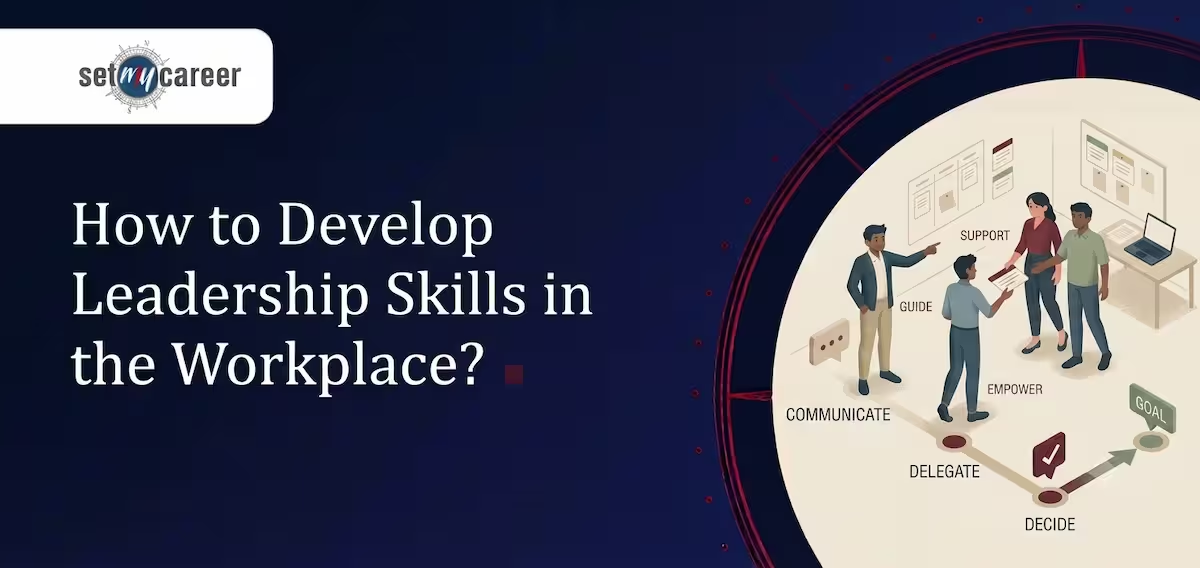
There is often a defining moment in a professional's career when the room falls silent, and every eye turns to them for a decision or direction. Whether you are officially a manager or simply stepping up during a critical project, that sudden surge of responsibility is a universal experience. The reality of building leadership skills is that they are rarely innate. They are deliberately developed, tested, and refined over time through experience and intentional practice.
Executive career coaching provides strategies for developing leadership skills in the workplace.
Effective leaders are the backbone of any successful organization. As industries evolve and complex business challenges arise, companies actively look for individuals who can anchor a team, navigate ambiguity, and drive meaningful results. Mastering these competencies not only elevates your daily performance but also naturally teaches you how to be confident in an interview setting when discussing your career trajectory. If you want to accelerate your career growth, moving from a contributor to a capable leader is the most impactful transition you can make.
Below, we will explore practical, proven strategies to help you cultivate strong leadership abilities in the workplace. From refining your communication style to building high-performing teams, these insights will help you transform into the kind of professional others genuinely want to follow.
Why Is It Important to Develop Leadership Skills?
Before diving into specific tactics, it is worth examining exactly why organizations place such a premium on leadership development. Building these capabilities impacts nearly every facet of your professional life:
- Accelerated Career Advancement: Strong leadership skills frequently serve as the deciding factor for promotions. Companies actively seek out employees who can guide initiatives rather than just execute tasks.
- Increased Team Productivity: Capable leaders understand how to align individual strengths with project goals. By motivating their peers, they drive higher productivity and superior organizational outcomes.
- Sharper Decision-Making: Leadership requires navigating complex variables under pressure. Developing these skills sharpens your critical thinking, allowing you to make informed, strategic choices rather than reactive ones.
- Healthier Team Dynamics: A professional who communicates well and understands team psychology can dismantle silos, mediate disputes, and create a highly collaborative work environment.
- Navigating Organizational Change: Markets shift, technologies update, and company structures reorganize. Leaders who can manage their own anxiety and guide others through uncertainty are invaluable assets.
- Continuous Personal Growth: The journey of leadership naturally forces you to confront your blind spots. This focus on self-awareness highlights the importance of personality development alongside professional milestones.
- Fostering Innovation: When leaders create an environment of psychological safety, employees feel comfortable taking calculated risks. This empowerment is where true creativity and innovation thrive.
- Effective Conflict Resolution: Disagreements are inevitable in any workplace. Strong leaders do not avoid conflict; they manage it constructively to find mutually beneficial resolutions.
- Strategic Relationship Building: Leadership extends beyond your immediate team. It involves networking, managing stakeholder expectations, and building trust across different departments.
Top Strategies for Developing Leadership Skills in the Workplace
Understanding the value of leadership is only the first step. To actually build these competencies, you need to integrate specific habits into your daily routine. Here are the most effective strategies for cultivating your leadership potential.
1. Enhance Your Communication Skills
Leadership lives and dies by communication. It is not just about speaking clearly; it is about adapting your message to your audience. Whether you are drafting a project brief, leading a virtual meeting, or delivering a performance review, your ability to be concise, empathetic, and persuasive is paramount. Practice framing your ideas around the "why" so your team understands the purpose behind their tasks, not just the instructions.
2. Cultivate Emotional Intelligence (EQ)
Technical expertise might get you promoted, but emotional intelligence keeps you successful. EQ involves recognizing your own emotional triggers and understanding the feelings of those around you. When a project derails, a leader with high EQ does not panic or assign blame. Instead, they manage their own frustration, read the room, and guide the team toward a solution with a calm, stabilizing presence.
3. Practice Active Listening
Many professionals listen simply to formulate their next response. Active listening requires you to focus entirely on the speaker, process their concerns, and acknowledge their perspective before offering a solution. By paying attention to non-verbal cues and asking clarifying questions, you build deep trust with your colleagues. People are far more willing to follow a leader who makes them feel genuinely heard.
4. Develop Critical Thinking and Problem-Solving Abilities
When you step into a leadership role, you are rarely handed clear-cut problems. You will frequently have to make decisions with incomplete information. Hone your ability to step back, objectively analyze the data available, consider potential edge cases, and anticipate the long-term consequences of your choices. A strong leader looks past the symptoms to address the root cause of an issue.
5. Embrace Continuous Learning
The best leaders are lifelong students. Markets evolve, methodologies change, and resting on past knowledge is a fast track to irrelevance. Stay intensely curious about industry trends, emerging technologies, and new management philosophies. This commitment to continuous professional development not only keeps your skills sharp but also sets a powerful example for your team to follow.
6. Build and Motivate High-Performing Teams
You cannot do everything yourself, and micromanagement is the enemy of scale. Effective leadership requires delegating tasks based on individual strengths and providing the autonomy needed for your team to execute. Celebrate small wins, publicly recognize individual contributions, and create an environment where team members feel invested in the collective outcome.
7. Enhance Flexibility and Grit
Projects will fail, clients will pull contracts, and unforeseen roadblocks will emerge. Grit is your capacity to absorb these setbacks and maintain your focus. Flexibility allows you to pivot your strategy without losing momentum. When you demonstrate resilience in the face of adversity, you project a quiet confidence that prevents your team from becoming demoralized.
8. Practice Ethical Leadership
Integrity is non-negotiable. Ethical leaders operate with transparency, take accountability for their mistakes, and make decisions based on strong moral principles—even when it hurts the bottom line in the short term. When you consistently do the right thing, you cultivate fierce loyalty and a culture of honesty within your organization.
9. Seek and Provide Constructive Feedback
Feedback is the mechanism for growth. Learn to deliver critique in a way that is specific, actionable, and compassionate. Focus on the behavior, not the person. Just as importantly, actively solicit feedback from your peers and direct reports. Demonstrating that you are open to constructive criticism proves that you prioritize the success of the team over your own ego.
Conclusion: Your Path to Becoming an Inspiring Leader
Developing leadership skills is not a destination; it is an ongoing process of self-reflection, education, and intentional practice. By prioritizing clear communication, emotional intelligence, ethical decision-making, and the empowerment of those around you, you fundamentally shift your value within an organization. Leadership is ultimately about lifting others up to achieve a shared vision.
Start integrating these strategies into your daily interactions, no matter your current job title. As you begin to navigate challenges with a calmer, more strategic mindset, your influence and impact will naturally expand. If you are ready to strategically elevate your career trajectory and refine your executive presence, exploring professional career counselling for working professionals can provide the personalized guidance you need to accelerate your growth. Your journey to becoming an inspiring, effective leader starts with the decisions you make today.