






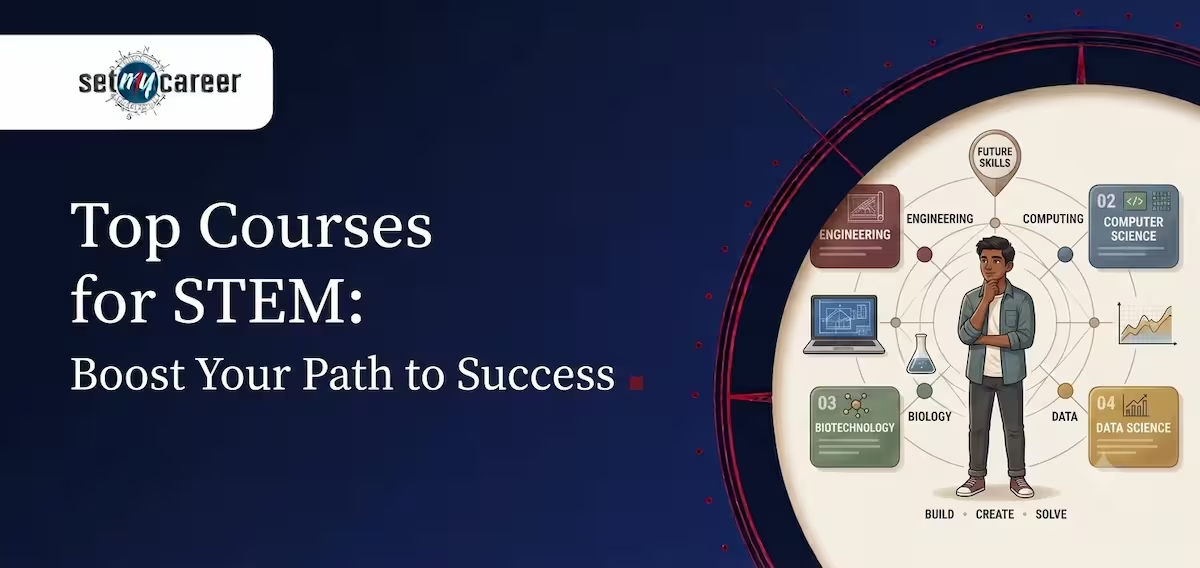
From the smartphones in our pockets to the renewable energy grids powering our cities, nearly every modern convenience is rooted in a single, massive framework: STEM. As the global economy becomes increasingly reliant on technology and data, choosing a career in these disciplines is no longer just a safe bet—it is a direct pathway to shaping the future. Whether you want to engineer life-saving medical devices, develop sustainable infrastructure, or train the next generation of artificial intelligence, a STEM education provides the foundational tools to make a tangible global impact. This guide explores what makes this sector so vital and highlights the top educational courses that can launch your professional journey.
Top courses for STEM provide excellent career options after 12th for science and technology students.
What is STEM?
STEM is an interdisciplinary approach to learning and problem-solving that integrates four distinct yet heavily connected fields: Science, Technology, Engineering, and Mathematics. Rather than treating these as isolated subjects, this framework combines them into a cohesive learning paradigm focused on real-world applications.
Science focuses on observing and understanding the natural world, from molecular biology to astrophysics. Technology acts as the digital and physical execution of those ideas. Engineering bridges the gap by applying scientific principles to design practical solutions—like bridges, software systems, and robotics. Finally, Mathematics provides the universal language and quantitative reasoning required to make it all work seamlessly.
For students evaluating courses after 12th medical science, this ecosystem offers incredibly diverse alternative pathways. You do not necessarily have to become a traditional doctor or clinical practitioner; you can pivot into biotechnology, healthcare informatics, or environmental research. Ultimately, entering a STEM discipline means joining a global workforce dedicated to continuous discovery, creativity, and critical problem-solving.
Key Benefits of Pursuing a Career in STEM
Opting for a technical or scientific career path offers distinct professional and personal advantages. Here is why these disciplines continue to attract top talent worldwide:
- High Demand and Job Security: The global talent shortage in tech and engineering means professionals in these sectors enjoy remarkable job stability. As automation and digital transformation reshape traditional industries, the need for skilled analysts, developers, and researchers consistently outpaces the available talent pool.
- Competitive Earning Potential: Due to the highly specialized skill sets required, these roles consistently rank among the most lucrative. Organizations are willing to pay a premium for individuals who can manage complex systems, analyze raw data, and drive bottom-line innovation.
- Opportunities for Tangible Innovation: Working in this sector places you at the bleeding edge of discovery. Professionals in these fields actively design the solutions that will define the next decade, from advanced robotics to climate change mitigation strategies.
- Unmatched Career Flexibility: A technical foundation does not lock you into a single job title. Analytical and problem-solving skills are highly transferable, allowing you to easily transition between industries such as finance, healthcare, agriculture, and manufacturing.
- Lifelong Learning and Growth: Because technology evolves at a staggering pace, these professions rarely become stagnant. You are constantly challenged to upskill, adapt to new frameworks, and expand your intellectual boundaries.
6 Top STEM Courses to Kickstart Your Career
The sheer breadth of options within science and technology means there is a specialization for nearly every interest and aptitude. Below are six highly sought-after academic pathways that offer strong career prospects and long-term stability.
1. Computer Science and Engineering (CSE)
In a heavily digitized global economy, a degree in Computer Science and Engineering remains the gold standard. Widely regarded as one of the best high salary courses after 12th science without NEET, CSE covers the fundamental architecture of the digital world. The curriculum typically spans software development, cybersecurity, artificial intelligence, cloud computing, and systems design. Students move beyond basic coding to understand complex algorithm optimization. Graduates are fiercely recruited by tech giants, financial institutions, and innovative startups to build everything from predictive recommendation engines to highly secure corporate networks.
2. Data Science and Analytics
Data is frequently called the new oil, but raw data is entirely useless without professionals who know how to refine it. Data Science programs teach students how to harvest, clean, and interpret massive datasets to uncover actionable business insights. Coursework heavily features statistical modeling, data visualization, and predictive analytics. By understanding how to read the story hidden inside the numbers, data scientists empower organizations to make smarter, evidence-based decisions regarding consumer behavior, supply chain efficiency, and global market trends.
3. Biomedical Engineering
Biomedical Engineering (BME) sits at the fascinating intersection of mechanical engineering and human biology. This discipline focuses on designing hardware and software solutions that directly improve healthcare outcomes. Students study subjects like biomechanics, tissue engineering, and medical imaging technology. From developing mind-controlled prosthetic limbs to creating minimally invasive surgical robots and advanced wearable health monitors, BME professionals push the boundaries of what modern clinical medicine can achieve.
4. Environmental Science and Sustainability
As the urgency surrounding climate change intensifies, Environmental Science has transitioned from a niche academic pursuit to a critical corporate necessity. This field examines the complex interactions within natural ecosystems and human environments. Students learn how to analyze pollution metrics, develop renewable energy strategies, and navigate corporate environmental, social, and governance (ESG) reporting. Graduates go on to advise governments, NGOs, and major corporations on how to reduce their carbon footprints and build resilient infrastructure.
5. Mathematics and Statistics
While it may seem traditional, a focused degree in Mathematics and Statistics is the underlying engine for modern technological innovation. These courses provide rigorous training in quantitative analysis, probability theory, and computational methods. A deep command of numbers is an incredibly versatile asset. Mathematicians and statisticians are the quiet architects behind financial risk models, cryptographic security protocols, epidemiological tracking, and the core algorithms powering artificial intelligence.
6. Robotics and Automation
The ongoing transition toward automated industry has made Robotics one of the most dynamic fields available today. This coursework covers the design, programming, and mechanical maintenance of autonomous systems. Students learn how to integrate sensors, control systems, and artificial intelligence to build machines that can perform tasks traditionally requiring human intervention. With manufacturing, logistics, and even agriculture increasingly relying on automated workflows, experts who can build and manage these sophisticated robotic systems are in exceptionally high demand.