


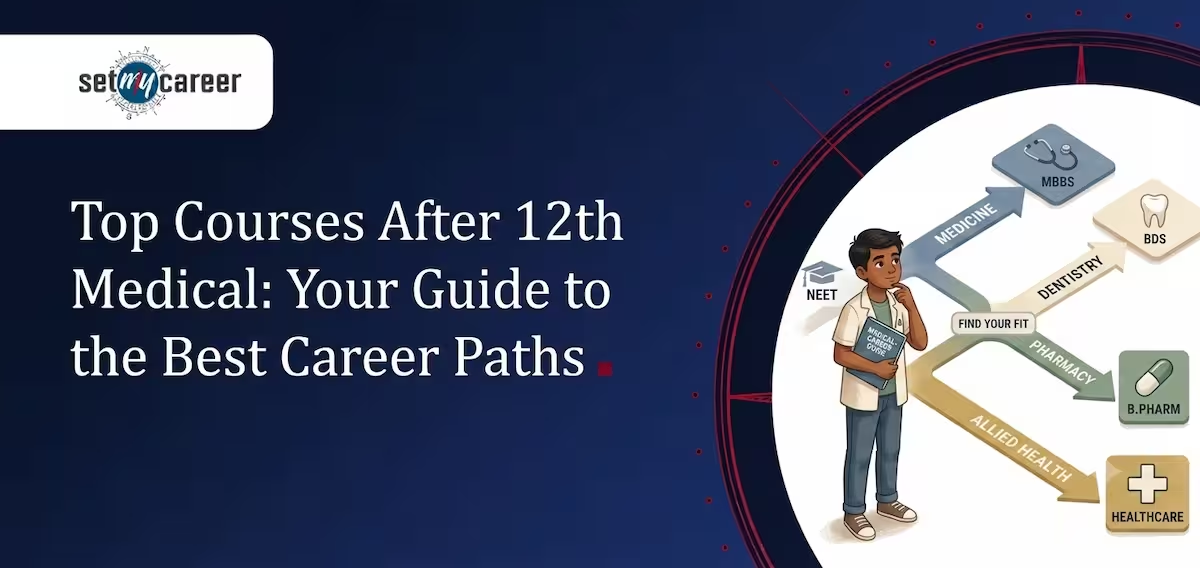
Receiving your 12th-grade board exam results marks a major milestone. For some, the transition is smooth; for others, questions about what happens after a setback can feel daunting. It is completely normal to wonder about alternative paths or feel the pressure of high expectations, but a single exam result does not define your professional future. Whether you have surpassed your goals or are recalibrating your next steps, countless opportunities await in the healthcare sector.
Top courses after 12th medical open up specialized career options after 12th for medical aspirants.
Think back to the intense preparation—the late-night study sessions, the endless problem-solving, and the sheer dedication required to get through senior secondary exams. That same resilience is precisely what the medical and healthcare industry demands. Today, the medical field extends far beyond traditional clinical roles. Whether your ambition is direct patient care, laboratory research, pharmaceutical development, or public health administration, there is a specialized path suited to your strengths.
Selecting the right undergraduate program—whether pursuing high-demand medical degrees or exploring high-paying science courses that do not require the National Eligibility cum Entrance Test (NEET)—requires careful planning. This guide examines the top medical and allied healthcare courses available after the 12th grade, helping you weigh traditional pathways against emerging scientific disciplines to find an option that aligns with your career aspirations.
Top Medical and Healthcare Courses After 12th Grade
MBBS (Bachelor of Medicine, Bachelor of Surgery)
The Bachelor of Medicine, Bachelor of Surgery remains the gold standard and most sought-after professional degree for aspiring clinicians. It serves as the foundational academic pathway for becoming a licensed medical doctor. The curriculum bridges rigorous theoretical study in preclinical sciences with extensive clinical rotations across various medical and surgical specialties. Securing admission to an MBBS program in India requires qualifying for the highly competitive NEET exam, setting the stage for a demanding yet deeply rewarding professional journey.
BDS (Bachelor of Dental Surgery)
For students with a specific interest in oral health, craniofacial anatomy, and surgical dentistry, the Bachelor of Dental Surgery is a premier choice. This undergraduate program focuses entirely on dental sciences, oral pathology, and maxillofacial surgery. Graduates enter a specialized healthcare market equipped to practice clinical dentistry, join hospital dental departments, or establish private clinical practices.
BAMS (Bachelor of Ayurvedic Medicine and Surgery)
The healthcare landscape in India places significant emphasis on traditional and integrative medicine. BAMS combines classical Ayurvedic principles with contemporary medical science, providing students with a comprehensive understanding of holistic healing. Graduates are qualified to practice as Ayurvedic physicians, contributing to preventative care, lifestyle medicine, and holistic wellness clinics.
BHMS (Bachelor of Homeopathic Medicine and Surgery)
For individuals drawn to alternative and complementary medicine, BHMS focuses on homeopathic treatment systems based on individualized care and diluted natural substances. This curriculum covers medical diagnostics, anatomy, and homeopathic materia medica. Practitioners of homeopathy find fulfilling roles in clinical practice, research, and public health awareness.
BPT (Bachelor of Physiotherapy)
Physiotherapy is an essential component of modern rehabilitation, orthopedics, and sports medicine. A BPT program trains students in advanced physical therapy techniques, biomechanics, and exercise rehabilitation to help patients recover from traumatic injuries, neurological conditions, and post-surgical trauma. It offers versatile career opportunities within multidisciplinary hospital units, sports franchises, and private rehabilitation clinics.
B.Sc. Nursing
Nursing forms the absolute backbone of clinical healthcare delivery. The Bachelor of Science in Nursing is a rigorous professional program that equips students with advanced clinical skills, patient monitoring techniques, and healthcare management protocols. B.Sc. Nursing graduates are in immense global demand, finding stable, high-responsibility positions across intensive care units, emergency departments, and public health organizations.
B.Pharm (Bachelor of Pharmacy)
If you are fascinated by the chemical composition of medications and the science of drug manufacturing, pharmacy is an ideal domain. A B.Pharm degree covers pharmacology, medicinal chemistry, pharmaceutics, and pharmacognosy. Graduates drive the pharmaceutical sector, working in drug formulation, clinical research, quality assurance, regulatory affairs, and pharmaceutical marketing.
B.Sc. in Biotechnology
Bridging biological sciences with cutting-edge engineering and technological innovation, a degree in biotechnology opens doors to scientific research and development. Students explore genetic engineering, molecular biology, bioinformatics, and bioprocess technology. This path is tailored for analytical minds aiming for careers in biomedical research, agricultural science, and genetic diagnostics.
B.Sc. in Medical Laboratory Technology (BMLT)
Accurate clinical diagnosis underpins every successful medical treatment plan. BMLT trains students to operate advanced diagnostic equipment, perform complex biochemical assays, analyze pathology samples, and manage medical laboratory operations. Skilled laboratory technologists are indispensable components of hospital diagnostic wings and pathology networks.
Overview of High-Paying Medical and Healthcare Careers
| Course Name | Professional Overview | Average Annual Salary Range (India) |
| MBBS | Comprehensive training in clinical medicine and surgery, qualifying graduates to practice as medical doctors. | ₹6,00,000 to ₹15,00,000+ |
| BDS | Specialized education in oral health sciences, dental surgery, and preventive dentistry. | ₹4,00,000 to ₹10,00,000 |
| BAMS | Integrates traditional Ayurvedic philosophy with modern medical diagnostics and therapeutics. | ₹3,00,000 to ₹8,00,000 |
| BHMS | Focuses on homeopathic principles, patient case-taking, and alternative medical therapeutics. | ₹2,50,000 to ₹7,00,000 |
| BPT | Trains practitioners in physical rehabilitation, movement mechanics, and therapeutic modalities. | ₹3,00,000 to ₹7,50,000 |
| B.Sc. Nursing | Prepares clinical professionals for direct patient care, bedside management, and healthcare administration. | ₹3,00,000 to ₹6,00,000 |
| B.Pharm | Covers drug discovery, chemical synthesis, pharmacy regulations, and clinical distribution. | ₹3,00,000 to ₹8,00,000 |
| B.Sc. Biotechnology | Focuses on genetic research, molecular innovations, and biotechnical product development. | ₹4,00,000 to ₹9,00,000 |
| B.Sc. Medical Laboratory Technology | Equips technicians to conduct critical diagnostic testing, sample analysis, and lab quality control. | ₹2,50,000 to ₹6,50,000 |
Why the NEET Exam is Central to Medical Admissions in India
For students aiming to enter mainstream allopathic medicine, dentistry, and select AYUSH programs in India, clearing the National Eligibility cum Entrance Test is a mandatory regulatory requirement. Understanding its purpose clarifies why the testing structure exists:
- Standardized Evaluation: NEET establishes a single, uniform benchmark for academic readiness across the entire nation, replacing fragmented state-level exams.
- Merit-Based Transparency: Admissions are determined strictly by performance scores, ensuring a transparent allocation of government and private seats.
- Regulatory Compliance: Mandated by national medical governing bodies to maintain rigorous educational standards across all medical training institutions.
- Equitable Access: It provides a level playing field, granting students from diverse geographic and socioeconomic backgrounds equal opportunity to secure admission.
- Streamlined Admissions: By consolidating entrance procedures, it minimizes the logistical burden of registering for dozens of separate university assessments.
Conclusion
Choosing the right educational path after your 12th-grade board exams is a pivotal moment, but it does not have to be an overwhelming one. Whether your score leads you directly toward clinical medicine through competitive exams or opens doors to allied healthcare, biotechnology, and pharmaceutical sciences, the medical sector offers unmatched stability and purpose. Take time to evaluate your personal strengths, interests, and long-term professional lifestyle goals. If you need clarity on aligning your academic profile with the right institution or career trajectory, professional mentoring and expert guidance can make all the difference. Explore our targeted resources at SetMyCareer to map out your next steps with confidence and begin building a rewarding future in healthcare today.