






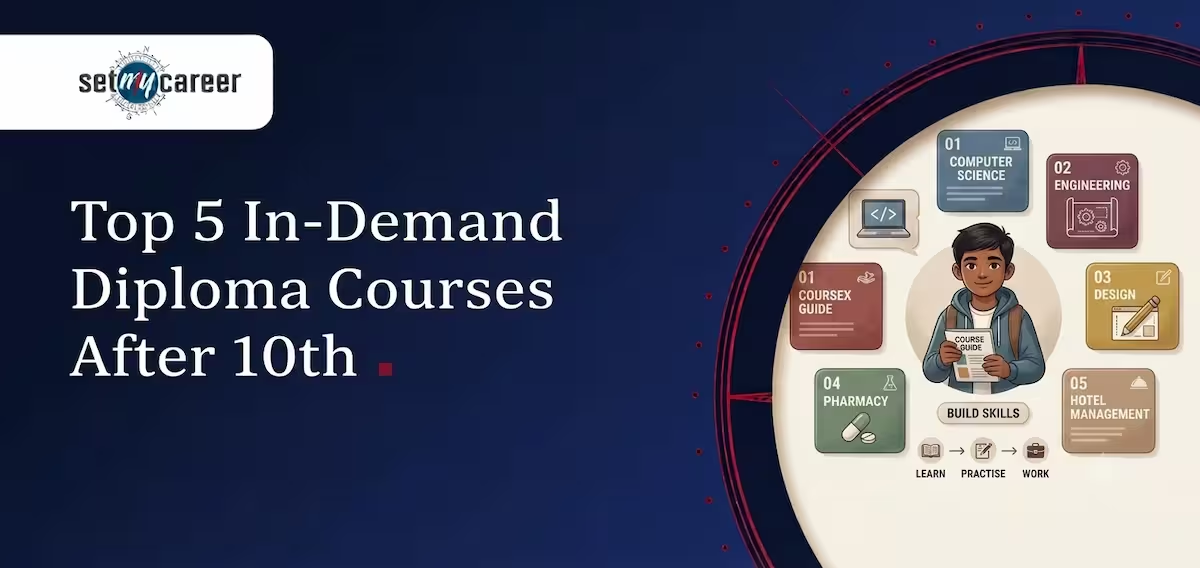
Finishing 10th grade is a major academic milestone, but it also brings up one of the most stressful questions a student will face: What comes next? You will likely hear endless advice suggesting the traditional routes of science, commerce, or arts. While those are perfectly fine options, they certainly aren't the only paths to a successful and lucrative career.
If you prefer hands-on learning, want to enter the job market faster, or simply want a specialized education without the broad, theory-heavy curriculum of 11th and 12th grade, diploma courses are an incredible alternative. These focused programs equip you with industry-ready skills and offer a direct pathway to either higher education or immediate employment. Whether you are fascinated by mechanical engineering, digital art, or corporate management, there is a specialized program tailored to your specific ambitions.
How to Choose the Right Diploma for Your Future
Before diving into specific course lists, it helps to understand why aligning your education with actual industry demand matters. A successful career starts by matching your natural strengths with sectors that are actively hiring. Selecting a program that genuinely interests you not only makes the studying process much easier but also sets a solid foundation for long-term professional fulfillment. Here are five of the most valuable and highly sought-after diploma tracks available today.
1. Diploma in Engineering (Polytechnic)
For students naturally drawn to mathematics, physics, and building things, a polytechnic diploma is one of the most strategic educational choices available. Typically lasting three years, this program offers specializations in high-growth fields like computer science, mechanical, electrical, electronics, and civil engineering.
Unlike the traditional high school route, an engineering diploma focuses heavily on practical workshop experience, laboratory testing, and applied technology.
- Immediate Career Pathways: Graduates can step straight into roles such as junior engineers, technical assistants, or draftsmen. A technical diploma also makes you eligible for numerous government sector jobs, including technical posts in railways, public works departments, and public sector undertakings (PSUs).
- The Lateral Entry Advantage: If you decide to pursue a bachelor's degree later, completing a three-year engineering diploma qualifies you for "Lateral Entry" in India. This allows you to bypass the first year of an engineering degree and enter directly into the second year of a B.Tech or B.E. program, saving you both time and tuition fees.
2. Diploma in Animation and Multimedia
The digital entertainment sector is expanding at a phenomenal rate, driven by streaming platforms, mobile gaming, and digital advertising. A Diploma in Animation and Multimedia is designed for creative individuals who want to turn their artistic talents into a technical profession.
This course goes far beyond basic drawing, covering 3D modeling, visual effects (VFX), motion graphics, UI/UX design basics, and professional video editing software.
- Industry Opportunities: The demand for skilled digital artists is exceptionally high. Graduates frequently find lucrative roles in film production studios, advertising agencies, game development companies, and corporate marketing departments.
- Freelance Flexibility: This field offers massive location independence. Many animators and multimedia specialists build highly successful freelance careers, working remotely with global clients on contract-based projects.
3. Diploma in Hotel Management
If you have excellent communication skills and thrive in fast-paced, people-oriented environments, the hospitality sector offers a dynamic career path. A Diploma in Hotel Management, which usually takes between one to three years depending on the institute, covers the core operational mechanics of the hospitality business.
Students learn the intricacies of food production and culinary arts, front-office management, executive housekeeping, and large-scale event coordination.
- Global Career Mobility: This qualification opens doors all over the world. Graduates are heavily recruited by luxury hotel chains, boutique resorts, international airlines, and cruise ships.
- Rapid Advancement: The hospitality industry values practical experience over almost everything else. Those who show strong leadership and customer service skills often experience rapid promotions into managerial roles.
4. Diploma in Fashion Designing
The modern fashion industry requires much more than just a good eye for clothing; it demands a deep understanding of textiles, market trends, consumer psychology, and garment construction. A Diploma in Fashion Designing is an intensive program that teaches the technical side of apparel creation, from pattern drafting and fabric selection to digital design software.
- Diverse Job Roles: Graduates can step into roles such as junior fashion stylists, boutique managers, visual merchandisers, or design assistants for established retail brands.
- Entrepreneurial Foundation: For those with an independent mindset, this diploma provides the technical foundation needed to launch a private clothing line, manage a bespoke tailoring business, or build a personal styling consultancy in an increasingly digital retail space.
5. Diploma in Business Administration
You do not need a master's degree to start learning how companies operate. A Diploma in Business Administration is an excellent stepping stone for students interested in the corporate world, managing startups, or eventually taking over a family business.
This program strips away the theoretical filler and focuses on the core pillars of commerce: basic accounting principles, human resource management, modern marketing strategies, and professional business communication.
- Corporate Entry: Graduates are well-prepared for entry-level corporate roles such as office administrators, operations assistants, sales coordinators, and marketing associates.
- Academic Stepping Stone: As businesses expand globally, they constantly need professionals who understand foundational operations. This diploma also serves as an excellent base if you plan to pursue a BBA or an MBA later in your academic journey.
Conclusion
Choosing a diploma course after 10th grade is a significant decision, but it does not have to be an overwhelming one. Whether you are drawn to the precise logic of technology, the creative freedom of design, or the strategic challenges of the business world, there is a specialized program designed to accelerate your career. Diplomas offer a practical, time-efficient, and highly focused route to professional success.
The key is to honestly evaluate your own interests, research the industries that are currently thriving, and choose a path that aligns with both. At SetMyCareer, we guide you through every step of your professional journey, helping you navigate your options and providing expert career guidance tailored to your unique strengths. Reach out to us today to explore your options and confidently take the first step toward your future.