




Entering the job market as a recent graduate or young professional can feel like shouting into a void. You might hold a relevant degree, boast a strong GPA, and navigate modern software with ease, yet you still find yourself staring at an empty inbox week after week.
This is a frustratingly common reality for Generation Z. While it is easy to blame a turbulent economy, the core issue rarely stems from a lack of raw talent, intelligence, or capability. More often, the friction occurs around the subtle nuances of the hiring process—how you present yourself, your level of pre-interview research, and the alignment between your expectations and an employer's immediate needs.
Understanding how hiring managers perceive you is the critical first step to changing your outcome. Below, we break down the primary reasons companies pass on Gen Z applicants and outline actionable, proven strategies to dramatically improve your chances of securing the job.
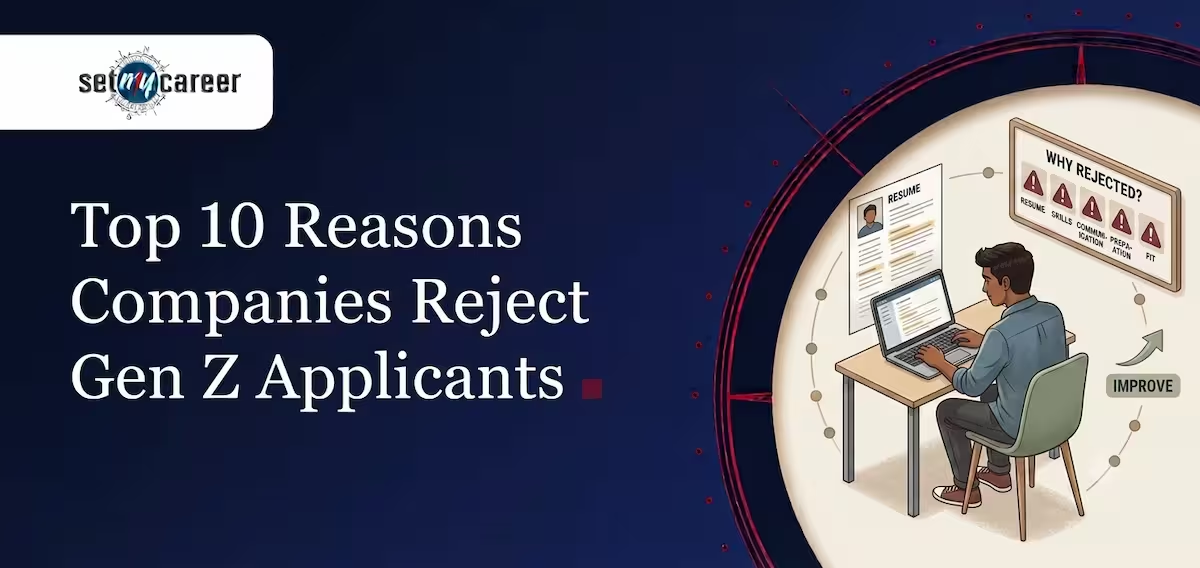
Top 10 Reasons Companies Reject Gen Z Applicants
1. A Gap in Soft Skills and Emotional Intelligence
Technical capabilities might get your resume past an Applicant Tracking System (ATS), but soft skills are what ultimately secure the offer. Hiring managers frequently observe that some younger candidates struggle with active listening, empathy, and collaborative problem-solving. In a corporate environment, the ability to navigate complex interpersonal dynamics, mediate minor conflicts, and work seamlessly across different departments is just as critical as your ability to execute technical tasks.
2. Misaligned or Unrealistic Expectations
Ambition is an excellent trait, but it must be grounded in market realities. Demanding top-tier salaries straight out of college, expecting rapid promotions within the first six months, or insisting on immediate, unconditional remote work can raise immediate red flags. Employers are actively looking for driven individuals who also possess the patience and willingness to master their entry-level responsibilities before asking for the corner office.
3. Overly Casual Communication Styles
The line between personal and professional communication has heavily blurred over the last decade, but hiring managers still expect a clear distinction. Sending emails formatted like text messages, using excessive slang, dropping emojis into formal correspondence, or—worst of all—ghosting a recruiter after an interview are quick ways to eliminate yourself from the candidate pool. Professional etiquette remains a core requirement, even in highly digitized workplaces.
4. Frequent Job-Hopping and Short Tenures
While the era of staying at a single company for forty years is largely over, a resume filled with short, three-to-six-month stints can signal a lack of commitment. Onboarding and training new employees require significant time and financial investment from a business. If a hiring manager suspects you will leave the moment a slightly better offer comes along, they will likely pass in favor of a candidate who demonstrates a track record of long-term reliability.
5. Showing Up Unprepared for Interviews
Logging into a Zoom call or walking into an office without a solid understanding of the company’s core mission, product lines, and recent milestones is a massive missed opportunity. Employers want to hire people who specifically want to work for their organization, not just someone looking for any paycheck. Failing to prepare thoughtful, specific questions for the interviewer signals a profound lack of interest.
6. Cultural and Workplace Value Mismatches
Gen Z places a high, necessary premium on mental health support, strict work-life boundaries, and corporate inclusivity. These are incredibly positive shifts for the broader workforce. However, friction occurs when a candidate's rigid expectations meet a legacy company that is still transitioning its internal culture. If an applicant appears inflexible or openly hostile toward existing corporate structures during the interview, employers often view it as a poor cultural fit.
7. Overdependence on Digital Interaction
Being a digital native is a massive advantage right up until it begins to replace necessary human interaction. Some Gen Z candidates display visible discomfort with face-to-face communication, spontaneous phone calls, or standard office etiquette. Companies still rely heavily on real-time, dynamic conversations to build trust, brainstorm effectively, and drive projects forward.
8. Digital Footprints and Social Media Red Flags
Your private life is your own, but publicly accessible social media profiles are fair game for background checks. A highly curated, entertaining TikTok or Instagram feed is perfectly fine. However, publicly complaining about past employers, displaying highly unprofessional behavior, or engaging in aggressive online arguments can destroy your credibility before the first interview even begins.
9. Struggling to Process Constructive Feedback
The ability to process critique without taking it personally is a fundamental career survival skill. Some employers express concern that younger workers occasionally lack workplace resilience, buckling under standard critical feedback or tight deadlines. Managers want team members who view critiques as a vital roadmap for professional growth, rather than a personal attack.
10. Generational Misunderstandings in the Workplace
It is vital to acknowledge that rejection is not always the applicant's fault. Hiring managers from older generations often carry their own ingrained biases. They might misinterpret a Gen Z candidate's natural confidence as arrogance, or fail to recognize how modern digital communication translates to actual workplace efficiency. Bridging this gap requires effort, empathy, and translation from both sides of the interview table.
How Gen Z Candidates Can Avoid Rejection: Practical Fixes That Work
If you are reflecting on your own interview experiences right now, you are already ahead of the curve. The key is to pivot from frustration to strategic action. Here is how you can effectively bridge the gap between your current approach and what hiring managers are actively looking for, turning "We'll keep your resume on file" into "Welcome to the team."
Polish Your Soft Skills
Actively look for ways to build your emotional intelligence and interpersonal communication.
- Practice active listening: Focus entirely on the interviewer's questions before formulating your response. Don't just wait for your turn to speak.
- Gain collaborative experience: Highlight group projects, volunteer work, or team sports on your resume to prove you can operate effectively within a unit.
Maintain Consistent Professionalism
Treat every touchpoint with a potential employer as an evaluation of your judgment.
- Proofread everything: Ensure emails are structured cleanly with proper greetings and professional sign-offs.
- Follow up thoughtfully: Always send a concise, polite thank-you email within 24 hours of an interview.
- Never ghost: If you lose interest in a role, send a brief, courteous email withdrawing your application. It preserves your reputation in the industry.
Ground Your Career Expectations in Reality
Before your interview, research standard entry-level salaries for your specific location and industry using data-driven tools. When asked about your career goals, express your ambition, but frame it around the value you want to bring to the company over the next few years. Show them you are ready to put in the foundational work required to earn that next promotion.
Do Deep-Dive Research Before Every Interview
Go far beyond the company's basic "About Us" page. Read their recent press releases or blog posts. Look up your interviewers on LinkedIn to understand their specific career trajectories. Most importantly, prepare three to four insightful questions to ask at the end of the interview (e.g., "What does success look like for this role in the first 90 days?" or "What is the biggest challenge your team is facing right now?").
Audit and Clean Up Your Digital Footprint
Take an hour to review your online presence from the perspective of a hiring manager. Switch personal accounts to private. More importantly, optimize your LinkedIn profile. Ensure you have a clear, professional photo, a well-written summary, and detailed, action-oriented descriptions of any internships, projects, or degrees.
Demonstrate Resilience and Adaptability
Prepare specific examples using the STAR method (Situation, Task, Action, Result) that highlight your ability to handle adversity. Talk openly about a time a project failed, how you accepted the critical feedback from a professor or manager, and what specific steps you took to correct the issue moving forward. This proves you are coachable.
Learn from Millennial Mentors
Millennials have already navigated the difficult transition of bringing new values into traditional corporate spaces. Connect with young managers and mid-level professionals. Observe how they balance pushing for workplace innovation and work-life boundaries while still maintaining deep professional respect from senior leadership.
Conclusion: Turning Rejections into Job Offers
Facing rejection in the job market is a universal experience, but it does not define your professional potential. By understanding the specific friction points that cause employers to hesitate—whether it is a lack of interview preparation, informal communication habits, or misaligned expectations—you gain the power to adapt your approach.
Small, intentional adjustments to your professional etiquette, interview strategy, and mindset can quickly transform you from a dismissed applicant into a highly desirable candidate. Rejection is merely feedback in disguise; use it to refine your pitch.
You do not have to navigate this transition alone. SetMyCareer is here to help you take that crucial next step. Whether you need assistance mastering complex interviews, building professional confidence, or mapping out a long-term career path that aligns with your unique values, connect with our experts today to build a future that truly fits you.