





Introduction
Imagine navigating a dense, unfamiliar city without a map or a GPS. You might eventually reach your destination, but only after wasting valuable time, taking frustrating detours, and burning through your fuel. Navigating the modern job market without professional career guidance feels remarkably similar.
Whether you are a high school student trying to pick a college major, a recent graduate entering a hyper-competitive workforce, or a seasoned professional feeling stuck in a mid-career slump, finding your true calling requires more than just guesswork. Professional career guidance provides the strategic roadmap you need to align your natural talents, deep-rooted passions, and financial goals with a viable profession.
In an era where entire industries are evolving overnight and new job titles are constantly emerging, making an uninformed career choice can be costly. Expert career counselling cuts through the noise, offering objective clarity, industry insights, and personalized strategies to help you succeed. In this comprehensive guide, we will break down exactly what career guidance entails and explore the top ten ways it can transform your professional trajectory.
What Is Career Guidance?
At its core, career guidance is a structured, collaborative process designed to help individuals acquire the insights, skills, and industry knowledge necessary to make informed professional decisions. Rather than simply telling you what job to take, a professional career coach equips you with the tools to confidently navigate your own path.
This process typically involves a deep dive into an individual's background, utilizing scientifically backed psychometric career tests, one-on-one consulting, and targeted skill assessments. By evaluating what you already know, what you naturally excel at, and what you genuinely enjoy, career advisors can distill thousands of potential job paths down to the few that truly fit your profile.
While often associated with high school and college students—research shows that over 40% of students feel entirely unprepared to declare a major or choose a career path—this guidance is equally critical for working adults looking to pivot industries or secure executive promotions.
A comprehensive career guidance program evaluates several foundational pillars before recommending a path:
- Core personality types and workplace behavioral traits
- Inherent cognitive processes and problem-solving styles
- Natural aptitudes, hard skills, and driving passions
- Short-term educational requirements and long-term professional ambitions
Understanding these elements eliminates the guesswork from your job search. Let's explore the specific ways this process pays off.
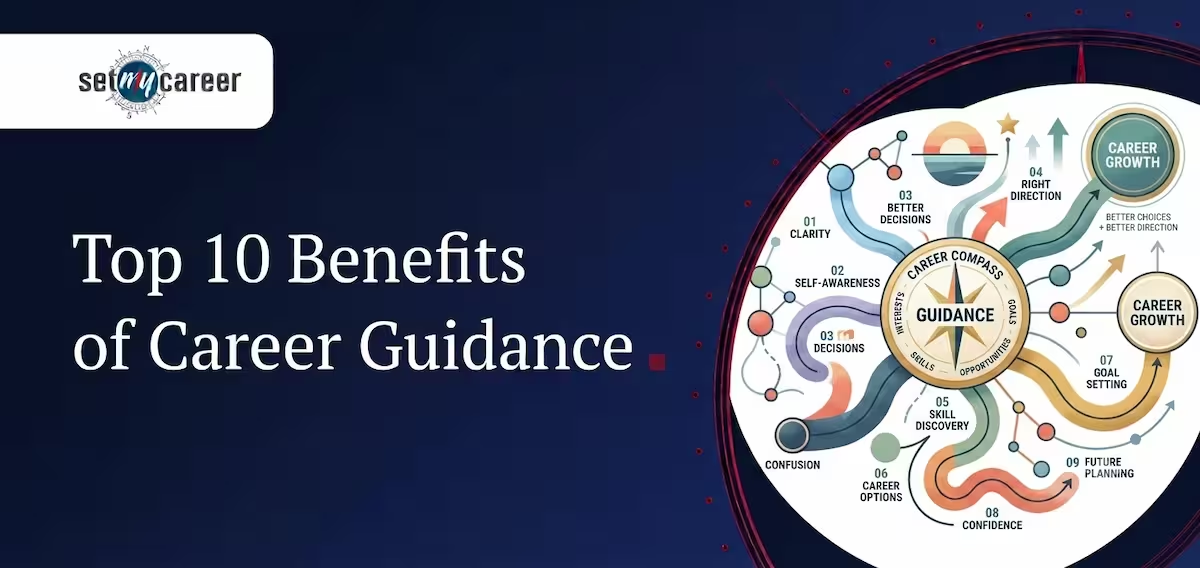
Top 10 Proven Benefits of Professional Career Guidance
1. Discover Your True Passions and Clarify Career Expectations
It is surprisingly common to spend years in a job only to realize you climbed the wrong ladder. Career guidance serves as a diagnostic tool to prevent this. Through advanced psychometric assessments—which evaluate your aptitude, personality, and core interests—counsellors reveal your hidden strengths and potential blind spots. This objective data helps you separate fleeting hobbies from sustainable career passions, ensuring that your expectations align with the day-to-day realities of your target industry.
2. Unlock Information on Diverse and Emerging Career Paths
We often limit our job searches to the careers we see around us—doctors, engineers, teachers, or marketers. However, the modern economy is full of lucrative, specialized roles you may have never heard of. Career guidance exposes you to a much broader spectrum of opportunities. Advisors provide hard data on emerging sectors, required certifications, projected industry growth, and baseline salaries, empowering you to target roles that offer both personal satisfaction and long-term job security.
3. Match Your Unique Skill Set to the Right Profession
Understanding what you are good at is only half the battle; knowing where those skills are valued most is the real challenge. For instance, if you possess a high aptitude for mathematics but have no desire to become an accountant or actuary, a career counsellor might point you toward quantitative UX research, data science, or algorithmic trading. Professional guidance ensures a harmonious match between your innate abilities and the specific demands of a role, maximizing both your performance and job satisfaction.
4. Develop Actionable, Long-Term Career Goals
Building a successful career is a marathon, not a sprint. Without clear milestones, it is easy to become complacent. Once you have identified your ideal professional destination, a career guide helps you reverse-engineer the journey. By establishing specific, measurable, and realistic long-term goals, you create a tangible roadmap. Furthermore, having a coach keeps you accountable, ensuring you continuously upskill and stay focused on your trajectory rather than getting distracted by minor setbacks.
5. Future-Proof Your Skills and Career Trajectory
Technology and automation are rapidly shifting the employment landscape. Career guidance extends far beyond landing your next job; it focuses heavily on preparing you for the future. Advisors help you identify which skills are at risk of becoming obsolete and which competencies you need to develop to remain competitive. By integrating proactive upskilling, strategic networking, and continuous learning into your career plan, you effectively future-proof your livelihood against industry disruptions.
6. Overcome Professional Roadblocks and Foster Personal Growth
Every professional faces obstacles—whether it is a devastating layoff, a toxic workplace, severe burnout, or a multi-year resume gap. Navigating these hurdles alone can be incredibly stressful. Career counsellors provide an objective, emotionally detached perspective to help you problem-solve. They assist in framing setbacks as opportunities, developing pivot strategies, and guiding you through deep self-reflection. This process not only gets your career back on track but fosters immense personal resilience.
7. Build Strategic, Data-Driven Job Search Strategies
Sending out hundreds of identical resumes into the digital void is a fast track to frustration. A successful job hunt requires a targeted strategy. Career guidance teaches you how to navigate the hidden job market, optimize your LinkedIn profile for recruiters, bypass Applicant Tracking Systems (ATS), and leverage modern networking tools. (For a deeper dive into these tactics, you can explore resources like our Chief Career Navigator Dr. Rathi’s free eBook, “13 Career Success Strategies,” to immediately elevate your approach.)
8. Build Confidence and Overcome Imposter Syndrome
Proper preparation breeds confidence. When you intimately understand your own value proposition, your self-esteem naturally rises. Career guidance provides you with the language to articulate your worth clearly. This newfound self-awareness is your strongest weapon against imposter syndrome and negative self-talk. When you walk into an interview or a salary negotiation fully aware of your strengths, employers immediately sense and respond to that quiet confidence.
9. Broaden Your Professional Perspective and Industry Awareness
When you are desperate for a paycheck, it is easy to develop tunnel vision and accept the first offer that comes your way. Career counseling elevates your perspective. Instead of focusing solely on your immediate job search, advisors train you to look at the bigger picture: company culture, upward mobility, equity options, and how a specific role fits into your ten-year plan. This broader perspective prevents you from making reactive decisions that could stall your long-term success.
10. Refine Essential Soft Skills for Workplace Success
Technical expertise might get you an interview, but soft skills get you the job—and the subsequent promotions. Career guidance heavily emphasizes the cultivation of emotional intelligence, cross-functional communication, and adaptability. Through practical exercises like mock interviews and behavioral role-playing, you receive real-time, constructive feedback. This ensures you are not just capable of doing the work, but you are entirely job-ready and culturally adaptable from day one.
SMC Expert Tip: Ultimately, career guidance is about maximizing your human potential. A dedicated career coach will not just review your resume; they will challenge your limiting beliefs, help you tap into dormant passions, and provide the objective direction needed to execute a successful, rewarding career roadmap.
End Notes
Investing in career guidance is ultimately an investment in your long-term fulfillment and financial security. By stepping back to understand your innate strengths and aligning them with the realities of the modern job market, you empower yourself to make strategic, highly informed decisions that will benefit you for decades.
Stop leaving your professional trajectory to chance. Reach out to the career guidance and counselling experts at SetMyCareer to take control of your journey. With our comprehensive psychometric assessments, personalized coaching, and one-on-one strategy sessions, we can help you turn your professional aspirations into an actionable reality. We wish you the absolute best on your path to a successful and rewarding career!