




Stepping into the professional world without a clear plan can feel incredibly disorienting, much like navigating a complex maze with no exit in sight. It is remarkably easy to feel paralyzed by uncertainty, second-guess your next move, or lose sight of your ultimate professional ambitions.
Career pathways eliminate this confusion. They act as a strategic compass, helping you map out actionable steps, smooth out transitional bumps, and maintain a sharp focus on your long-term objectives. With a well-defined roadmap in hand, building a sustainable and rewarding career transitions from a stressful guessing game into an intentional, deeply fulfilling journey. Let's break down exactly how establishing a clear trajectory serves as the foundation for professional success.
What Exactly Are Career Pathways?
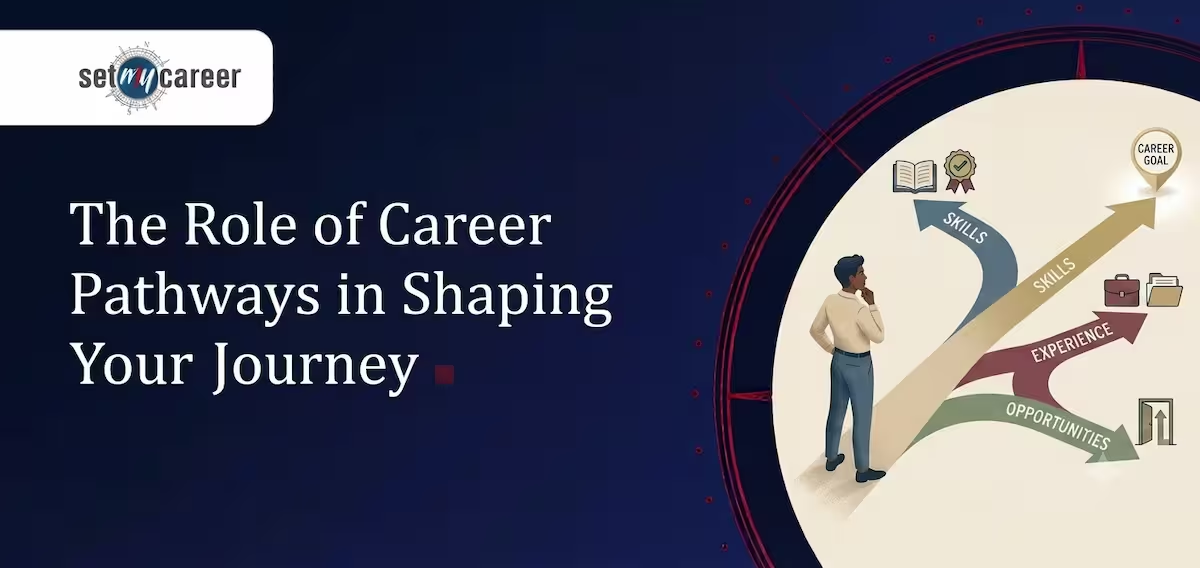
A career pathway is far more than a simple sequence of job titles. It is a strategic, adaptable framework designed to align your innate skills, emerging interests, and long-term ambitions with tangible professional opportunities. Rather than viewing your work life as a series of disconnected roles, a pathway helps you visualize a cohesive narrative for your career.
Creating this roadmap empowers you to anticipate industry challenges, make highly informed career moves, and maintain a steady focus on your ultimate targets. More importantly, a well-structured pathway provides the clarity, direction, and sense of purpose necessary to navigate the inevitable shifts in the modern job market without losing your momentum.
Why Are Career Pathways Crucial for Long-Term Professional Growth?
- Clarity in Decision-Making: Faced with a fork in the road—whether it is accepting a new job offer, investing in an expensive certification, or pivoting to an entirely new industry—a defined career path significantly reduces decision fatigue. It provides a clear metric against which to measure every potential opportunity.
- Targeted Skill Development: Pathways naturally expose the gap between your current capabilities and your future goals. This allows you to prioritize proactive, strategic learning rather than wasting time and money on irrelevant skills.
- Strategic Alignment with Core Goals: Instead of jumping impulsively at random job openings simply for a bump in salary, a structured roadmap ensures every lateral or upward move directly supports your overarching professional aspirations.
- Building Professional Confidence: Uncertainty breeds anxiety. Knowing the specific steps required to reach your next milestone replaces self-doubt with quiet confidence. You become far more prepared to advocate for yourself during performance reviews or salary negotiations because you know exactly the value you are building.
5 Actionable Steps to Create Your Custom Career Pathway
Architecting a personalized career trajectory might seem like a massive undertaking, but breaking the process down into distinct, actionable phases makes it entirely manageable. It requires honest self-reflection, clear objective-setting, and a willingness to leverage external support. Here is how to map out your professional future:
1. Assess Your Current Starting Point
Before you can map a route to your destination, you must understand exactly where you stand. Conduct a thorough audit of your current technical abilities, soft skills, past experiences, and formal qualifications. Identify your strongest assets and brutally acknowledge your weak points. For instance, if you excel in creative design but lack the technical software expertise required for a senior art director role, mastering that software becomes an obvious first step. This baseline self-awareness ensures the foundation of your pathway is grounded in reality.
2. Set SMART Objectives
Vague ambitions like "I want to be a manager" rarely yield concrete results. Frame your targets using the SMART framework: Specific, Measurable, Achievable, Relevant, and Time-bound. A highly effective goal sounds like, "I will earn my PMP certification within the next eight months to qualify for a senior project management role by the end of the fiscal year." Clear, time-bound objectives keep you consistently motivated and accountable.
3. Strategically Explore Training and Education
Once you identify your skill gaps, actively work to bridge them. Upskilling or reskilling does not always require returning to university for a traditional degree. Look into high-impact online courses, specialized industry certifications, or intensive bootcamps. If you are aiming for a pivot into data analytics, acquiring a specific credential in Python or machine learning can instantly elevate your resume and accelerate your progress along your defined path.
4. Actively Seek Out Mentorship
Navigating a career trajectory entirely on your own is doing things the hard way. A seasoned mentor provides invaluable, battle-tested guidance that you simply cannot find in a textbook. They can help you spot industry blind spots, validate your career choices, and offer candid feedback on your progress. Mentorship does not have to be a rigid, formal arrangement; you can cultivate powerful advisory relationships with former managers, senior colleagues, or connections made through specialized networking platforms like LinkedIn.
5. Reevaluate and Pivot Regularly
Your career pathway should be a living document, not an unbreakable contract. Industries evolve, economic landscapes shift, and your personal priorities will inevitably change over time. Commit to reviewing your career roadmap at least once a year. This periodic reflection ensures your pathway remains closely aligned with your current ambitions and allows you to pivot gracefully when unexpected opportunities arise.
Conclusion
Creating a career pathway is fundamentally about taking intentional control over your professional destiny. It ensures that every job you take and every skill you learn is directly aligned with your deepest values and highest aspirations. A well-constructed roadmap equips you with the confidence to navigate industry disruptions, seize new opportunities decisively, and ultimately achieve a deeply fulfilling work life.
Whether you are standing at a professional crossroads, preparing for a major industry transition, or simply struggling to map out your next best move, SetMyCareer provides the expert guidance you need. Connect with our specialists today to explore targeted career counselling for working professionals, and take the definitive first step toward building a trajectory that truly reflects your potential.