





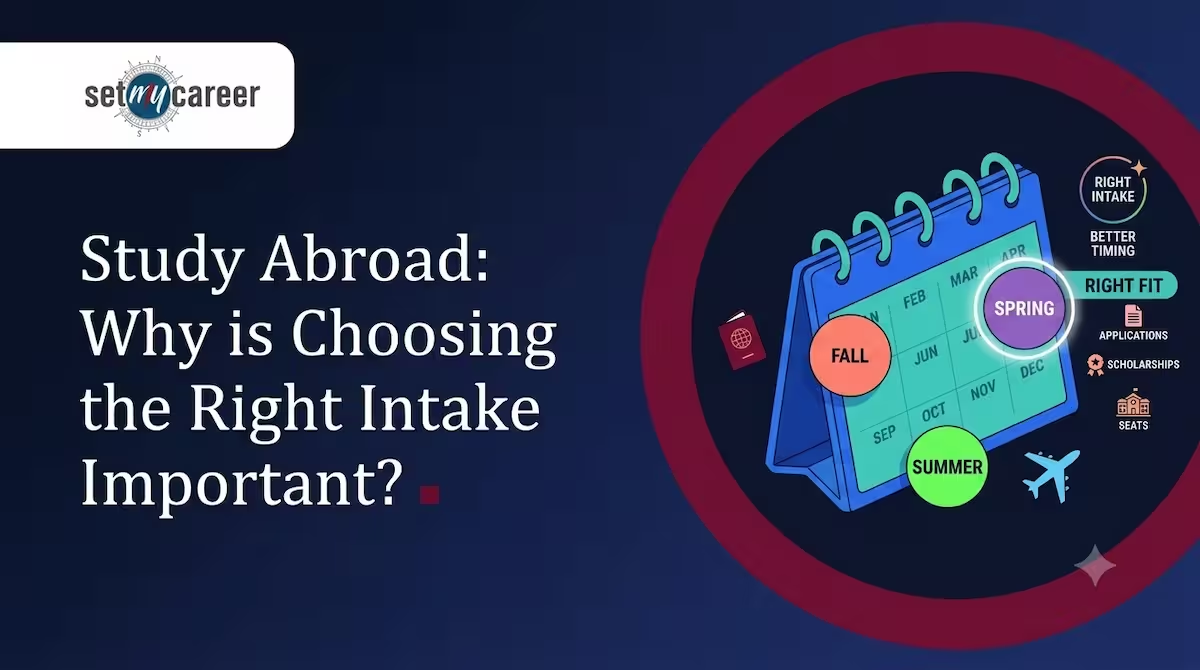
Imagine securing admission to your dream university abroad, only to realize that your chosen intake offers limited course modules, missed scholarship deadlines, or awkward hiring cycles for post-study jobs. It is a frustrating scenario, but it happens more often than you think. Selecting the right study abroad intake is just as critical as choosing the right degree or institution.
Universities worldwide operate on structured academic calendars with multiple entry points throughout the year. Understanding how these intakes differ—and how they align with your academic, financial, and professional goals—is the secret to a smooth transition into global education.
What Are Study Abroad Intakes and How Do They Work?
A study abroad intake refers to a specific period in the academic year when a university opens its doors to a new cohort of international students. Unlike systems in many Asian countries where admissions occur strictly once a year (typically in July or August), top universities across the United States, the United Kingdom, Canada, Australia, and Europe offer flexible entry windows.
Each intake operates as an independent admission cycle with its own application deadlines, visa processing windows, orientation programs, and course start dates. While the underlying academic curriculum remains consistent, the choice of intake directly influences class sizes, funding opportunities, campus recruitment, and accommodation availability.
Comparing the Major Study Abroad Intakes: Fall, Spring, and Summer
Most international universities structure their academic year into three primary intakes. Here is a detailed look at how each intake operates and who it suits best.
1. Fall Intake (September to December)
The Fall intake is the flagship admission cycle globally, particularly in the US, UK, Canada, and Western Europe. Marking the beginning of the primary academic year, it attracts the largest volume of applications worldwide.
- Maximum Course Availability: Nearly 100% of academic programs, majors, and specialized elective tracks launch during the Fall semester.
- Scholarship and Financial Aid Priority: Institutional grants, assistantships (RA/TA positions), and external merit scholarships allocate the majority of their budgets to Fall applicants.
- Optimum Career Alignment: On-campus recruiting, summer internship fairs, and corporate networking drives are structured around the Fall academic calendar.
- Vibrant Campus Life: Student clubs, orientation weeks, and peer networking activities operate at peak capacity during this term.
2. Spring Intake (January to May)
Also known as the secondary intake, the Spring cycle acts as a crucial alternative for students who missed Fall deadlines, required extra time for standardized test preparation, or faced visa processing delays.
- Reduced Competition: Application volumes are generally lower, which can slightly work in favor of qualified applicants vying for remaining spots.
- Selective Program Offerings: While core degree paths remain open, highly specialized majors or niche electives may not accept new students in Spring.
- Internship Timing Adjustments: Students entering in Spring must plan their academic timeline carefully, as some institutions require completion of two consecutive full semesters before becoming eligible for off-campus internships or co-op placements.
3. Summer Intake (May to August)
The Summer intake is a mini-session offered by select universities across destinations like the US, Germany, and Australia. It caters primarily to accelerated certificate programs, intensive language courses, executive diplomas, or specialized research projects.
- Accelerated Graduation Tracks: Ideal for students looking to fast-track their credit requirements or complete short-term credentials.
- Smaller Class Sizes: Offers intimate learning environments and direct access to faculty members.
- Limited Institutional Scale: Mainstream undergraduate and postgraduate degree programs rarely utilize Summer as a primary entry point.
Side-by-Side Comparison of Study Abroad Intakes
| Feature | Fall Intake | Spring Intake | Summer Intake |
| Primary Duration | September – December | January – May | May – August |
| Program Availability | Extensive (95% - 100% of courses) | Moderate (50% - 70% of courses) | Limited (10% - 25% of courses) |
| Scholarship Odds | Highest funding allocations | Moderate to limited funding | Minimal financial aid |
| Competition Level | High (Largest candidate pool) | Moderate (Fewer applicants) | Low |
| Job & Internship Prospects | Optimal alignment with corporate hiring cycles | Requires strategic planning for internships | Best for short-term projects or research |
Standard Timelines and Application Deadlines
Planning your study abroad timeline requires working backward from your target intake start date. Admissions committees review applications on rolling or round-based schedules, making early submission a distinct advantage.
Fall Intake Application Schedule
- Preparation Phase (August – November of the preceding year): Take standardized tests (IELTS, TOEFL, GRE, GMAT) and secure letters of recommendation.
- Application Submission (December – March): Finalize Statements of Purpose (SOPs) and submit university portals.
- Offers & Visa Processing (April – July): Receive admission decisions, secure funding, and schedule embassy visa interviews.
- Departure (August – September): Book flights and arrange housing.
Spring Intake Application Schedule
- Preparation Phase (April – June of the preceding year): Complete required language tests and compile academic transcripts.
- Application Submission (July – September): Submit application packages before early priority deadlines.
- Offers & Visa Processing (October – November): Finalize financial documentation and process student visas.
- Departure (December – January): Travel and attend international student orientation.
Summer Intake Application Schedule
- Preparation Phase (October – November): Research participating institutions and language criteria.
- Application Submission (December – February): Submit targeted applications for short-course windows.
- Offers & Departure (March – April): Complete rapid visa filing and pre-departure arrangements.
Key Factors to Consider When Selecting Your Intake
Every student’s academic background and personal timeline are unique. Weigh these essential factors before locking in your target entry term:
1. Course Specifics and Module Availability
Always verify whether your specific major is active for your target intake. While a business school might offer its core MBA in both Fall and Spring, specialized tracks like Business Analytics or Supply Chain Engineering might only admit students in September.
2. Funding, Assistantships, and Scholarships
If your overseas education depends on securing merit scholarships, teaching assistantships (TA), or graduate research assistantships (RA), the Fall intake is overwhelmingly the best choice. University departments allocate their central budgets at the start of the academic year in Autumn.
3. Visa Processing Windows and Approval Buffer
Embassy backlogs fluctuate throughout the year. Applying for a Spring intake means navigating visa processing during the year-end holiday season when embassy operating hours may be restricted. Always build a two-to-three-month buffer for visa issuance.
4. On-Campus Recruitment and Off-Campus Hiring Cycles
Global corporations align their university graduate hiring programs with the traditional summer break. Fall intake students complete their first full academic year right as summer internship cycles begin, giving them a natural advantage in securing industrial placements and post-study work permits.
5. Adaptation and Weather Conditions
Relocating to regions with extreme winters—such as Canada, the Northern United States, or North-Eastern Europe—during a January Spring intake can be physically challenging for students from warmer climates. Arriving in September provides a gentler weather transition.
Strategic Benefits of Early Application Planning
Spontaneity rarely works well in international education logistics. Giving yourself a 10-to-12-month head start delivers several practical advantages:
- Time for Standardized Test Retakes: Early planning leaves room to retake exams like the IELTS, TOEFL, GRE, or GMAT if your initial score falls short of competitive cutoffs.
- Access to Choice Accommodation: On-campus dormitories and affordable off-campus student housing near major universities sell out months in advance. Early admits get first pick.
- Financial Documentation Accuracy: Proof-of-funds verification, education loan disbursements, and currency transfers take time to execute without penalty.
- Peace of Mind During Visa Filing: Avoiding last-minute embassy appointments drastically reduces pre-departure stress and prevents delayed arrivals.
Conclusion: Choosing the Path That Fits Your Goals
There is no universally "perfect" intake—only the intake that aligns best with your academic readiness, financial plan, and career timeline. While the Fall intake remains the global heavy hitter for course selection and scholarship availability, the Spring intake offers a flexible, strategic bridge for students who need additional preparation time without delaying their plans by an entire year.
Audit your current academic transcripts, set a realistic testing schedule, check specific department deadlines, and map out your financial plan. By taking a proactive approach to your application timeline, you set yourself up for a confident, successful transition to studying abroad.