




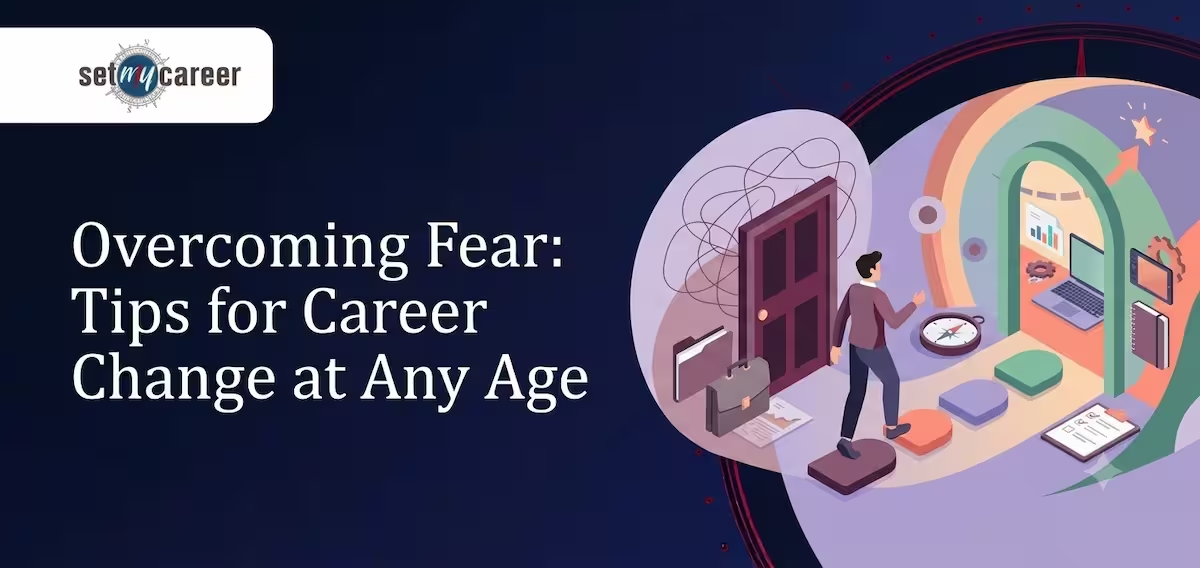
Thinking about changing careers can trigger a complex mix of excitement and deep anxiety. You might find yourself questioning your age, doubting your current skill set, or wondering if it is simply "too late" to start over. Whether you are contemplating a career change at 30, planning a massive pivot for a career change at 40, or exploring new horizons even later in life, the fear of the unknown is the single biggest barrier holding professionals back.
Here is the reality: professional reinvention is entirely possible at any stage of life. The traditional, linear career path is largely a thing of the past. With strategic clarity, the right support system, and a resilient mindset, you can push through the hesitation and take deliberate steps toward a more fulfilling professional life.
Actionable Strategies to Overcome the Fear of Changing Careers
Transitioning into a new field requires more than just a polished resume; it requires emotional management and strategic planning. Below are highly practical methods to help you navigate the fear of change and execute a successful career pivot.
1. Acknowledge and Name Your Fear
Fear usually surfaces when something deeply matters to us, but actively ignoring it only amplifies its control over your decisions. Take a quiet moment to identify exactly what is causing your anxiety. Are you afraid of public failure? Financial instability? The judgment of peers who might not understand your choice? Writing these specific fears down strips away their vague, overwhelming nature. Once a fear is named and on paper, it becomes a tangible problem you can actually solve.
2. Redefine What "Too Late" Actually Means
Starting over has nothing to do with your biological age and everything to do with your willingness to adapt. If you are worried about a career change at 40, remember that you still have decades of working years ahead of you. You are not starting from scratch; you are starting from experience. Core competencies like crisis management, client communication, cross-functional leadership, and complex problem-solving are highly transferable skills. These previous experiences will serve as your greatest competitive advantage in a new industry.
3. Test the Waters Through Job Crafting
You do not necessarily need to hand in a resignation letter tomorrow to begin pursuing a new direction. Start with "job crafting"—the process of actively reshaping your current role to better align with your emerging interests. Volunteer for cross-departmental projects, take on responsibilities that utilize different software, or shadow a colleague in a different division. This allows you to build a new portfolio of skills and test your assumptions about a new field without taking on immediate financial risk.
4. Seek Objective Expert Guidance
Attempting to navigate a major life transition in an echo chamber is a recipe for decision fatigue. A certified career counsellor or an industry mentor can help you clarify your scattered thoughts and map out a realistic trajectory. Professional career guidance breaks a massive, intimidating goal down into manageable, actionable milestones. A fresh, objective perspective can quickly highlight blind spots and opportunities you may have overlooked.
5. Strategically Skill Up
A common misconception is that changing industries requires going back to a university for a four-year degree. In the modern job market, this is rarely true. Identify the specific technical gaps between your current resume and your target role. You can often bridge these gaps through focused, short-term online courses, intensive bootcamps, or industry-recognized micro-certifications. Consistent, targeted learning over a few months is usually enough to get your foot in the door.
6. Build a Financial Safety Runway
The fear of losing financial stability is entirely valid and arguably the most common hurdle for mid-career changers. Address this fear with math, not emotion. Calculate your minimum viable living expenses and begin building a transition fund. Aim to save a few months' worth of runway, cut unnecessary discretionary spending, or take on freelance work in your new chosen field to generate side income. A solid financial cushion transforms a desperate job hunt into a calm, strategic transition.
7. Use Mental Rehearsal and Visualization
Elite athletes use visualization to prepare for high-stakes environments, and you can apply the exact same psychology to your career pivot. Dedicate time to mentally rehearse your success. Imagine what your new daily routine looks like, the type of colleagues you will interact with, and the satisfaction of mastering a new role. Grounding yourself in the positive outcomes of the transition helps quiet the brain's natural threat-response to change.
8. Curate a Supportive Environment
Your environment heavily dictates your success. Limit career conversations with people who project their own risk-aversion onto you. Instead, intentionally surround yourself with professionals who have successfully navigated their own pivots. Conduct informational interviews, attend industry meetups, and join online communities dedicated to career transitions. Hearing real, unvarnished stories of job mobility normalizes the messy middle of the process and proves that it can be done.
9. Learn to Tolerate Discomfort
When you step outside of your established expertise, you are going to feel clumsy, nervous, and unsure of yourself. This is the price of admission for a more fulfilling life. Discomfort is not a red flag indicating that you made a mistake; it is the physiological sensation of growth. Expect the imposter syndrome, normalize the awkwardness of being a beginner again, and keep moving forward anyway.
10. Relentlessly Celebrate Small Wins
A complete career overhaul does not happen overnight, which is why tracking your micro-progress is vital. Setting up customized alerts on the best job search sites in India, finishing a weekend workshop, or finally updating your LinkedIn summary to reflect your new direction are all massive victories. Acknowledging these small steps provides the psychological momentum required to sustain a long-term job search.
Conclusion
Closing one professional chapter to start another requires a significant amount of bravery, but fear should never be the deciding factor in your life's trajectory. Change is uncomfortable, but staying stagnant in a career that no longer serves you is far worse. By approaching your transition with a strategic mindset, acquiring the right skills, and managing your financial risks, you can successfully shift from a place of self-doubt to profound self-belief.
Do not let your age, the opinions of others, or the temporary discomfort of being a beginner write your final story. You have the capability to build a professional life that energizes you. SetMyCareer is here to walk alongside you during this transition. Whether you need help identifying your ideal path, refining your personal brand, or mapping out a step-by-step transition plan, connect with our career experts today and take your first confident step toward a future that truly fits who you are.