






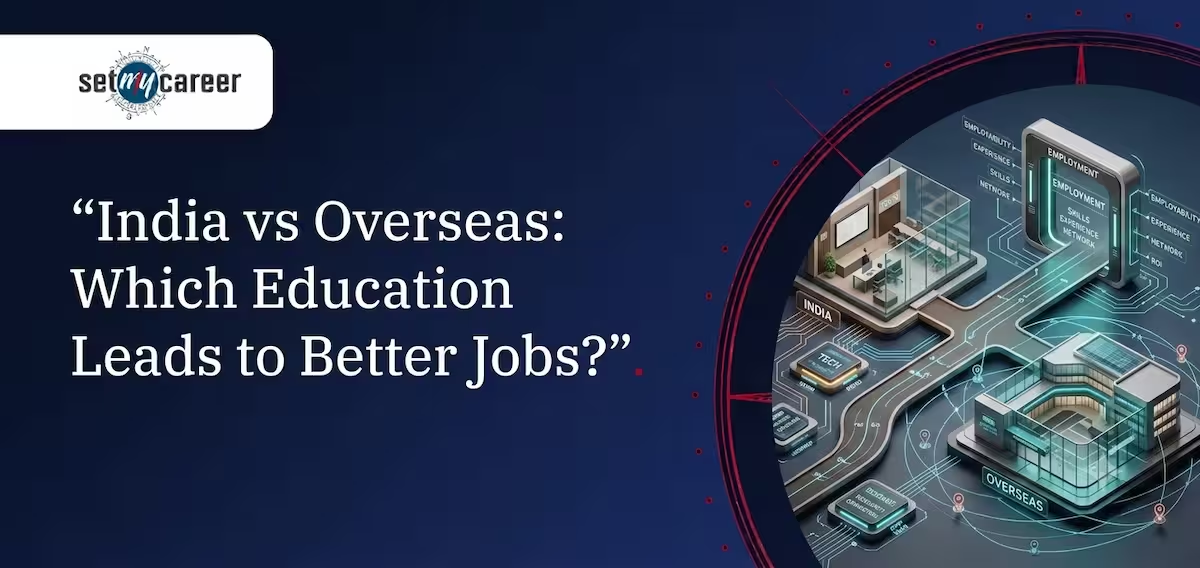
If you are an Indian student navigating the transition from school to higher education, your browser history likely tells a story of intense indecision. On one tab, you are looking at vibrant photos of sprawling, centuries-old university campuses halfway across the world. On the next, you are comparing the placement records of top-tier institutions right here at home. You are facing the classic, generation-defining dilemma: Desh ya Pardes? (Home country or a foreign land?)
This decision is rarely just about choosing a place to live for the next two to four years. It feels like choosing the trajectory of your entire life. Will an Indian degree pave a steady, reliable path to success? Or is studying overseas the ultimate secret to unlocking premium job offers, advanced career flexibility, and significantly higher earning potential?
Take a deep breath. This confusion is entirely normal, and millions of students weigh these exact variables every year. Making the right choice requires cutting through the marketing noise and evaluating both paths based on your specific career goals, financial reality, and personal adaptability. Let's break down the realities of studying abroad versus staying in India so you can make an informed, confident decision.
The Glamour of Going Global: Why Overseas Education Appeals
There is an undeniable excitement tied to international education. It promises adventure, independence, and access to a massive world of possibilities. But beyond the appeal of travel, there are deeply practical reasons why Indian students cross borders for their degrees.
Consider the modern hiring landscape. Studies suggest that a recruiter's initial scan of an application is astonishingly quick—some estimates indicate they spend just six to seven seconds reviewing a single resume. That is less time than it takes to tie your shoelaces. Generic applications are practically designed to get lost in that rapid review process. For many students, an international degree serves as the standout credential that makes a recruiter pause.
- Global Exposure and Cultural Immersion: Living and studying in a new country throws you out of your comfort zone. You are exposed to diverse perspectives, unfamiliar languages, and different approaches to problem-solving. This builds high-level cultural intelligence and adaptability—soft skills that global employers heavily prioritize.
- World-Class Institutions and Specialized Programs: Many popular destination countries house universities with centuries of academic prestige, cutting-edge research facilities, and highly specialized niche programs that may not yet be available in India. This allows you to gain a highly specific academic edge.
- Building an International Network: The people sitting next to you in a foreign lecture hall will eventually become professionals scattered across the globe. Professors, alumni, and peers become your international network, opening doors to overseas collaborations and cross-border career moves.
- Potential for Overseas Jobs: A degree from a recognized international university is a universally understood credential. For students aiming to secure employment abroad, an overseas education is often the most direct route to post-study work visas and better-paying roles in foreign markets.
Pro Tip: If cost is your primary hesitation, thoroughly research study abroad scholarships early in the process. Many universities and international governments offer substantial financial aid to high-performing Indian students, which can dramatically reduce your financial burden.
Navigating the Professional World: Beyond the Campus
Regardless of where you earn your degree, securing a strong job requires more than just submitting applications to online job boards. While job portals are important, the "hidden job market"—opportunities filled through referrals and internal networking—makes up a massive portion of modern hires. Simply browsing job seeker sites means you are only seeing the tip of the iceberg.
This is where your choice of university location plays a massive role. You have to build a supportive professional community in the market where you want to work.
- Digital Networking: Connect with industry leaders on platforms like LinkedIn. Don't just click 'connect.' Send a personalized note mentioning a shared interest or a recent project they worked on.
- Informational Interviews: These are goldmines for recent graduates. Reach out to professionals in roles you admire and ask for a 15-minute virtual coffee chat. It is a low-pressure way to gather localized industry insights and get your name in front of decision-makers before a job is even posted.
- Community Engagement: Actively participate in online forums, professional groups, or regional webinars. Sharing your expertise and asking thoughtful questions makes you a recognizable voice in your specific field.
The Strength of Home Ground: The Value of Indian Education
With all the talk of international networking and global campuses, you might assume going abroad is the only way to succeed. But hold on—the picture is incomplete without acknowledging the massive, undeniable advantages of pursuing your higher education right here in India.
Indian education offers a unique set of powerful benefits that international universities simply cannot replicate:
- Exceptional Cost-Effectiveness: Let's talk numbers. The total cost of an Indian education—factoring in tuition, accommodation, and living expenses—is a fraction of what you would spend in the US, UK, or Australia. This allows you to graduate without the crushing burden of massive student loan debt, giving you more freedom to take career risks or start a business early on.
- Deep Market Relevance: An Indian education provides an intuitive understanding of the domestic economy, local industry frameworks, and regional cultural nuances. If you plan to build a long-term career or launch a startup in India, this localized knowledge is arguably your most valuable asset.
- Powerful Localized Networks: Studying in India naturally plugs you into a massive network of domestic professionals, alumni, and peers. When you are looking for internships, entry-level roles, or co-founders, a strong Indian alumni network is incredibly effective at fast-tracking your access to the local job market.
- Booming Domestic Opportunities: India is currently one of the fastest-growing major economies in the world. Multinational corporations are aggressively expanding their Indian operations, shifting from back-office support to high-value research and development. There is a massive, ongoing demand for skilled professionals, meaning you no longer have to leave the country to find highly lucrative, globally impactful roles.
Job Prospects: Looking Beyond the Label
The ultimate question most students ask is: Which path guarantees the better job?
The reality is that neither path offers a strict guarantee. Career success is not a simple equation where an overseas degree automatically equals a higher salary. You have to look past the label on your diploma.
Overseas Job Market Realities
While the potential for earning in foreign currency is highly appealing, the international job market can be fiercely competitive. As an international graduate, you are competing against local citizens who do not require visa sponsorship. Navigating complex immigration laws, securing work permits, and adjusting to changing government policies can be stressful hurdles. Many students discover that securing long-term overseas employment is harder than securing the degree itself.
Indian Job Market Potential
Conversely, the Indian job market is highly dynamic. With the rise of the domestic tech ecosystem, manufacturing booms, and international investments, the ceiling for professional growth within India has skyrocketed. A highly skilled graduate from a top Indian institution can often achieve a better purchasing power parity and quality of life at home than they might in a high-cost foreign city.
Ultimately, employers care less about the geographic coordinates of your university and more about three core traits:
- Your Practical Skills: Did your education equip you with the hard skills currently demanded by the industry?
- Your Proactiveness: Have you actively sought out internships, built an impressive portfolio, and cultivated a strong professional network?
- Your Adaptability: Are you capable of learning, unlearning, and re-learning as technological advancements shift your industry landscape?
Making Your Informed Choice: Questions to Ask Yourself
Deciding between staying in India and studying abroad requires honest self-reflection. Weigh these specific factors before making your final call:
- What are your specific career aspirations? Does your dream job require international exposure immediately, or are the best growth opportunities currently happening within the Indian market?
- What is your financial reality? Can your family comfortably afford the costs associated with overseas education, or would a premium Indian degree offer a much safer, stress-free return on investment?
- How does the specific program rank? Don't just compare countries; compare specific departments. Sometimes, a specialized program at an Indian institute outranks a mid-tier program abroad. Research the faculty, curriculum, and historic placement records.
- Are you highly adaptable? Living abroad requires immense resilience. You have to manage your own finances, navigate a new culture, and handle homesickness. Are you genuinely ready for that level of independence?
- Where do you see yourself settling? Think ten years down the line. If you eventually want to build your life, family, and long-term career in India, building your foundational network here through a domestic degree might be the smartest move.
Conclusion
Choosing between an Indian education and an overseas degree is a milestone decision, but it is important to remember that neither choice is inherently "wrong." Both paths are entirely capable of leading you toward a fulfilling, high-impact career.
Instead of getting caught up in the prestige of a foreign zip code or the safety of staying close to home, focus on the substance of the education you will receive. Prioritize the relevance of the curriculum, the strength of the professional network you will build, and how well the environment aligns with your financial and personal realities. Whether you choose to pack your bags for a new continent or build your future right here at home, your ultimate success will be defined by your work ethic, adaptability, and drive.