
Sitting in a lecture hall during your final semester of college, the reality often hits without warning: the structured, predictable environment of academia is ending, and you are expected to step out into the professional world and build a life. For many, the impending pressure of choosing the right career path feels less like an exciting milestone and more like an overwhelming burden.
Career counselling can help professionals master career exploration in the evolving job market.
If you are experiencing anxiety around this transition, your feelings are entirely justified. Your career trajectory shapes nearly every facet of your life—from your financial security and geographic location to your daily routine, social circles, and overall mental well-being. It is a monumental decision that requires deliberate reflection rather than a rushed guess.
Yet, trying to pinpoint a lifelong career direction amid a sea of unknowns can leave you feeling paralyzed. Whether you are a recent graduate trying to navigate your first steps in the job market, or a seasoned professional realizing it is time for a major career change, you do not have to figure it out overnight. The key to moving forward is mastering the art of career exploration.
What Is Career Exploration?
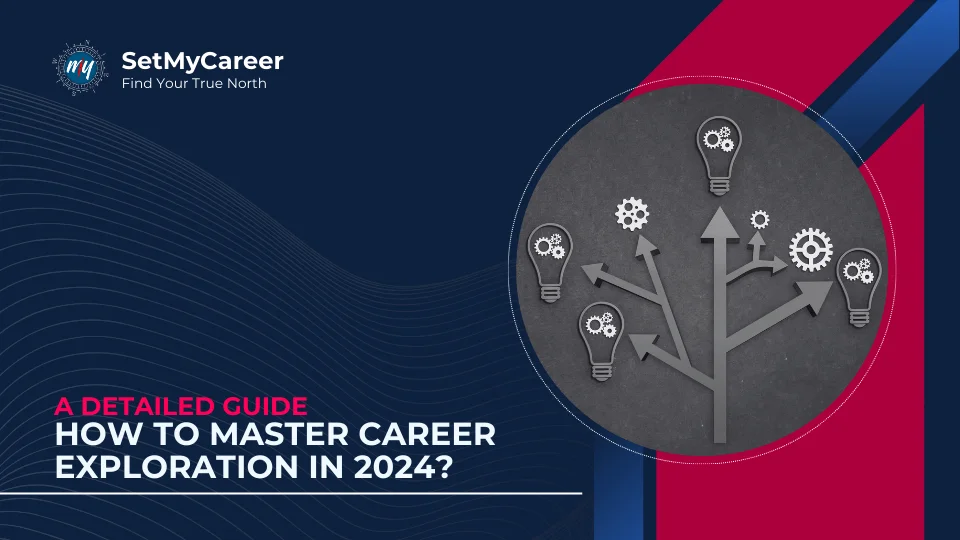
Career exploration is the active, ongoing process of learning about your own psychological and professional makeup while simultaneously investigating the job market to find an optimal fit. It is a structured methodology, not a random search on a job board.
A thorough exploration phase involves:
- Testing out different professional environments to see where you naturally thrive.
- Evaluating what types of complex problems naturally hold your attention.
- Identifying both your strongest aptitudes and your functional blind spots.
- Mapping your core personal values to potential industry cultures.
Rather than throwing darts at a wall and hoping one sticks, career exploration is about intentional discovery. You strategically place yourself in new professional scenarios, research viable economic paths, speak directly to people executing the roles you find interesting, and pay close attention to the tasks that energize you. The ultimate goal is to gather enough hard data about yourself and the market to make a highly informed, confident decision about your next professional step.
The Importance and Goals of Exploring Career Options
Navigating toward a fulfilling profession is critical to building a sustainable, meaningful life. Taking the time to properly investigate your options provides several distinct advantages:
- Discover hidden talents and interests: By stepping outside your comfort zone and experimenting with different responsibilities, you often uncover latent talents. These capabilities can open up entirely new, lucrative possibilities you might have otherwise ignored.
- Gain confidence in your career decisions: Thoroughly exploring various options prevents you from hastily committing to a path based on societal pressure or a sunk-cost fallacy. Knowing you have reviewed the alternatives allows you to move forward with absolute conviction.
- Experience rapid personal development: Every new professional interaction builds self-awareness. Navigating informational interviews, taking on short-term gigs, and handling rejection all build the resilience, empathy, and emotional intelligence required of a well-rounded professional.
- Expand your professional network: The hidden job market is massive. Every person you meet during your exploration phase becomes a node in your professional network, potentially granting you access to unadvertised roles in the future.
- Reduce anxiety about the unknown: Ambiguity breeds anxiety. Gaining concrete clarity around what a job actually entails—the good, the bad, and the boring—demystifies the role and gives you the confidence to pursue it without fear.
How to Carry Out an Effective Career Exploration Strategy
The discovery process looks slightly different for everyone depending on their life stage and industry, but highly effective professionals typically utilize a variation of the following core steps.
Re-Assess Your Career Interests Through Professional Counselling
Meeting with a certified career counsellor helps you objectively evaluate your current interests, strengths, weaknesses, and non-negotiable values. Because we often have blind spots regarding our own capabilities, an outside perspective is invaluable.
Through personalized coaching sessions and the application of validated psychometric career tests, you can uncover career paths that perfectly align with your cognitive style. A good counsellor will challenge your assumptions by asking questions such as:
- Which academic subjects or projects did you genuinely enjoy, and which did you only complete out of obligation?
- Think about your past jobs or internships—during which tasks did you experience a state of "flow," and which tasks left you mentally exhausted?
- If financial constraints were completely removed from the equation, how would you choose to spend your productive hours?
Create a Comprehensive List of Transferable Skills
Transferable skills are the universal abilities that retain their value across different roles and industries—such as stakeholder communication, data analysis, project management, and conflict resolution. Identifying these strengths helps you realize that your past experiences have currency, even if you are pivoting to a completely new field.
Reflect meticulously on your academic coursework, past internships, extracurricular leadership roles, and volunteer work. Extract the specific skills you cultivated during those periods. Once you have a master list, you can identify which competencies are highly marketable and which require further refinement to help you land your target role.
Optimize and Tailor Your Resume
As you acquire new skills through short-term gigs, online certifications, or job shadowing, your resume should evolve alongside you. However, a modern resume must be more than a static timeline of your work history; it needs to be a targeted marketing document.
Industry data indicates that corporate job openings receive roughly 250 resumes on average, yet only a tiny fraction—around 2%—result in an interview. To bridge this gap, your resume must clearly demonstrate your work ethic and directly address the specific needs of the employer. If you are struggling to bypass Applicant Tracking Systems (ATS) or need help framing your varied experiences cohesively, consulting with resume optimization experts can drastically improve your callback rate.
Conduct Informational Interviews with Industry Veterans
Informational interviews allow you to bypass polished corporate marketing and get the unvarnished truth about a specific career path. By speaking directly with seasoned professionals, you gain access to nuanced industry insights that do not exist on job boards.
When you secure a brief meeting with a mentor or industry leader, respect their time by coming prepared with strategic, thoughtful questions. Avoid asking easily Googleable questions and focus instead on their subjective experience:
- What specific decisions or pivotal moments accelerated your trajectory into leadership?
- What educational background or hard skills best prepared you for the realities of this work?
- What is the most challenging or frustrating aspect of your day-to-day operations, and how do you navigate it?
- What are the most common misconceptions outsiders have about this role before they start?
- If you were entering this industry today as a beginner, what would you do differently?
Gain Practical Experience Through Micro-Gigs and Shadowing
Theoretical research can only take you so far. Eventually, you need to test your assumptions in the real world. Pursue short-term contracts, freelance gigs, or pro bono work related to the careers you are evaluating. This low-risk approach provides a highly accurate preview of the daily grind.
For example, if you suspect you might enjoy a career in digital marketing, offer to audit and refresh a local small business's social media strategy for a month. Execute the work, ask for constructive feedback, and assess how the process made you feel. If you make a mistake, view it as a valuable data point rather than a failure—testing the waters is exactly what this phase is for.
The Next Steps: Knowing When to Commit to a Path
During the exploration phase, it is incredibly common to feel a sudden urge to rush the process just to have an answer. Try to practice patience. Remind yourself that career development is an iterative, lifelong journey, not a singular destination.
That being said, exploration eventually must transition into execution. Here are a few strong indicators that you are ready to zero in on a specific career direction:
- Sustained intellectual engagement: You find yourself reading about the industry, following its leaders, and thinking about the work even when you are off the clock.
- External market validation: You consistently receive positive feedback from peers, mentors, or clients regarding your capabilities in this specific area.
- Clarity overriding fear: The excitement of pursuing the role begins to heavily outweigh the anxiety of the transition.
- A tangible roadmap: You have developed a strategic, actionable plan for your next steps—whether that means applying for a master's program, seeking an entry-level role, or building a portfolio—and you feel fully prepared to execute it.
Once you hit these benchmarks, your focus shifts from asking "What should I do?" to "How do I become the best candidate for this role?"
Final Thoughts on Designing Your Career
Deciding on a professional trajectory—especially when external pressures are mounting—can feel paralyzing. However, the anxiety surrounding the choice dissipates quickly once you take an active, experimental approach. Committing the necessary time and energy to thoughtful career exploration pays exponential dividends, ensuring that you build a life based on your actual strengths rather than societal expectations.
Trust that the right direction will gradually come into focus if you remain patient, intentional, and willing to test your assumptions. You do not have to have the next thirty years mapped out today; you only need the courage to take the very next step.