






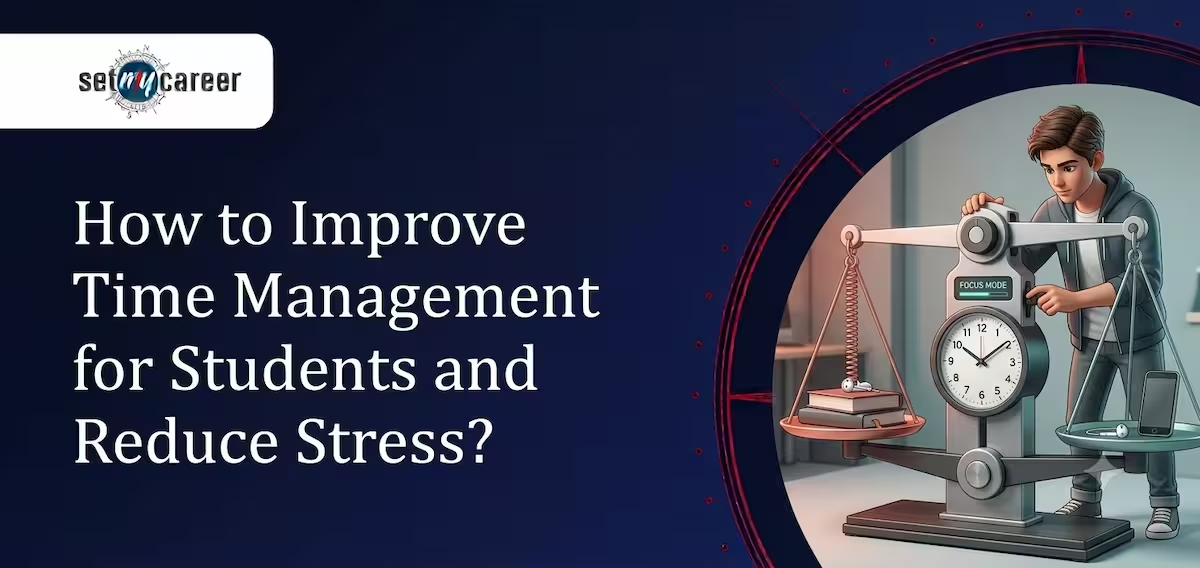
Balancing coursework, extracurricular commitments, and a personal life often feels like a high-wire act. For most students, finding enough hours in the day is a constant struggle, and without a solid system in place, academic pressure can quickly snowball into burnout. Effective time management goes far beyond simply crossing items off a to-do list—it requires intentional decision-making about where you direct your energy and focus.
Career guidance for students includes time management skills essential for academic and career success.
Students who master their schedules do not magically have more free time; they simply know how to allocate their hours to maximize productivity while protecting their well-being. By adopting the right frameworks, you can transition from constantly playing catch-up to feeling completely in control of your academic journey. Let’s explore proven, practical ways to develop this essential life skill.
Why Time Management is Critical for Student Success
Building strong organizational habits does more than just improve your grades. It fundamentally changes how you experience your education. When you prioritize tasks effectively, you create a sustainable routine that supports both your academic ambitions and your personal life. Here is why mastering this skill is so crucial:
- Eliminates Last-Minute Anxiety: Procrastination fuels stress. Effective planning helps you avoid the panic of midnight cram sessions, allowing you to approach exams and project deadlines with a calm, prepared mindset.
- Elevates Academic Performance: When you organize your workload and allocate sufficient time to complex assignments, the quality of your work naturally improves. Rushed work rarely reflects your true potential.
- Sharpens Cognitive Focus: A clear, structured schedule removes the cognitive burden of deciding what to do next. When you know exactly how to manage your time as a student, you can focus deeply on a single subject without background anxiety distracting you.
- Protects Personal Time: A healthy student life requires downtime. Strong time management allows you to balance academics with social events, hobbies, and the importance of extracurricular activities without feeling guilty for taking a break.
- Fosters Lifelong Discipline: Developing a structured routine builds self-regulation and accountability. These are foundational traits that will serve you long after graduation.
- Builds Career Readiness: The ability to juggle competing priorities, meet deadlines, and manage projects independently is exactly what future employers look for. Mastering these habits now sets the stage for long-term professional success.
10 Practical Time Management Strategies for Students
1. Set Clear and Achievable Goals
Start with absolute clarity. What specific outcomes do you need to achieve today, this week, or this month? Break massive, intimidating projects into smaller, actionable steps. For example, instead of writing "work on research paper" on your to-do list, write "outline the introduction and find three academic sources." Highly specific goals provide clear direction, create a sense of momentum, and significantly reduce decision fatigue.
2. Prioritize Tasks Using the Eisenhower Matrix
Not all assignments carry the same weight. The Eisenhower Matrix is a highly effective decision-making tool that helps you organize your workload based on urgency and actual importance. It divides tasks into four distinct quadrants:
- Urgent and Important: Tasks requiring immediate action, such as an essay due tomorrow or studying for an impending midterm. Do these first.
- Important but Not Urgent: High-value activities that contribute to long-term success, like outlining a term paper due next month, reviewing lecture notes, or skill-building. Schedule dedicated time for these to prevent them from becoming emergencies later.
- Urgent but Not Important: Interruptions that demand your attention but offer little academic value, such as responding to casual group chats or running minor errands. Delegate or minimize these whenever possible.
- Neither Urgent Nor Important: Time-wasting activities like mindless scrolling on social media or binge-watching shows during study hours. Eliminate these entirely while working.
3. Stop Attempting to Multitask
While listening to a lecture, texting a friend, and writing an essay simultaneously might feel productive, the human brain is not wired for true multitasking. What you are actually doing is "context switching," which drains mental energy and drastically lowers your retention rate. Protect your focus by working on one specific subject at a time. You will complete the task faster and with far fewer errors.
4. Build a Realistic, Flexible Schedule
A well-structured planner or digital calendar is your strongest defense against chaos. Map out your week by allocating specific time blocks for classes, study sessions, and extracurriculars. However, the secret to a schedule that actually works is realism. Do not pack every single minute with rigorous work. Build in buffer times for unexpected delays and schedule deliberate periods for relaxation. Consistency always outpaces short bursts of perfection.
5. Practice the Pomodoro Technique
Staring at a textbook for three uninterrupted hours usually leads to diminishing returns. Instead, try the Pomodoro Technique: work with intense, uninterrupted focus for 25 minutes, then force yourself to take a 5-minute break to stretch or grab water. After completing four cycles, take a longer 20- to 30-minute break. This rhythm works with your brain's natural attention span, keeping you refreshed and preventing mental fatigue.
6. Learn the Power of Saying No
Overcommitting is a leading cause of student burnout. Whether it’s joining a fourth campus club, taking on extra shifts at a part-time job, or agreeing to social events right before finals, you have to recognize your physical and mental limits. Politely declining requests that do not align with your current academic priorities is a necessary skill for protecting your time.
7. Curate a Distraction-Free Environment
In a world engineered for digital distraction, deep work requires intentional boundaries. Put your phone in another room or use "Do Not Disturb" mode while studying. Designate a specific, quiet workspace that trains your brain to transition into focus mode the moment you sit down. If digital temptations are too strong, use website blockers like Freedom or StayFocusd to restrict access to social media during your study blocks.
8. Protect Your Sleep and Health Habits
You cannot hack your way out of sleep deprivation. Time management fundamentally relies on energy management. Ensure you are getting adequate sleep (seven to eight hours), staying hydrated, and eating nutritious meals. A rested, healthy brain processes information faster, retains memories better, and is far more resilient against the stress of a heavy workload.
9. Conduct a Weekly Review
At the end of each week—perhaps on a Sunday evening—take fifteen minutes to evaluate your progress. Did you underestimate how long your reading assignments would take? Were you easily distracted in the library? Use this reflection period to adjust your schedule for the upcoming week. Continuous, small adjustments keep your routine highly efficient.
10. Ask for Support When You Need It
If you are consistently struggling to keep your head above water despite trying various strategies, do not hesitate to reach out. Speak with academic advisors, form a study group with disciplined peers, or utilize campus tutoring centers. Sometimes, getting a fresh, objective perspective on your workload can help you identify blind spots in your routine.
Building a Sustainable Routine for Long-Term Success
Mastering time management is an ongoing process of trial, error, and refinement. It is not about turning yourself into a highly efficient robot; it is about building a system that allows you to achieve your academic goals while still having the freedom to enjoy your student life. By setting clear intentions, prioritizing ruthlessly, and protecting your focus, you can transform academic stress into predictable success.
If you need personalized guidance on balancing your education, identifying the right academic path, or preparing for your future career, SetMyCareer is here to support you every step of the way. Connect with our expert career coaches to build a stress-free, strategic roadmap for your future.