





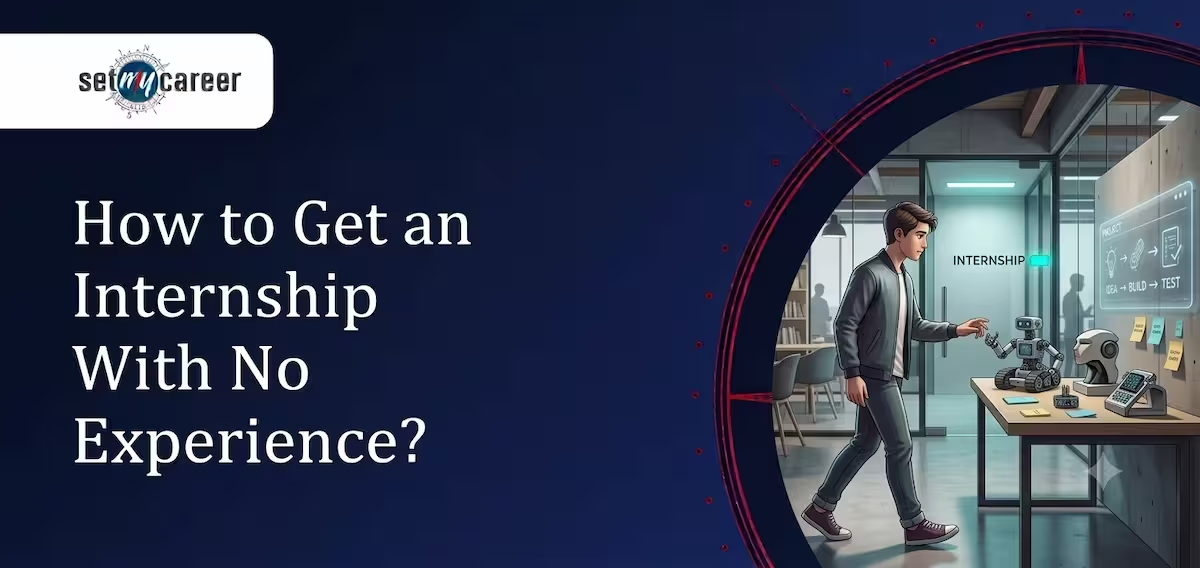
You find an internship listing that aligns perfectly with your goals, open the application, and immediately hit a wall: "Minimum 1 to 2 years of experience required." It is a frustrating Catch-22 that millions of students and recent graduates encounter every year. How are you supposed to gain professional experience if every entry-level role requires it upfront?
Internships provide practical experience and expand career options after graduation.
The truth is that companies hiring interns do not expect a polished work history. What hiring managers actually look for is raw potential, foundational knowledge, adaptability, and a strong work ethic. By shifting your approach from passively applying on job boards to actively demonstrating your capabilities, you can land a valuable internship even with a completely blank resume.
7 Proven Strategies to Secure an Internship Without Experience
Securing your first role requires smart positioning and persistent outreach. Instead of competing on past job titles, focus on showcasing your skills, initiative, and eagerness to learn.
1. Build a Functional Resume That Highlights Projects and Skills
When you lack formal employment history, a traditional chronological resume can work against you. Instead, adopt a functional or skills-based resume format that prioritizes your capabilities over a timeline of job titles.
Fill your education and projects sections with concrete achievements. Feature relevant university coursework, research papers, volunteer positions, student organization leadership, and personal initiatives. For instance, rather than simply listing "Marketing Course," describe a campaign strategy you designed for a class assignment, complete with the tools you used and the results you achieved. Emphasize transferable skills like data analysis, public speaking, technical writing, and problem-solving to show employers you can contribute from day one.
2. Craft a Tailored Cover Letter That Tells Your Story
A well-written cover letter is your secret weapon when your resume lacks formal work history. While a resume lists what you have done, a cover letter explains who you are, why you want the role, and how you intend to add value.
Address the hiring manager directly whenever possible. Explain your interest in the specific company, highlighting recent projects or values that resonate with you. Focus heavily on soft skills such as adaptability, resourcefulness, and communication. Clearly articulate how your academic background and enthusiasm make you an ideal candidate who can learn quickly and support the team's objectives.
3. Leverage Strategic Networking to Access the Hidden Job Market
Industry research consistently shows that more than 70% of open positions are filled through professional connections rather than public job boards. When you lack experience, a warm introduction from a trusted contact carries far more weight than an automated resume submission.
Begin by connecting with university professors, campus alumni, and local industry professionals on LinkedIn. Request brief informational interviews to learn about their career paths and ask for advice on breaking into the field. Attend local industry meetups, career fairs, and virtual webinars. Engaging regularly with professionals in your target sector builds relationships that often lead to unadvertised internship opportunities.
4. Target Startups, Boutique Agencies, and Small Businesses
Large corporations often run hyper-competitive internship programs that rely on automated applicant tracking systems (ATS) to filter out resumes without specific keywords or past experience. In contrast, early-stage startups and small businesses are usually far more flexible.
Smaller companies often face resource constraints and value proactive individuals who are willing to wear multiple hats. In a startup environment, your enthusiasm, flexibility, and willingness to tackle diverse tasks are often prized far above formal corporate credentials. Additionally, working at a smaller company typically gives you broader exposure to business operations and greater project ownership.
5. Build In-Demand Capabilities Through Online Certifications
Proactively learning new tools demonstrates self-motivation and initiative—qualities every manager values. If you are targeting a specific field, take the initiative to learn the foundational software and methodologies used by professionals in that industry.
- Digital Marketing: Complete certifications in Google Analytics, HubSpot Content Marketing, or Meta Social Media Marketing.
- Software Development & IT: Build foundational skills in Python, SQL, Git, or cloud fundamentals through platforms like Coursera, edX, or Udemy.
- Business & Finance: Earn certifications in Advanced Excel, Tableau, Power BI, or basic financial modeling.
Display these credentials prominently on your resume and LinkedIn profile to prove that you possess practical, up-to-date knowledge.
6. Create Your Own Experience Through Personal Projects and Freelancing
Do not wait for a company to give you permission to gain experience—create it yourself. Building a tangible portfolio of work is one of the fastest ways to prove your competence to prospective employers.
If you are pursuing a career in writing, launch a blog or write articles on platforms like Medium. If you are an aspiring designer, build a digital portfolio featuring concept redesigns for existing brands. Programmers can contribute to open-source software projects on GitHub, while business students can offer pro bono consulting or social media management to local non-profits. These self-directed projects provide concrete proof of your skills and give you real-world examples to discuss during interviews.
7. Prepare Thoroughly to Ace the Interview Process
Once you land an interview, your primary goal is to convince the employer that you are reliable, capable, and easy to train. Prepare thoroughly by researching the company's products, services, recent news, and corporate culture.
Practice answering standard behavioral interview questions using the STAR method (Situation, Task, Action, Result). When asked about your lack of formal experience, frame it positively: emphasize your fresh perspective, your up-to-date academic training, and your commitment to working hard. Rehearse your responses out loud to build confidence, maintain steady eye contact, and demonstrate genuine excitement about the opportunity.
4 Common Internship Application Mistakes You Must Avoid
When applying for your first position, avoiding critical missteps is just as important as doing the right things. Steer clear of these frequent errors to keep your application in the candidate pool.
| Common Application Mistake | Why It Harms Your Prospects | What You Should Do Instead |
| Mass-Applying with Generic Resumes | Generic resumes trigger ATS filters and signal a lack of genuine interest to hiring managers. | Customize your resume and cover letter for every role using specific keywords from the job description. |
| Relying Solely on Online Job Boards | Job boards are overcrowded, making it difficult for inexperienced candidates to stand out. | Combine online applications with direct networking, informational interviews, and cold outreach. |
| Attending Interviews Unprepared | Failing to understand the company's mission suggests poor work ethic and a lack of dedication. | Research the company thoroughly and prepare thoughtful, role-specific questions for the interviewer. |
| Dismissing Unpaid or Volunteer Roles | Overlooking non-monetary opportunities can cause you to miss out on exceptional learning experiences. | Evaluate roles based on their learning potential, mentorship, and networking value—not just the stipend. |
How to Request and Obtain an Official Internship Certificate
Completing your internship is a major milestone, but you must ensure you receive formal documentation before your tenure ends. An internship certificate serves as official verification of your employment history, making it essential for future job applications and background checks.
As your internship comes to a close, schedule a brief exit meeting with your supervisor or the HR department to request an official certificate of completion. A standard internship certificate should include:
- Your full legal name and official intern job title
- The exact start and end dates of your internship tenure
- A summary of your key responsibilities, projects, and notable achievements
- An evaluation of your performance, work ethic, and professional conduct
- The official company letterhead, authorized signature, and corporate stamp
Always request both a digital PDF copy and a physical signed hard copy for your records before your last official day.
Why an Internship Certificate Is Vital for Your Career Growth
An internship certificate is far more than a routine exit document—it is a valuable asset that accelerates your long-term career progression in several distinct ways:
- Provides Verified Employment Proof: Background check agencies and corporate recruiters consistently require formal documentation to verify the details listed on your resume.
- Enhances Resume Credibility: Having verified industry experience instantly elevates your profile above competitors who only possess academic credentials.
- Strengthens Postgraduate Applications: Top universities worldwide require official proof of practical industry engagement when evaluating candidates for master's programs and MBA courses.
- Builds Long-Term Professional Confidence: Successfully completing a structured internship validates your capabilities and prepares you for the expectations of full-time corporate roles.
Final Thoughts: Launching Your Career Journey
Landing your first internship without prior experience requires persistence, strategic positioning, and a commitment to continuous learning. By building a skills-focused resume, reaching out to industry professionals, creating your own personal projects, and preparing thoroughly for interviews, you can break the experience barrier and secure a role that aligns with your goals.
Remember that every industry leader started exactly where you are today. Treat the application process as a learning experience, refine your approach with every interview, and focus on demonstrating the value you can bring to a team.
If you need expert guidance to navigate your career path, SetMyCareer is here to support you. Connect with our experienced career counselors to receive personalized guidance, resume reviews, and strategic advice tailored to help you achieve your professional aspirations.