



Stepping out of university with a degree in hand, Vishwa faced a reality that catches many young professionals off guard: a paralyzing abundance of career options coupled with a highly competitive, rapidly shifting job market. Despite her qualifications, she felt overwhelmed and entirely unsure of where to direct her energy. It wasn’t until a mentor recommended seeking professional career consultation that the fog began to lift.
Career consultation can significantly boost your professional development, especially during a career change.
That single decision fundamentally changed the trajectory of Vishwa's professional life. It provided her with an objective assessment of her strengths, a clear understanding of market demands, and a strategic roadmap she desperately needed to move forward with confidence.
The modern workplace is in a constant state of evolution. Driven by technological advancements, shifting economic landscapes, and changing workplace dynamics, the traditional "corporate ladder" has largely been replaced by a more complex professional web. In this environment, having a trusted expert to guide you through the intricacies of career planning is no longer a luxury—it is a strategic necessity.
This article explores the transformative impact of career consultation and how targeted professional guidance can accelerate your growth, whether you are just entering the workforce, navigating a mid-career transition, or planning your eventual retirement.
Understanding the Three Core Phases of a Career Lifecycle
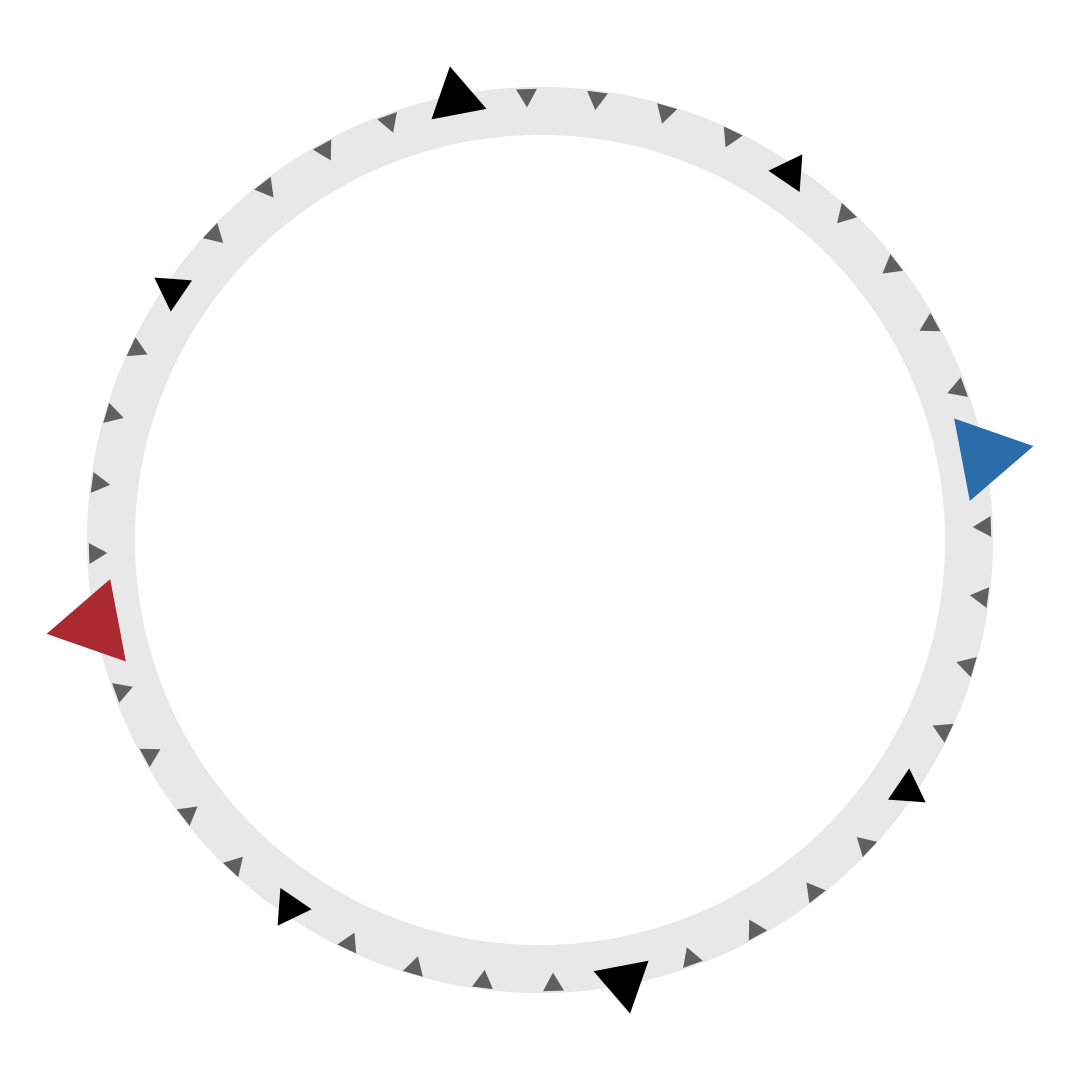
A successful career is rarely a straight line. Instead, it is a lifelong journey that generally moves through three distinct phases. Each stage presents a unique set of challenges, expectations, and opportunities that require entirely different professional strategies.
The Initial or Exploration Phase
Typically occurring in your early twenties right after completing formal education, the exploration phase is characterized by trial and error. This is a period of active self-discovery where young professionals test different roles, acquire foundational hard skills, and begin to understand workplace dynamics. The primary goal during this phase is not necessarily rapid promotion, but rather finding a strong alignment between your natural aptitudes and the realities of the job market.
The Establishment Phase
Once you have gained clarity and foundational experience, you enter the establishment phase. Usually spanning your late twenties through your forties, this is where the bulk of your professional building occurs. During these peak earning years, the focus shifts toward deepening your subject matter expertise, expanding your professional network, taking on leadership responsibilities, and solidifying a personal brand within your industry.
The Maintenance or Reinvention Phase
As professionals enter the later stages of their careers, they often reach a critical crossroads. Some choose the maintenance route, focusing on sustaining their current executive roles, mentoring the next generation of leaders, and maximizing their earning potential before retirement. Others experience a deep desire for reinvention—leveraging decades of accumulated wisdom to pivot into consulting, secure board seats, start a business, or transition into purpose-driven nonprofit work.
While these phases provide a general framework, modern careers are fluid. You might find yourself cycling back to the exploration phase multiple times throughout your life. Regardless of where you currently stand, a career consultant provides the objective perspective necessary to navigate these transitions smoothly.
What Exactly Is Career Consultation?
Career consultation—frequently referred to as career counseling or career coaching—is a specialized professional service designed to help individuals make informed, strategic decisions about their professional lives. A qualified career consultant acts as a strategic partner, utilizing data-driven assessments and industry insights to help clients maximize their potential.
The role of a career consultant encompasses several high-impact responsibilities:
- Comprehensive Career Exploration: Moving beyond simple personality tests, consultants help clients map their deeply held values, interests, and cognitive strengths to viable, high-growth market opportunities.
- Strategic Goal Setting: Helping individuals translate vague ambitions into realistic, time-bound objectives, ensuring steady momentum rather than aimless drifting.
- Objective Skill Assessment: Conducting thorough audits of a client's hard technical skills and soft interpersonal skills to identify critical gaps and recommend high-ROI upskilling opportunities.
- Modern Job Search Strategies: Providing actionable tactics for navigating Applicant Tracking Systems (ATS), optimizing LinkedIn profiles, tapping into the hidden job market, and mastering behavioral interviews.
- Navigating Career Transitions: Designing risk-mitigated roadmaps for professionals facing unexpected job loss, executing a major industry pivot, or returning to the workforce after a prolonged absence.
How Career Consultation Accelerates a Fresher’s Professional Development
Entering the workforce without a strategy often leads to accepting misaligned roles out of desperation, which can stall long-term earning potential. For recent graduates, career consultation provides a massive competitive advantage:
- Guided Self-Discovery: Through structured psychometric assessments and guided reflection, consultants help entry-level candidates articulate their strengths and weaknesses long before they sit down for an interview.
- Targeted Industry Exploration: Consultants bridge the gap between academic theory and industry reality, introducing freshers to lucrative roles and emerging sectors they likely never knew existed.
- Tactical Job Search Preparation: Rather than blasting out generic resumes, freshers learn how to tailor their application materials for specific roles, craft compelling cover letters, and confidently handle challenging interview scenarios.
- Realistic Milestone Setting: Setting achievable 1-year and 3-year goals helps young professionals stay focused, avoiding the burnout and frustration that often accompany the early years of a career.
- Foundational Networking Guidance: Consultants demystify the networking process, teaching freshers how to conduct informational interviews, build mutually beneficial relationships, and leverage alumni networks effectively.
The Value of Career Consultation for Mid-Career and Senior Professionals
The stakes are significantly higher for experienced professionals. A misstep at the mid-career or executive level can cost years of earning potential and professional momentum. For seasoned experts, career consultation shifts from basic job search tactics to high-level career management:
- Strategic Career Advancement: Identifying leadership blind spots, optimizing executive presence, and providing negotiation strategies to secure promotions, equity, or higher compensation packages.
- Seamless Industry Transitions: Helping established professionals extract their highly transferable skills—such as cross-functional leadership, P&L management, or strategic planning—and market them effectively to entirely new industries.
- Optimizing Work-Life Integration: Guiding high-achievers who are facing burnout toward roles or alternative work arrangements (such as fractional executive work or remote leadership) that align with shifting personal priorities.
- Exploring Entrepreneurial Pursuits: Assisting senior professionals in safely transitioning from employee to founder by validating business concepts, structuring exit strategies, and leveraging existing industry networks.
- Strategic Retirement Planning: Helping executives phase out of full-time corporate grinds and into fulfilling post-career opportunities, such as advisory roles, board memberships, or academic teaching.
Overcoming Career Breaks, Transitions, and Major Pivots with Expert Guidance
Some of the most stressful professional moments occur outside of the standard corporate climb. Career consultants are particularly valuable during periods of significant professional disruption.
Re-entering After Career Breaks
Whether a gap in employment is due to raising children, caring for a sick relative, recovering from an illness, or navigating a sudden layoff, re-entering the workforce can feel incredibly daunting. Career consultants help individuals reframe these gaps constructively, update obsolete skills, rebuild shattered professional confidence, and position their time away as a period of personal growth and resilience.
Navigating Complex Career Transitions
Walking away from a successful but unfulfilling career to start over in a new field carries massive emotional and financial risks. A consultant acts as an objective sounding board, helping you research new industries, identify necessary certifications, and build a phased transition plan that minimizes income disruption while maximizing long-term satisfaction.
Executing Strategic Career Pivots
Sometimes you love your industry but have outgrown your specific function—for example, a senior software engineer wanting to pivot into product management. Career consultants help you map the internal politics of lateral moves, identify the specific skill gaps you need to close, and help you rebrand your internal reputation to successfully secure a new trajectory without sacrificing your hard-earned seniority.