

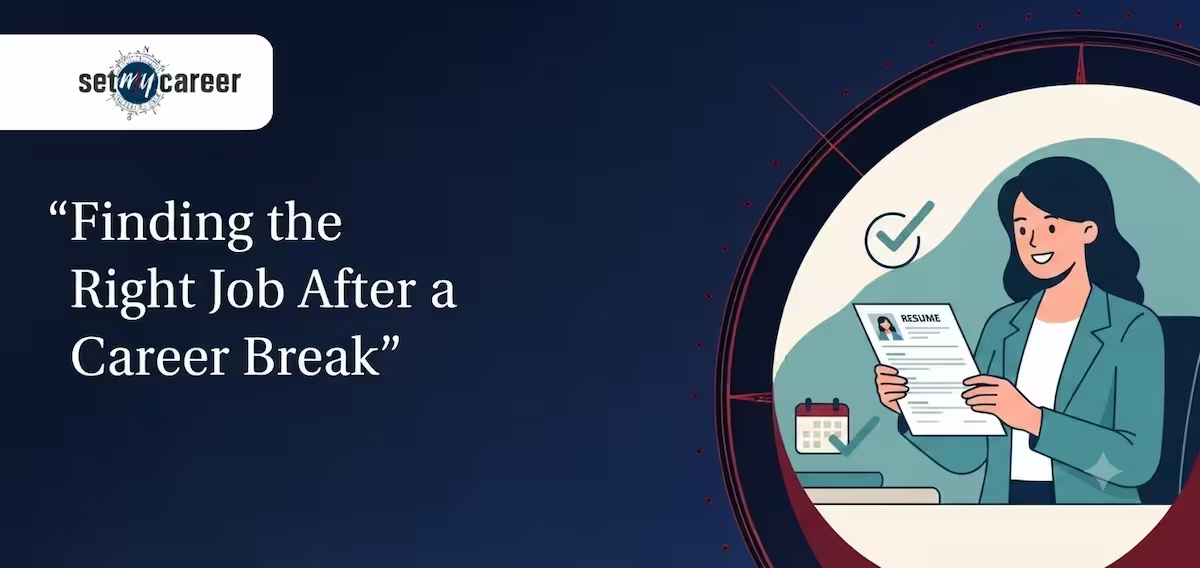
So, you took a pause in your professional journey. Maybe you stepped away to care for young children, support an aging family member, pursue an advanced degree, navigate a health challenge, or simply to recharge and gain some much-needed perspective. Whatever the reason behind your time away, you are now contemplating the return, and it is entirely normal to feel a complex mix of excitement, uncertainty, and a few nerves.
If you are looking at your resume and wondering, "How do I even start searching for jobs after a career break?" you are far from alone. Millions of professionals navigate this exact transition every year. While re-entering the workforce might feel intimidating, the path forward is highly manageable. In many cases, a well-planned return can lead to a more fulfilling and aligned role than the one you left behind.
Let's look at how you can strategically approach finding a job that matches your current aspirations while leveraging the unique, real-world experiences you gained during your time away.
Reframing Your Career Break: Why a Resume Gap is Actually a New Chapter
Before you send out a single application, you need to shift your internal perspective. Your career break is not a blank void on your resume—it is a period where you lived, learned, adapted, and grew.
Whether you were managing a bustling household, dedicating time to volunteer work, freelancing, upskilling, or focusing on personal resilience, you were actively developing highly transferable abilities. Skills like complex problem-solving, advanced time management, crisis navigation, and empathy do not disappear just because you aren't on a corporate payroll.
Viewing your break as a period of active development is crucial. If you treat your time away as a liability, interviewers will too. When you confidently frame it as a deliberate and valuable chapter of your life, potential employers will respect the narrative you present.
A Step-by-Step Action Plan to Finding the Right Job After a Career Break
Returning to the workforce should not be about grabbing the first job offer that comes your way. It is about identifying the right fit for this new phase of your life. Here is a structured approach to mapping out your return:
Introspection: Defining Your Post-Break Career Goals
The professional returning from a break is rarely the exact same person who left. Your priorities, personal interests, and what you consider a healthy work-life balance have likely shifted.
Take time for honest self-reflection before you begin applying. What kind of corporate culture are you seeking? Does your current lifestyle require a remote or hybrid role? What specific aspects of your previous jobs energized you, and which ones drained you? Defining your non-negotiables early on saves you from pursuing roles that no longer serve your needs.
Inventory Your Transferable Skills (Including Break-Acquired Abilities)
Start by listing the core professional competencies you possessed before your break. Then, take a hard look at the skills you utilized during your time away.
Did you manage strict household budgets, coordinate complex family schedules, learn new digital tools, volunteer for a local non-profit, or master multitasking under intense pressure? These are highly valuable soft skills. Identify the crossover between the abilities you have honed and the requirements of the roles you want to pursue.
Upskill and Reskill Strategically
Industries move quickly, and technology evolves even faster. Based on your desired career path, identify any knowledge gaps and invest time in strategic upskilling.
Completing relevant online courses (via platforms like Coursera, LinkedIn Learning, or edX), earning industry-specific certifications, or attending virtual workshops can make a massive difference. Not only does this refresh your technical knowledge, but it also signals to hiring managers that you are proactive, self-motivated, and ready to hit the ground running.
Research the Current Job Market
What constituted a highly sought-after role or required skill set when you left the workforce may have changed entirely. Spend time researching the current landscape of your target sector.
Analyze dozens of job descriptions to understand modern vocabulary, required software proficiencies, and current salary benchmarks. Additionally, actively look for organizations known for hosting "returnships" (structured return-to-work programs) or offering flexible work arrangements. These programs are specifically designed to help professionals reintegrate smoothly.
Polish Your Professional Profile
Your marketing materials need a refresh. Update your resume to reflect your most recent skills and experiences. Instead of leaving an unexplained gap, address your career break clearly and confidently. You can use brief, professional phrasing such as "Planned Career Break for Family Care" or "Sabbatical for Independent Study and Travel," followed by a bullet point highlighting a relevant skill maintained or gained during that time.
On LinkedIn, utilize their dedicated "Career Break" feature to explain your gap natively on the platform. Ensure your headline reflects the roles you are targeting now, and actively engage with industry content to signal that you are back in the professional conversation.
Network, Network, Network!
Applying through online portals is rarely the most effective way to land a job after a hiatus. Reach out to former colleagues, past managers, industry contacts, and university alumni.
Send a brief, friendly message letting them know you are re-entering the market and asking if they have time for a quick informational chat. Professional networking uncovers the hidden job market—roles that are filled internally or via referral before they ever make it to a public job board.
Be Open to Different Avenues
A full-time, permanent position is not the only way to re-enter your industry. Consider contract roles, freelance consulting, part-time work, or project-based assignments. These alternative arrangements allow you to ease back into a professional routine, immediately add recent experience to your resume, and build fresh industry connections that often transition into full-time offers.
Practice Your Narrative
You will inevitably be asked about your career break during interviews. The key is to prepare a concise, positive explanation. Keep the details of why you left brief, and quickly pivot to why you are excited to return and the specific value you bring to the company now. Frame the gap as a period of personal growth that has ultimately made you a more focused, resilient, and capable candidate.
Navigating the Market: Exploring Jobs for Women with a Career Break
A significant percentage of career breaks are taken by women assuming caregiving responsibilities. If this is your situation, recognize that the corporate landscape is shifting. Forward-thinking companies are increasingly recognizing the immense, untapped talent pool of women returning to the workforce.
Do not hesitate to prioritize employers that champion diversity, equity, and inclusion (DEI) initiatives. Look for organizations that explicitly advertise flexible jobs for women with a career break or offer formal return-to-work corporate pipelines. Your experiences outside the traditional office environment are valid, and the right employer will view your unique perspective as a distinct asset to their team.
Conclusion
Finding the right job after a career break is a multifaceted process that requires patience, deep self-awareness, and a proactive strategy. Your time away has undoubtedly equipped you with fresh perspectives, enhanced resilience, and practical skills that you may not have fully recognized yet.
Embrace this transition with the confidence you deserve. Focus on the tangible value you bring to the table, articulate your professional story with pride, and lean heavily on your network. The job market is vast, and with strategic planning and guidance from career experts, you can absolutely secure a role that represents a powerful step forward in your evolving career journey.