






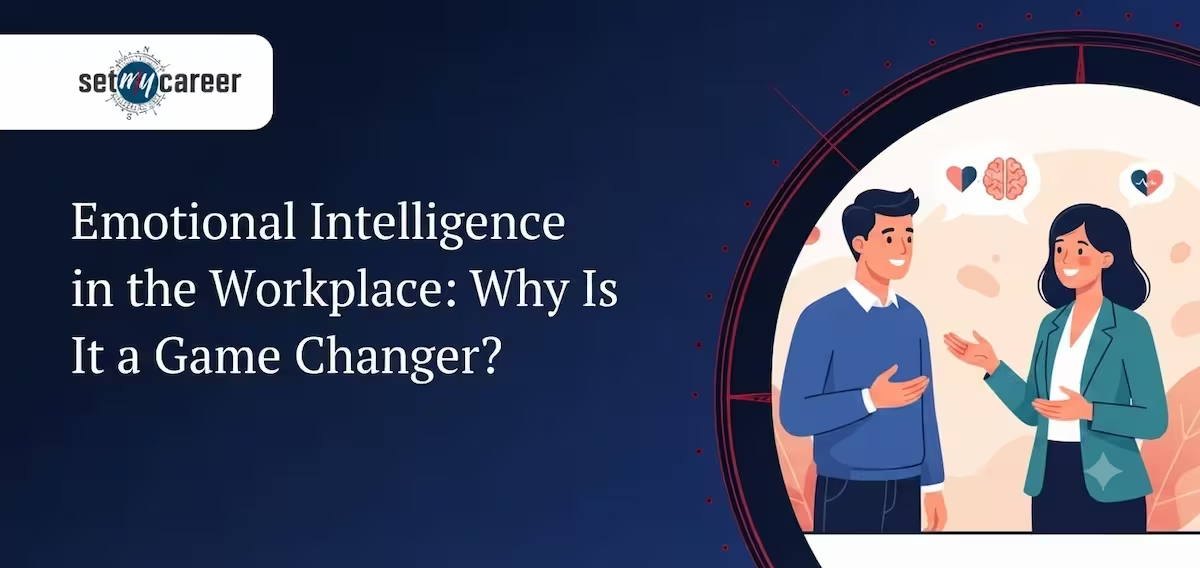
Technical skills might get your foot in the door, but emotional intelligence determines how high you climb. While academic achievements and hard skills establish your baseline competence, your ability to navigate complex interpersonal dynamics is what truly sets you apart in the modern workplace. If you struggle to manage stress, react impulsively to feedback, or fail to connect with colleagues, you will likely find yourself passed over for promotions—especially for leadership roles that require team cohesion and strategic thinking.
This guide explores the profound impact of emotional intelligence in the workplace. We will break down the defining traits of highly emotionally intelligent professionals, examine how these skills accelerate career growth, and provide actionable steps to improve your emotional quotient (EQ) if you feel it is holding you back.
What Is Emotional Intelligence?
Emotional intelligence is the ability to recognize, understand, manage, and positively influence your own emotions, as well as the emotions of the people around you. It goes far beyond simply being "nice." High EQ involves accurately interpreting interpersonal cues, navigating conflict with empathy, and making rational decisions even when under immense pressure.
Consider a scenario where you manage a high-stakes project. The moment a team member makes a minor mistake, you lose your temper and reprimand them in front of the group. Will your team feel comfortable bringing future problems to your attention? Will they respect your leadership? Almost certainly not. They will likely avoid you, leading to communication breakdowns and poor team performance.
Similarly, a professional who becomes easily offended by constructive criticism or isolates themselves from collaborative efforts will naturally limit their own career progression. Emotional intelligence is the bridge between raw talent and applied professional success.
Signs of High Emotional Intelligence (And Why It Transforms Your Career)
Self-Awareness: Understanding Your Internal Triggers
An emotionally intelligent person operates with a high degree of self-awareness. They understand their emotional baseline, recognize exactly what triggers their frustration or anxiety, and know how those feelings influence their behavior. Because they understand the "why" behind their emotions, they can choose the most appropriate response rather than reacting on autopilot.
Workplace Example: Imagine you are in a high-level meeting. You contributed heavily to a successful project, but your manager publicly praises a colleague while seemingly ignoring your efforts. It is completely natural to feel slighted. However, instead of reacting defensively or shutting down for the rest of the meeting, a self-aware professional analyzes the situation. They process the frustration internally and decide to address the oversight privately with their manager later, framing the conversation constructively rather than emotionally.
Advanced Social Skills and Communication
Professionals with high EQ are exceptional communicators. They know how to deliver difficult messages without causing unnecessary offense or damaging relationships. Rather than labeling a subordinate as "incompetent" for missing a target, an emotionally intelligent leader identifies the specific performance gap and provides the exact resources—such as targeted training or adjusted workflows—needed to help that person succeed.
Workplace Example: When receiving critical feedback, an employee with high emotional intelligence does not view the critique as a personal attack. They separate their self-worth from their work output. By actively listening to the feedback and applying it to their daily routines, they continuously refine their skills and demonstrate remarkable professional maturity to their superiors.
Self-Regulation Under Pressure
Maintaining composure during stressful situations, resisting impulsive decisions, and demonstrating consistent self-discipline are the hallmarks of emotional self-regulation. Professionals who exhibit this trait are highly sought after for demanding roles—such as Project Managers, Team Leads, and Chief Operating Officers—because they bring stability to chaotic environments.
Workplace Example: A critical client deadline is approaching, and a key team member submits incomplete, subpar work. Instead of sending an angry email or panicking, the emotionally intelligent manager takes a deep breath and regulates their immediate frustration. They approach the team member calmly, provide clear and actionable corrections, and collaboratively build a rapid recovery plan to ensure the project crosses the finish line on time.
Empathy and Organizational Awareness
Empathy is the capacity to put yourself in someone else's position and genuinely understand their perspective. When colleagues and direct reports feel heard and validated, they are far more likely to share innovative ideas, admit to mistakes early, and ask for necessary help. Cultivating empathy fosters a collaborative environment, drastically reduces turnover, and boosts overall team productivity.
Workplace Example: You notice a newly hired coworker struggling to speak up during strategy meetings, visibly shrinking back when asked for input. Instead of ignoring the behavior or writing them off as a poor cultural fit, you check in with them privately. You offer reassurance, validate their expertise, and suggest a few low-pressure ways they can introduce their ideas in the next meeting. Over time, your empathy helps them build confidence, transforming a hesitant newcomer into an active, valuable contributor.
Actionable Steps to Improve Your Emotional Intelligence
While some people naturally lean toward high EQ, emotional intelligence is absolutely a learnable skill. It requires consistent effort and a willingness to confront your own behavioral patterns. Here are several practical steps to elevate your emotional intelligence:
- Track Your Emotional Triggers: You cannot fix a problem you refuse to acknowledge. Start a private log of your emotional reactions at work. Document what specifically triggers your stress, when you feel the urge to respond impulsively, and how you wish you had reacted in hindsight. Identifying these patterns is the first step toward changing them.
- Monitor Your Physiological Responses: We often ignore the physical warning signs of an emotional reaction. Does your heart rate spike when a specific client calls? Do your shoulders tense up during performance reviews? Recognizing these physiological cues allows you to intercept your emotions early. When you feel that physical shift, utilize a brief breathing technique or temporarily step away to reset your nervous system.
- Cultivate Emotional Impulse Control: Building willpower is essential for emotional regulation. The next time you are faced with a difficult colleague or an infuriating email, practice the "pause." Force yourself to wait before speaking or hitting send. That brief window of forced silence is where rational decision-making takes over from emotional reactivity.
- Practice Self-Compassion: Professional growth is a messy process. Be kind to yourself when you fall short of your own expectations, and acknowledge your progress when you successfully navigate a tough interpersonal conflict. Research consistently shows that individuals who practice self-compassion are highly correlated with possessing deep empathy for others.
- Master Active Listening: The most emotionally intelligent professionals often speak the least. Focus on listening to understand, rather than listening to formulate your next reply. By giving people your undivided attention, you build immense trust, accurately read the emotional undercurrents of the conversation, and respond with much greater tact.
- Expand Your Social Interactions: Do not isolate yourself behind a screen. Actively engage with colleagues from different departments and backgrounds. Use these interactions as a testing ground for your EQ skills. Practice taking minor criticisms gracefully, seek to understand the motivations of difficult coworkers, and actively look for opportunities to demonstrate compassion.
Conclusion
An emotionally intelligent professional possesses the rare ability to find constructive paths forward, even in deeply negative or stressful situations. This resilience is exactly why individuals with high EQ are prioritized for leadership, trusted with high-stakes client relationships, and respected by their peers.
It is important to acknowledge that not all emotional hurdles can be overcome through sheer willpower alone. If you find that workplace stress, anxiety, or deep-seated behavioral patterns are severely impacting your career and well-being, seeking guidance from a licensed psychological counselor or executive coach can be incredibly beneficial. Suffering in silence drains your potential and damages your mental health. Ultimately, long-term career success relies just as much on how you manage yourself and collaborate with others as it does on the technical expertise you bring to the table.