





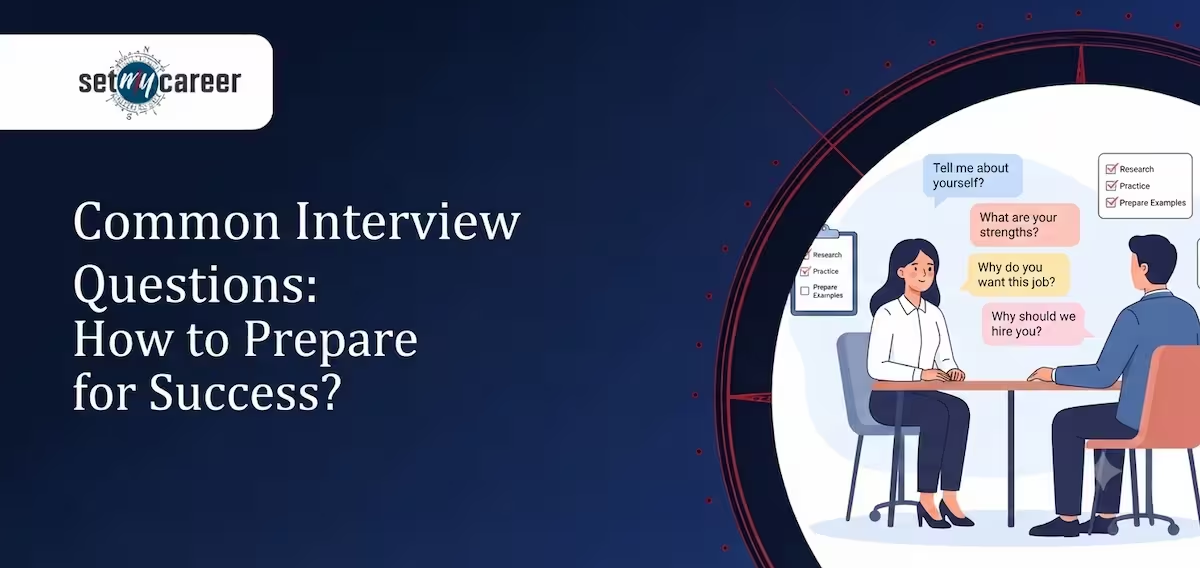
The big day has finally arrived—you’ve landed an interview for a role you genuinely want. Your resume is polished, your outfit is ready, and you’ve spent hours researching the company. But as you sit in the lobby or wait for the video call to connect, the nerves start to creep in. You know the classic questions are coming: “Tell me about yourself.” “Why should we hire you?”
Preparing for common interview questions helps professionals succeed in their career change.
While these prompts seem straightforward, they are often the hardest to answer on the spot. How you respond can set the tone for the entire conversation and ultimately determine whether you get an offer. If you are struggling with how to project confidence during an interview, preparation is your best defense. In this guide, we will break down the most common interview questions and provide actionable strategies to help you craft compelling, authentic answers that leave a lasting impression.
Step-by-Step Guide to Answering Common Interview Questions
1. “Tell me about yourself” – Craft Your Professional Narrative
This is almost always the first question you will face. While it sounds like an open invitation to share your life story, hiring managers are actually looking for a concise, targeted summary of your professional journey. This is your baseline introduction, and it needs to highlight exactly why you are sitting in that chair.
The Strategy: Use the Present-Past-Future Framework.
- Present: Start with your current role. Briefly explain what you do and highlight a major responsibility or recent win.
- Past: Work backward to mention previous experience that directly relates to the job you want. Focus on quantifiable achievements rather than just listing past duties.
- Future: Conclude by explaining why you are excited about this specific opportunity and how it aligns with your career trajectory.
Why it matters: Employers want to see if you can communicate complex information clearly and coherently. By keeping your answer focused on how your background aligns with the job description, you immediately establish yourself as a highly relevant candidate.
2. “Why do you want to work here?” – Align Your Goals with the Company
This question separates the candidates who are mass-applying to hundreds of jobs from those who genuinely want to work for this specific organization. It is your chance to prove you’ve done your homework.
The Strategy: Go Beyond the Homepage.
- Research the company’s recent news, product launches, or community initiatives. Read insights from their leadership team on LinkedIn.
- Identify one or two specific aspects of the company’s culture, mission, or market position that genuinely resonate with you.
- Connect those aspects directly to your own professional aspirations and values.
Why it matters: Hiring managers want to build teams with people who are invested in the company's success. If you can articulate exactly how their innovative environment or customer-first approach matches your own working style, you transition from a standard applicant to a potential team member.
3. “What are your strengths?” – Showcase Your Skills with Real Evidence
This is your green light to confidently advocate for yourself. However, claiming you are a "hard worker" or a "perfectionist" rarely stands out. You need to provide context.
The Strategy: Tell a Story.
- Select two or three strengths that are explicitly mentioned in the job description.
- Back up each claim with a specific, real-world example using the STAR method (Situation, Task, Action, Result).
- For example, rather than just saying you have strong project management skills, describe a time you led a cross-functional team to deliver a critical project two weeks ahead of schedule.
Why it matters: Anyone can read off a list of positive adjectives. By providing clear evidence of your skills in action, you allow the interviewer to visualize you replicating that success within their organization.
4. “What is your greatest weakness?” – Be Honest, Tactful, and Proactive
This notoriously tricky question is not a trap designed to make you disqualify yourself. Instead, it is an assessment of your self-awareness and your ability to handle constructive feedback.
The Strategy: Focus on the Fix.
- Avoid cliché answers like "I care too much" or "I work too hard." They come across as insincere.
- Choose a genuine weakness that is not a core requirement for the role. (For example, if you are an accountant, don't say you struggle with numbers. Instead, you might mention public speaking).
- Spend 20% of your answer explaining the weakness, and 80% explaining the actionable steps you are taking to improve it.
Why it matters: Employers value growth-minded individuals. Sharing that you recognized a gap in your skillset—such as struggling with delegation—and successfully addressed it by implementing project management software shows maturity and initiative.
5. “Where do you see yourself in five years?” – Demonstrate Realistic Ambition
Interviewers ask this to gauge your longevity. Hiring and onboarding a new employee is expensive, and they want to ensure you aren't planning to leave after six months.
The Strategy: Connect Your Future to Their Future.
- You don't need to have a rigid, step-by-step master plan. Instead, focus on the types of experiences you want to gain and the value you want to add.
- Express an interest in mastering the role you are applying for, eventually taking on more complex responsibilities, or perhaps stepping into leadership or mentorship.
- Ensure your goals make sense within the context of the company's typical career paths.
Why it matters: A thoughtful answer reassures the employer that you view this position as a foundational step in a long-term career, making you a worthwhile investment for their team.
6. “Why did you leave your last job?” – Keep It Professional and Forward-Looking
Whether you were laid off, quit because of a toxic manager, or are simply looking for a pay bump, the way you frame your departure speaks volumes about your character.
The Strategy: Focus on the "Pull," Not the "Push."
- Never badmouth a former employer, boss, or colleague. Negativity in an interview is an immediate red flag.
- Keep your explanation brief, neutral, and factual.
- Quickly pivot the conversation toward what you are looking for *next*. Frame your departure around seeking new challenges, desiring a different company culture, or wanting to specialize in a specific area that your previous role didn't offer.
Why it matters: Maintaining a positive, forward-looking tone demonstrates high emotional intelligence and professionalism. It shows you handle transitions with grace and are focused on future opportunities rather than past grievances.
Conclusion
Nailing a job interview rarely comes down to sheer luck. It is the direct result of deliberate preparation, strategic thinking, and the ability to present your professional story authentically. By taking the time to anticipate common questions, align your past experiences with the company's current needs, and practice your delivery, you strip away the anxiety and replace it with genuine confidence.
Remember that an interview is a two-way street. You are evaluating the employer just as closely as they are evaluating you. Walk into the room (or join the call) knowing the unique value you bring to the table.
If you are looking to refine your interview technique, optimize your resume, or map out your next major career move, professional guidance can make all the difference. Connect with the experts at SetMyCareer today for personalized coaching and resources designed to help you secure the opportunities you deserve.