

Have you ever found yourself sitting at your desk, going through the motions, and realizing that the work in front of you no longer brings you any sense of fulfillment? You might catch yourself dreaming about making a dramatic change, starting fresh on a brand-new career path, only to be immediately held back by the fear of the unknown.
You are certainly not alone in this experience.
Most professionals eventually reach a career crossroads where they must decide whether to stay in a comfortable, stable—yet entirely uninspiring—job, or take a calculated leap into a new industry. The prospect of completely changing careers can feel overwhelming. However, pushing past that initial fear often leads to the most rewarding, engaging, and purposeful work of your entire life.
The Psychology of Career Changes: Balancing Pain and Pleasure
Deciding to walk away from the professional equity you have built is never a simple choice. It inherently involves a complex mix of anxiety and excitement. How do you actually know if making a massive career pivot is the right strategic move? And if you do decide to jump, what does the reality of that transition look like?
Having navigated a major career shift myself, I want to pull back the curtain on what you can genuinely expect. Understanding the inevitable friction—as well as the massive upside—will help you prepare for the journey ahead.
What Is a Career Transition?
A career transition is distinctly different from a standard job hunt. It means leaving your current professional trajectory entirely to shift into a new field, industry, or discipline. Rather than just taking the same job title at a competing company, you undergo a professional metamorphosis guided by your evolving interests, strengths, and life goals.
This could look like a corporate banker pivoting to high school education, a registered nurse moving into health-tech software sales, or a lawyer becoming a freelance copywriter. Because you are entering unfamiliar territory, transitioning requires a complete reboot of your professional narrative. You must learn a new industry vocabulary, build a new network, and figure out how to translate your past experience into fresh credibility.
While this route carries undeniable risk, it is often the only permanent escape from chronic career stagnation. It is a holistic shift that demands time, deliberate effort, and a highly strategic approach to execute successfully.
Common Reasons for a Career Transition
Professionals consider radical career changes for a multitude of reasons. Some simply outgrow the roles they once loved and desperately need a new intellectual challenge. Others reach a breaking point with toxic workplace dynamics, hit an unbreakable salary ceiling, or realize their current lifestyle is completely unsustainable.
Whether your motivation stems from deep dissatisfaction or a positive yearning for personal growth, the drive to change is usually valid. If you are debating whether you need a new job or a completely new career, look for these telling signs:
- The Sunday Scaries are constant: You actively dread waking up and going to work most days of the week.
- Values misalignment: The daily realities of your industry fundamentally conflict with your core personal values.
- Skill stagnation: You feel like you haven't learned anything new or developed a meaningful skill in years.
- Total apathy: You find yourself completely disengaged during meetings, projects, and performance reviews.
- Persistent daydreaming: You regularly fantasize about doing something radically different with your life.
If several of these descriptions resonate with your current situation, you owe it to your future self to start exploring other viable options.
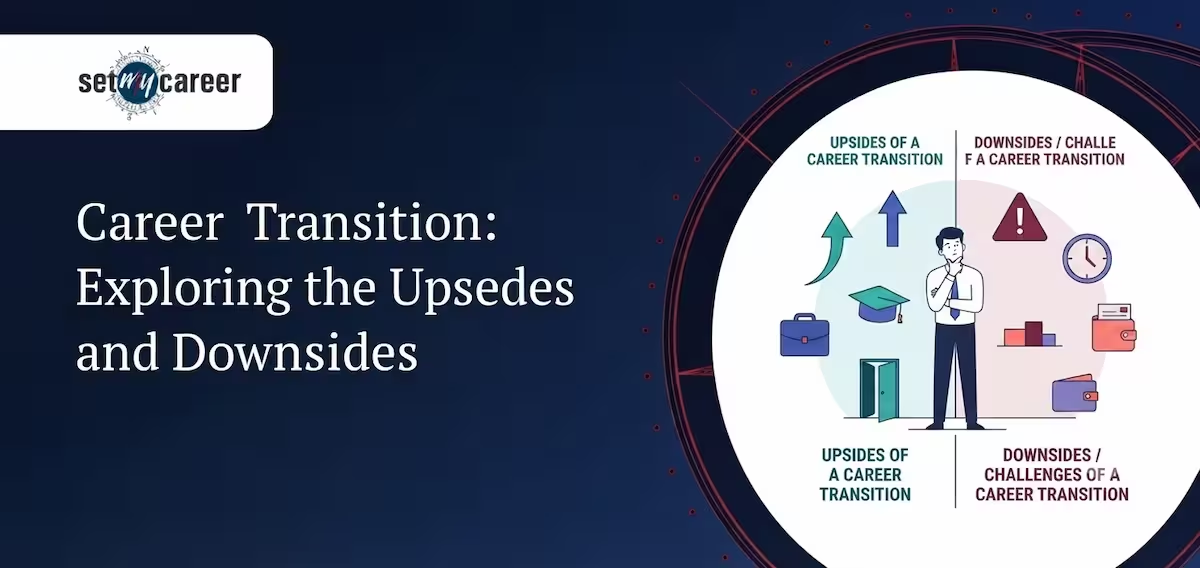
The Downside: Cons of a Career Transition
While reinventing your professional life can reignite your passion, the road to get there is rarely smooth. To succeed, you need to mentally prepare for the friction. Here are the most common hurdles you will encounter:
Temporary Pay Cuts and Financial Strain
Unless your transferable skills perfectly align with a high-paying demand in your new field, you will likely need to take a step back in compensation. Re-entering a field at a junior or mid-level position means your paycheck will temporarily reflect that. This requires serious financial planning, strict budgeting, and a willingness to make lifestyle sacrifices while you rebuild your earning power.
Lost Professional Momentum
The hard-earned reputation, internal influence, and robust network you held in your former career do not automatically follow you into a new industry. You will essentially have to start from scratch to prove your competence and reliability. Rebuilding your credibility from the ground up requires deep humility and resilience.
A Steep Learning Curve
Depending on how drastic your pivot is, you will face an intense period of learning. A marketing manager transitioning into front-end web development, for example, faces hundreds of hours of studying before they can even apply for entry-level roles. This curve can trigger severe imposter syndrome. You must learn to balance continuous education with your daily responsibilities without burning out.
Explaining Your Decision to Skeptics
Well-meaning family members, friends, and colleagues will likely question your judgment—especially if you are walking away from a prestigious title or a high salary. You need to develop a clear, confident narrative explaining your "why." Working with a certified career counselor can help you validate your choice internally, giving you the armor needed to handle external skepticism.
The Risk of Burning Bridges
If you let the excitement of your new path distract you from finishing strong in your current role, you risk damaging valuable relationships. Abruptly quitting or leaving your team in a bad spot hurts your professional reputation. Always prioritize a seamless handover, offer knowledge-transfer sessions, and exit with absolute integrity.
While these challenges are daunting, they are not permanent roadblocks. They are simply the necessary growing pains that separate those who dream about change from those who actually achieve it.
The Upside: Pros of a Career Transition
The initial discomfort of a career change is a small price to pay for decades of professional fulfillment. When you finally align your daily work with your natural talents and authentic interests, the benefits are life-changing.
Unprecedented Autonomy
When you proactively engineer a career change, you stop reacting to the limited options handed to you and start calling the shots. You get to define what success looks like on your own terms. This level of autonomy is highly empowering and immediately improves your baseline mental health and work-life balance.
A Broader Vision for Your Impact
A fresh start gives you permission to think expansively about the legacy you want to leave. Whether you want to build better technology, help people improve their health, or create compelling art, pursuing work that resonates with your core values leads to a profound sense of daily purpose.
Access to New Professional Networks
As you enter a new field, you will seek out fresh mentors, attend different industry events, and collaborate with a completely new demographic of professionals. This expands your worldview. Studies consistently show that building a new, supportive network accelerates learning and boosts self-confidence during transitional periods.
Mastering and Applying Transferable Skills
A career pivot forces you out of your comfort zone, necessitating rapid self-development. However, you aren't arriving empty-handed. You get the unique thrill of taking the versatile skills you already mastered—such as crisis management, client communication, or data analysis—and applying them to novel problems in your new industry. You possess far more intellectual capital than you realize.
Passion-Fueled Motivation
When you actually care about the outcome of your work, your energy levels naturally rise. The stress of learning a new skill feels entirely different than the draining stress of a toxic job. This intrinsic motivation allows you to upskill rapidly, outpace uninspired competitors, and actually enjoy the process of building your new career.
5 Proven Strategies to Smooth Your Career Transition
If you are ready to take the leap, you need a pragmatic execution strategy. Use these five steps to minimize the risk and accelerate your transition.
1. Deep-Dive Into Industry Requirements
Before making any drastic moves, conduct thorough research on the exact technical and soft skills required in your target role. Look at dozens of job descriptions and identify the recurring requirements. Build a structured study plan—utilizing certifications, bootcamps, or online courses—to close your knowledge gaps before you ever submit an application.
2. Test the Waters with Freelance or Part-Time Work
You do not have to quit your day job immediately to start your transition. Look for ways to moonlight in your new field. Take on a small freelance project, consult on the weekends, or volunteer your services to a non-profit. This allows you to build a tangible portfolio and verify that you actually enjoy the work without disrupting your primary income.
3. Maintain Open Communication and Leave Gracefully
If you are planning to leave your current employer, handle the exit professionally. Alternatively, if you want to pivot into a new department within your current company, schedule a candid conversation with your manager. Discuss your strengths, the skills you are actively developing, and your desire to take on different types of projects. Sometimes, the easiest career transition happens right under your current employer's roof.
4. Audit and Highlight Your Transferable Skills
Your previous experience is your greatest asset if you know how to frame it. Take a hard inventory of the versatile skills that bridge the gap between your old career and your new one. When rewriting your resume and cover letter, explicitly connect the dots for hiring managers so they understand exactly how your unique background makes you a highly capable candidate.
5. Network Relentlessly
Applying through generic job boards is the hardest way to change careers. Instead, focus on building human connections. Reach out to professionals in your target industry on LinkedIn and request 15-minute informational interviews. Ask them about their daily challenges, what they wish they knew when they started, and what specific advice they have for a transitioning professional. Insider referrals are the fastest way to bypass the traditional resume pile.
Conclusion: Taking the Leap Toward Professional Fulfillment
No two career transitions will ever look exactly the same. Your journey will be uniquely shaped by your financial realities, your industry, and your personal goals. What remains universally true, however, is that making a major professional pivot requires realistic expectations, steady persistence, and a high degree of courage.
By carefully evaluating your finances, committing to continuous learning, and strategically leveraging your past experience, you can mitigate the risks of starting over. When the learning curve feels impossibly steep or self-doubt creeps in, anchor yourself to the reason you started this process in the first place: the pursuit of daily purpose and a more expansive, positive impact on the world. You have the capability to reinvent your professional life—all you have to do is take the first calculated step.