






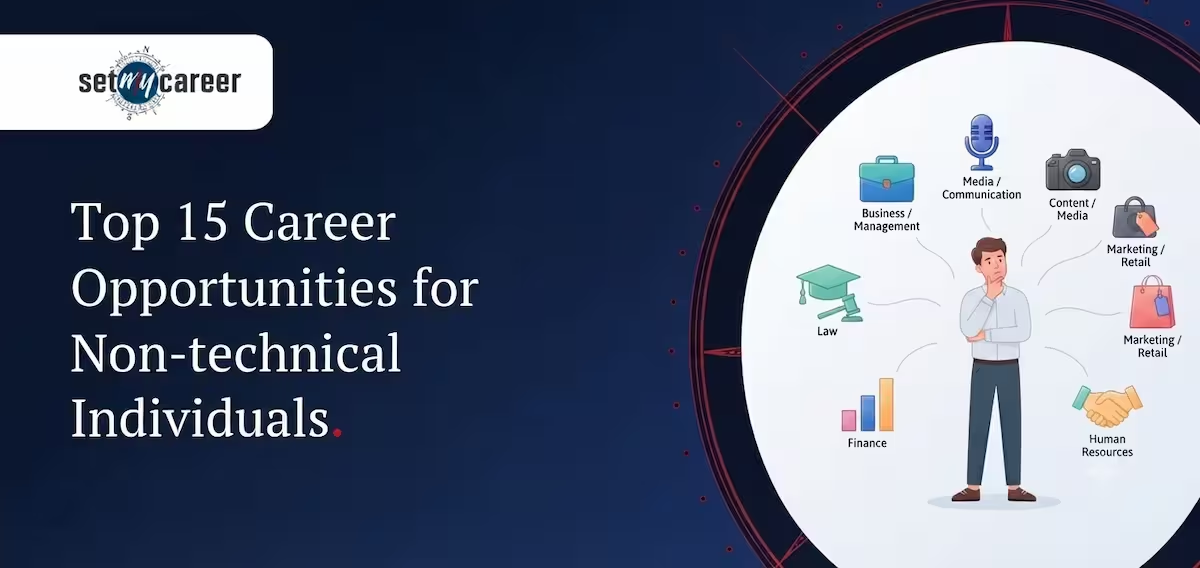
In an increasingly digital economy, technical expertise often steals the spotlight. However, a wealth of high-impact, lucrative career paths exists for professionals who excel outside engineering, programming, and software architecture. While technical roles concentrate on systems, code, and hard sciences, non-technical careers leverage human-centric strengths—strategic communication, creative problem-solving, emotional intelligence, relationship building, and business acumen.
As organizations expand and become more specialized, non-technical executives are the driving force behind operational efficiency, brand equity, market expansion, and organizational culture. The difference between drifting through a career and building a thriving professional trajectory comes down to clarity. Professionals with defined career goals translate their ambitions into reality through targeted skill acquisition and structured execution.
There is also a fascinating shift happening among Gen Z and millennial professionals: the rise of the hybrid skillset. Computer science graduates are mastering graphic design, while professional writers are learning Python for data analysis. Modern career growth isn't about declaring one domain superior to another—it is about understanding how technical and human-centric disciplines harmonize to create exceptional business value.
Below, we examine the fundamental differences between technical and non-technical fields and explore 15 top career opportunities where non-technical professionals can build rewarding, high-growth careers.
Technical vs. Non-Technical Career Paths: Key Differences Explained
Before exploring specific career trajectories, it helps to map out how technical and non-technical disciplines compare. Aligning your natural strengths with the right operational mindset is key to selecting the right professional path or choosing specialized post-secondary programs.
| Dimension | Technical Fields | Non-Technical Fields |
| Primary Focus | Engineering, computer science, mathematics, medical sciences, and technical IT infrastructure. | Human behavior, creative execution, strategic management, communication, and business operations. |
| Core Competencies | Hard skills, domain-specific tool mastery, programming languages, and quantitative analysis. | Interpersonal abilities, emotional intelligence (EQ), persuasive writing, and design thinking. |
| Day-to-Day Function | Building, maintaining, and troubleshooting machines, systems, software, and technical products. | Managing relationships, leading teams, shaping brand narratives, and driving revenue growth. |
| Example Roles | Software Engineer, Data Scientist, Systems Architect, Mechanical Engineer. | Management Consultant, Brand Strategist, HR Business Partner, PR Director. |
| In-Demand Capabilities | Coding (Python, Java), machine learning models, cloud computing, and automated testing. | Cross-functional collaboration, negotiation, strategic narrative development, and conflict resolution. |
| Career Evolution | Advances alongside technological breakthroughs, software updates, and scientific innovation. | Evolves alongside macroeconomic shifts, consumer behavior, and organizational growth models. |
| Educational Pathways | Typically requires specialized STEM degrees, technical bootcamps, or formal engineering certifications. | Thrives on interdisciplinary education, liberal arts backgrounds, and continuous professional experience. |
Top 15 High-Growth Non-Technical Career Opportunities
1. Management Consulting
Management consultants advise senior executives on corporate strategy, operational efficiency, cost optimization, and organizational change management. They analyze complex business problems, identify performance bottlenecks, and engineer actionable roadmaps for sustainable growth.
- Core Skills: Analytical reasoning, structured problem-solving, executive presentation, and business modeling.
- Average Salary: ₹8,00,000 PA (entry to mid-level)
- Growth Outlook: Demand remains exceptionally high as enterprises navigate digital transformation, ESG (environmental, social, and governance) compliance, and supply chain restructuring.
2. Digital Marketing & Growth Strategy
Digital marketing professionals design and execute multi-channel campaigns across search engines, social media platforms, email networks, and content ecosystems. Their primary objective is to acquire customers, build brand awareness, and maximize return on ad spend (ROAS).
- Core Skills: Copywriting, audience segmentation, campaign analytics, and creative direction.
- Average Salary: ₹5,00,000 PA
- Growth Outlook: Rapid growth driven by e-commerce expansion, performance marketing, and the demand for specialized search engine optimization (SEO) and media buying.
3. Business Development
Business development managers drive corporate expansion by identifying new sales channels, establishing strategic partnerships, negotiating distribution deals, and exploring market expansion opportunities.
- Core Skills: High-stakes negotiation, relationship building, strategic deal structuring, and consultative selling.
- Average Salary: ₹6,50,000 PA
- Growth Outlook: Vital across every B2B and B2C sector, with high compensation ceilings tied directly to revenue generation.
4. Business Analysis
Business analysts serve as the bridge between operational stakeholders and executive leadership. They evaluate workflows, document business processes, analyze data trends, and recommend process improvements to increase profitability and operational agility.
- Core Skills: Process mapping, requirements gathering, stakeholder management, and functional data analysis.
- Average Salary: ₹6,50,000 PA
- Growth Outlook: Essential for enterprises undergoing digital evolution, particularly within banking, financial services, healthcare, and retail.
5. Technical Content Writing & Documentation
Technical writers translate complex product architecture, engineering specifications, and software capabilities into clear user guides, API documentation, knowledge base articles, and operational manuals.
- Core Skills: Technical comprehension, clear written communication, audience empathy, and information architecture.
- Average Salary: ₹5,00,000 PA
- Growth Outlook: Strong, consistent demand driven by SaaS platforms, developer tools, and artificial intelligence startups seeking intuitive documentation.
6. Corporate Finance & Accounting
Finance and accounting professionals manage cash flow operations, financial reporting, corporate budgeting, auditing, tax compliance, and long-term capital allocation for businesses of all sizes.
- Core Skills: Financial literacy, regulatory compliance, attention to detail, and quantitative reporting.
- Average Salary: ₹6,50,000 PA
- Growth Outlook: A foundational business function that offers steady career advancement as companies adopt automated financial analytics and risk management tools.
7. Content Strategy & Brand Storytelling
Content strategists and marketers create compelling articles, whitepapers, social narratives, video scripts, and brand assets designed to engage audiences, build trust, and establish market authority.
- Core Skills: Storytelling, editorial planning, audience research, and brand positioning.
- Average Salary: ₹6,00,000 PA
- Growth Outlook: Massive demand as brands transition away from disruptive traditional ads toward owned media, organic reach, and humanized brand experiences.
8. Human Resources & Talent Operations
HR professionals oversee talent acquisition, workplace culture, employee onboarding, performance management, compensation structures, and corporate diversity initiatives.
- Core Skills: Active listening, conflict resolution, organizational psychology, and talent evaluation.
- Average Salary: ₹8,00,000 PA
- Growth Outlook: Critical for scaling organizations. Professionals can advance to high-impact roles such as HR Business Partner (HRBP) or Chief Human Resources Officer (CHRO).
9. Advertising & Media Planning
Advertising professionals conceptualize creative campaigns across digital, print, broadcast, and outdoor media. They study consumer psychology to craft messages that capture attention and influence purchasing decisions.
- Core Skills: Creative direction, visual messaging, consumer insights, and campaign strategy.
- Average Salary: ₹6,50,000 PA
- Growth Outlook: Bright prospects, particularly for strategists who understand short-form video content, influencer marketing platforms, and targeted digital media.
10. Public Relations & Corporate Communications
PR specialists safeguard and enhance the public reputation of corporations, executives, and high-profile individuals. They manage media relations, craft press releases, handle crisis communications, and oversee corporate social responsibility (CSR) messaging.
- Core Skills: Crisis management, media networking, persuasive writing, and brand advocacy.
- Average Salary: ₹9,00,000 PA
- Growth Outlook: High demand as corporate accountability, social media scrutiny, and executive personal branding become central to reputation management.
11. Market Research & Consumer Insights
Market research executives design surveys, facilitate focus groups, and analyze market trends to help businesses understand target demographics, validate new product concepts, and assess competitive landscapes.
- Core Skills: Qualitative research methods, data interpretation, behavioral analysis, and report writing.
- Average Salary: ₹5,00,000 PA
- Growth Outlook: Steadily expanding through integration with consumer psychology, behavioral economics, and product development teams.
12. Graphic Design & Visual Brand Identity
Graphic designers create visual assets—ranging from brand logos and marketing collaterals to pitch decks and packaging—that communicate a company's identity clearly and attractively.
- Core Skills: Typography, visual composition, brand aesthetics, and proficiency with creative design software.
- Average Salary: ₹4,00,000 PA
- Growth Outlook: Strong demand across agency and in-house teams, with lucrative pathways available for designers who pick up user interface (UI) and user experience (UX) design skills.
13. Instructional Design & Corporate Learning
Instructional designers construct educational programs, training modules, and learning materials tailored for corporate employee development, educational institutions, or online course creators.
- Core Skills: Learning theory, curriculum design, visual communication, and project management.
- Average Salary: ₹6,00,000 PA
- Growth Outlook: Rapid growth as companies prioritize continuous employee upskilling, remote onboarding programs, and specialized internal training.
14. General Management & Operations
General managers oversee daily business operations, manage cross-functional department heads, allocate budgets, and ensure that every team executes against top-level corporate objectives.
- Core Skills: Operational leadership, P&L management, strategic decision-making, and team mentorship.
- Average Salary: ₹15,00,000 PA
- Growth Outlook: Exceptional career trajectory. Completing an MBA or executive leadership program often accelerates advancement to executive-suite (C-suite) roles.
15. Entrepreneurship & Venture Building
Entrepreneurs identify market gaps, develop products or services, assemble teams, secure capital, and build scalable business entities from the ground up while navigating risk and market uncertainty.
- Core Skills: Risk resilience, strategic vision, fundraising, salesmanship, and relentless execution.
- Average Salary: Variable (Uncapped earning potential)
- Growth Outlook: Supported by robust startup ecosystems, incubator programs, government funding initiatives, and venture capital interest across emerging markets.
Conclusion: Navigating Your Non-Technical Career Journey
The boundary dividing technical and non-technical disciplines is becoming more fluid every year. While software tools, automation, and artificial intelligence handle increasingly complex technical tasks, distinctly human capabilities—strategic vision, creative storytelling, emotional intelligence, and leadership—remain irreplaceable.
For professionals seeking growth, non-technical fields offer dynamic, future-proof career paths across every major industry. By continuously refining your core communication skills, building domain expertise, and taking a strategic approach to personal branding, you can position yourself for long-term career success without ever writing a line of code.
Are you looking to transition from a technical to a non-technical field or elevate your current leadership trajectory? Our career counselling for working professionals can help you identify your core strengths, map out actionable development steps, and guide you toward the most rewarding opportunities in the market.