





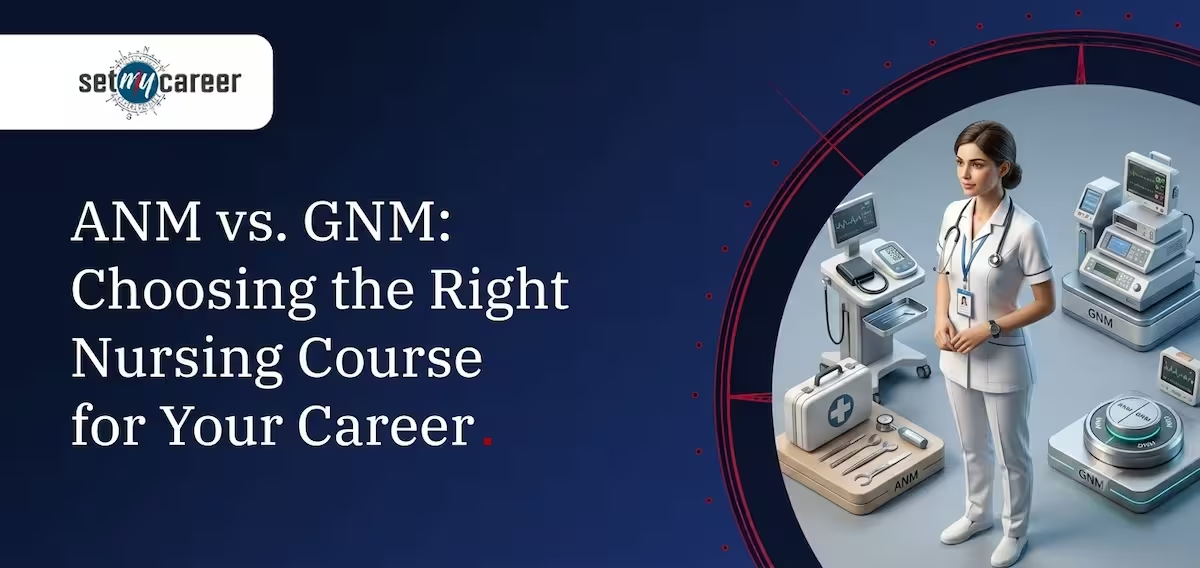
Choosing a career in nursing is a profound commitment to patient care and community well-being. However, deciding on the right educational entry point can quickly become overwhelming. For many aspiring healthcare professionals, the first major crossroads comes down to choosing between an ANM (Auxiliary Nursing Midwifery) and a GNM (General Nursing and Midwifery) diploma.
While both courses open doors to rewarding careers in the healthcare sector, their pathways differ significantly in duration, clinical scope, and long-term career advancement. Selecting the right program is critical to aligning your personal career goals with the realities of the medical field. Let’s break down the specifics of each course to help you determine which nursing credential best suits your aspirations.
Choosing between ANM and GNM nursing courses affects career options after 12th for healthcare students.
Understanding ANM: Auxiliary Nursing Midwifery Explained
Auxiliary Nursing Midwifery (ANM) is a foundational, diploma-level program specifically focused on primary healthcare, maternal care, and community disease prevention. Running for 2 years—which includes a mandatory 6-month internship—the ANM curriculum is designed to rapidly prepare students for frontline healthcare roles.
Throughout the program, students learn essential skills regarding maternal and child health, immunization protocols, basic medical care, and family welfare education. Because ANM professionals often serve as the first point of contact in rural and underserved areas, the training heavily emphasizes preventive healthcare and community outreach.
Career Opportunities for ANM Graduates
ANM graduates are the backbone of grassroots healthcare infrastructure. They frequently secure roles in primary health centers (PHCs), community health centers (CHCs), and rural hospitals. Beyond traditional clinical settings, ANMs are highly sought after by non-governmental organizations (NGOs) and government family welfare programs to work as community health workers and maternal care assistants.
Understanding GNM: General Nursing and Midwifery Explained
General Nursing and Midwifery (GNM) is a more intensive and comprehensive diploma program, typically lasting 3 to 3.5 years (including a 6-month clinical internship). Unlike the community-focused ANM, GNM is designed to produce highly versatile nurses capable of delivering advanced clinical care across various medical departments.
The GNM curriculum dives deep into medical sciences, covering subjects such as anatomy, physiology, surgical nursing, pediatric care, and psychiatric nursing. This extensive training ensures that GNM nurses can handle complex patient care, assist in major surgeries, and manage emergency medical situations alongside doctors.
Career Opportunities for GNM Graduates
Because of their broader clinical training, GNM graduates enjoy diverse employment opportunities. They are heavily recruited as staff nurses in multi-specialty hospitals, private nursing homes, trauma centers, and large-scale government healthcare institutions. Additionally, a GNM diploma serves as a direct stepping stone for career advancement, making graduates eligible to pursue higher studies like a Post Basic B.Sc. Nursing degree.
Head-to-Head Comparison: ANM vs. GNM Nursing Courses
To help you visualize the distinctions between the two programs, here is a detailed breakdown of their core characteristics:
| Aspect | ANM (Auxiliary Nursing Midwifery) | GNM (General Nursing and Midwifery) |
| Course Duration | 2 years (including 6-month internship) | 3 to 3.5 years (including clinical internship) |
| Eligibility Criteria | 10+2 (Open to any stream, though Science is often preferred) | 10+2 (Science stream with Biology preferred; English is mandatory) |
| Core Curriculum Focus | Primary healthcare, midwifery, community health, and preventive care | Comprehensive clinical nursing, surgical assistance, and advanced patient care |
| Primary Work Environments | Primary Health Centers (PHCs), rural dispensaries, NGOs, community programs | Multi-specialty hospitals, intensive care units (ICUs), private clinics, corporate hospitals |
| Higher Education Pathway | Limited direct pathways (Graduates typically upgrade by pursuing a GNM diploma) | Extensive opportunities (Eligible for Post Basic B.Sc. Nursing, followed by M.Sc. Nursing) |
Which Nursing Course is Right for You?
Your decision should factor in how quickly you want to start working, the type of medical environment you prefer, and your long-term educational plans.
Who Should Choose ANM?
- Fast-Track Job Seekers: If you are looking for a shorter, more affordable course that provides quick entry into the healthcare workforce, ANM is an excellent choice.
- Community-Minded Individuals: If you find fulfillment in grassroots work and want to directly impact rural healthcare settings or community health initiatives, this role aligns perfectly with those values.
- Maternal Care Advocates: The course is ideal for those who want to specialize specifically in midwifery, maternal health, and infant care rather than general hospital trauma.
Who Should Opt for GNM?
- Aspiring Clinical Specialists: If you want a rigorous, extensive education that prepares you to handle critical care, surgical wards, and complex medical technologies, GNM is the way to go.
- Hospital-Focused Careers: Those who envision themselves working in fast-paced urban hospitals, specialized clinics, or large private medical facilities will need the comprehensive training GNM provides.
- Future Degree Seekers: If you ultimately plan to hold a bachelor's or master's degree in nursing, or eventually move into hospital administration or nursing education, GNM serves as the necessary foundation.
Making an Informed Decision for Your Healthcare Future
Choosing between ANM and GNM ultimately depends on your immediate career goals, your financial and time constraints, and your long-term aspirations within the medical field. ANM provides a rapid, specialized entry into community and maternal health, while GNM offers a rigorous, comprehensive pathway into advanced hospital care and higher university degrees. Both are vital to the healthcare ecosystem, offering incredible opportunities to make a tangible, life-saving impact.
If you are still weighing your options and feeling unsure about which path aligns best with your strengths, you don't have to navigate this decision alone. SetMyCareer is here to provide expert career counseling and personalized guidance to help you map out your future in healthcare. Connect with our experts today and take the first confident step toward a fulfilling nursing career.