



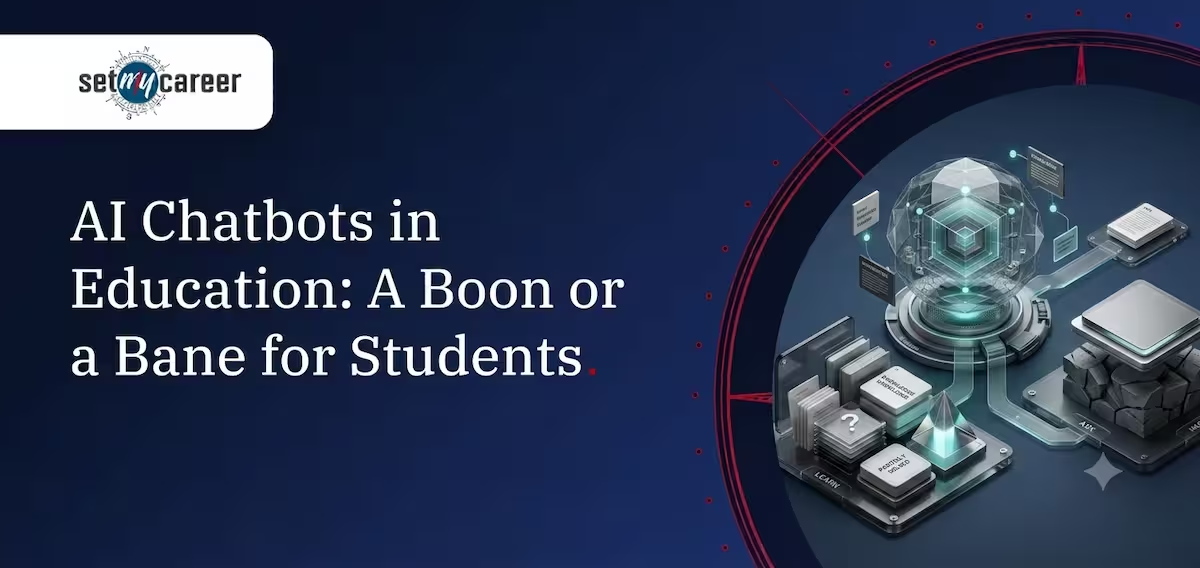
Have you ever wished for a personal tutor who never sleeps, knows every subject inside and out, and is always ready to explain a complex concept? While it might sound like science fiction, this level of support is quickly becoming a reality in today's classrooms. Artificial intelligence chatbots are rapidly reshaping how students learn, promising a highly personalized and accessible educational experience. However, alongside the undeniable convenience comes a significant debate. Will these digital assistants ultimately help students grow into capable thinkers, or will they become a crutch that hinders intellectual independence and academic integrity? Let's take an objective look at both the benefits and the distinct challenges of integrating AI chatbots into education to determine whether they represent a massive leap forward or a potential stumbling block.
Career guidance for students incorporates AI tools like chatbots to enhance learning experiences.
The Bright Side: How AI Chatbots Empower Modern Learning
When implemented thoughtfully, AI chatbots offer a wealth of advantages that can transform a standard curriculum into a highly dynamic learning environment. The core benefits lie in their ability to provide tailored, instant support that traditional classroom models often struggle to deliver.
- Uninterrupted 24/7 Accessibility: Students no longer have to wait for scheduled office hours or weekly tutoring sessions to get unstuck. Advanced chatbots, such as Duolingo's AI-powered Max tutor, offer immediate feedback, conversational practice, and detailed explanations at any time of day, ensuring that the learning momentum is never broken .
- Deeply Personalized Learning Paths: A classroom teacher simply cannot tailor every lesson to thirty different learning speeds simultaneously. AI chatbots bridge this gap by analyzing a student's interaction patterns, identifying knowledge gaps, and dynamically adjusting the difficulty of the material to suit their specific pace.
- Enhanced Student Engagement: Dense textbooks and lengthy lectures can easily cause students to lose focus. Interactive bots break complex theories down into digestible, conversational micro-lessons. This interactive dialogue keeps learners actively participating rather than passively consuming information.
- Bridging Language and Accessibility Gaps: For non-native speakers or students with learning differences, the classroom environment can feel intimidating. AI-driven writing assistants like Grammarly and conversational models like ChatGPT provide a judgment-free space to practice communication, refine grammar, and build confidence before submitting assignments.
The Dark Side: Drawbacks and Risks of Educational AI
Despite the impressive technological leaps, leaning too heavily on artificial intelligence introduces serious risks to the educational ecosystem. The primary concerns revolve around exactly what students lose when an algorithm does the heavy lifting for them.
- Erosion of Independent Problem-Solving: The struggle of wrestling with a difficult concept is often where real learning happens. When students rely excessively on chatbots to generate quick answers, they risk short-circuiting their own critical thinking skills. Over time, this dependency can leave them ill-equipped to tackle complex, unstructured problems in the real world .
- Accuracy and the Risk of "Hallucinations": Chatbots are highly sophisticated language prediction models, not infallible truth machines. They can, and frequently do, generate plausible-sounding but entirely factually incorrect information. If students lack the foundational knowledge to spot these errors, they may unknowingly absorb and repeat false data .
- Data Privacy and Security Vulnerabilities: Educational institutions handle vast amounts of sensitive student data. When third-party AI platforms are introduced without strict vetting, there is a very real risk that personal interactions and academic information could be mishandled, stored improperly, or exposed in data breaches.
- Academic Dishonesty and Plagiarism: The most highly publicized drawback of educational AI is how easily it can be misused. Because chatbots can instantly draft compelling essays, solve complex equations, and write code, the temptation for students to submit AI-generated work as their own has sparked a major crisis in academic integrity.
How to Blend AI Chatbots with Traditional Education
Banning AI in schools is largely an exercise in futility; the technology is too accessible and too useful. Instead, the solution lies in a balanced integration where AI acts as a supplement to, rather than a replacement for, traditional teaching methods .
- Empowering Teachers as Facilitators: Rather than competing with AI, educators can use these tools to automate routine administrative tasks and answer repetitive syllabus questions. This frees up valuable time for teachers to focus on one-on-one mentorship, emotional support, and facilitating high-level classroom discussions.
- Establishing Clear Ethical Frameworks: Schools and universities must move quickly to define exactly what constitutes acceptable AI use. Providing students with transparent guidelines on how to properly use chatbots for brainstorming or research—while strictly prohibiting direct generation of final assignments—sets clear boundaries.
- Redesigning Assessments for Critical Thought: If an AI can easily pass a test, the test likely needs to be changed. Educators are shifting away from rote memorization exams and generic essays, moving toward assessments that require in-class presentations, personal reflections, and collaborative project-based learning.
- Continuous Evaluation and Feedback: The integration of AI should not be a "set it and forget it" process. Institutions need to regularly gather feedback from both students and faculty to ensure that the chatbots being utilized actually enhance comprehension and align with the school's core educational goals.
Conclusion: Embracing the Future of Learning
The integration of AI chatbots into education presents both thrilling possibilities and undeniable challenges. While these digital assistants can democratize access to personalized tutoring and help students navigate difficult subjects, they must be managed carefully to ensure they enhance cognitive development rather than bypass it. The ultimate goal is not to hand education over to algorithms, but to leverage these powerful tools responsibly alongside dedicated human educators.
Navigating the rapid changes in the educational landscape can feel overwhelming, especially when trying to map out a clear path to future career success. If you are looking to make the most of emerging technologies or need expert guidance in aligning your academic choices with long-term professional goals, personalized career counseling can provide invaluable clarity. Connect with our experts at SetMyCareer today, and let us help you build a strategic foundation to thrive in your educational and professional journey.