






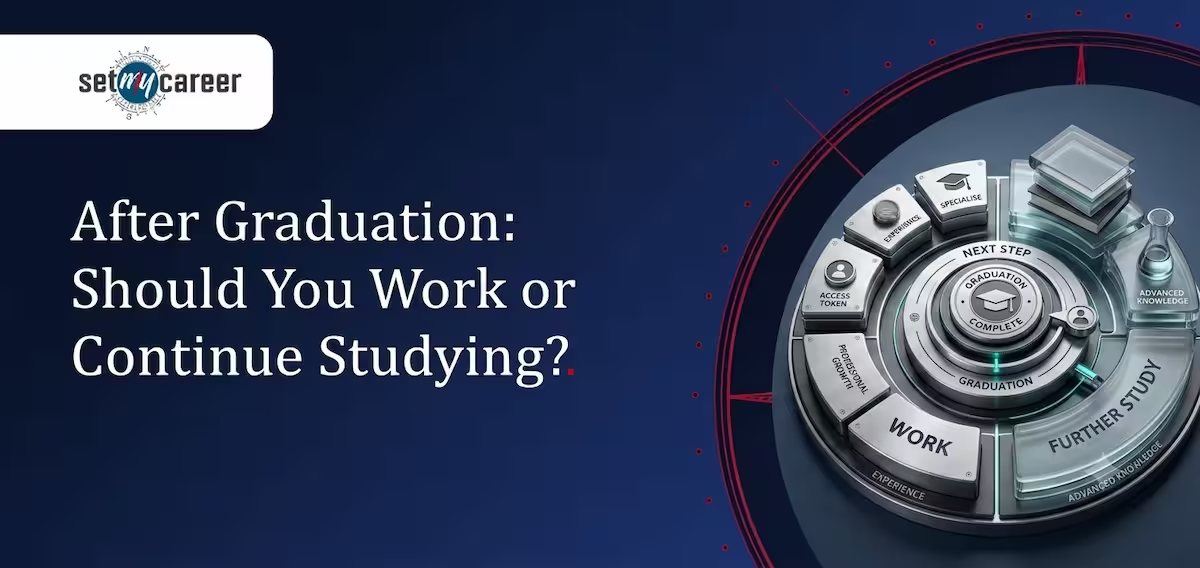
The moment the graduation ceremony ends and the cap hits the ground, a new, slightly more intimidating question takes over: What do I do now? The relief of finishing final exams is almost immediately replaced by the pressure of mapping out your future. Some graduates are eager to dive straight into a full-time job, while others feel the pull of a master's degree. Still, others look toward internships, gap years, or specialized certification courses to bridge the gap.
If you are feeling overwhelmed, you are not alone. The transition from the structured environment of a university to the open-ended reality of professional life is a major life event. There is no universally correct next step. To help you navigate this transition, let's break down the realities of working, studying, and hybrid paths so you can make an informed choice about your future.
Work vs. Study: Deciding Your Direction After Graduation
Choosing to Work Right Away: Gaining Ground Early
Entering the workforce immediately after earning your degree is one of the most effective ways to build momentum. Many organizations actively recruit recent graduates for entry-level roles, management trainee programs, and associate positions. Industries ranging from technology and finance to media and healthcare rely heavily on the fresh perspectives new graduates bring to the table.
Why consider working immediately?
- Immediate financial independence: Earning a regular salary allows you to support yourself, pay down student loans, and start building a financial safety net.
- Real-world skill development: Theories learned in a classroom look very different when applied in a corporate environment. Early career exposure helps you develop soft skills like negotiation, workplace communication, and time management.
- Practical career exploration: Sometimes the best way to find out if you like a specific career path is to actually do the job. Working helps you quickly identify your professional strengths and clarify what you don't want to do.
- Early professional networking: Building relationships with managers, mentors, and colleagues early on can open doors to unadvertised opportunities years down the line.
Potential challenges to keep in mind:
- The ceiling effect: In certain specialized fields, your upward mobility might eventually stall without an advanced degree.
- Risk of stagnation: If you land in a repetitive role that doesn't prioritize learning, it is easy to become comfortable and lose the drive to upskill.
- Less bandwidth for exam prep: If your long-term goal involves competitive exams (such as civil services or law school), balancing a demanding full-time job with rigorous study requires exceptional discipline.
Continuing with Studies: Deepening Your Expertise
For those who have a clear vision of their career trajectory—or those targeting highly specialized fields—returning to the classroom might be the most strategic move. Whether you are eyeing a Master’s degree, an MBA, or a targeted postgraduate diploma, advanced education can significantly increase your market value.
Why further studies might be the right fit:
- Specialized industry knowledge: A postgraduate degree shifts your focus from broad foundational concepts to niche expertise, making you a highly competitive candidate.
- Increased earning potential: Many senior and specialized roles require advanced degrees and typically come with a higher starting salary compared to undergraduate-level positions.
- Academic and research opportunities: If you thrive in an academic environment, continuing your education is essential for careers in research, development, and university-level teaching.
- Fulfilling professional prerequisites: Professions such as law, medicine, clinical psychology, and high-level public policy often mandate extended, formalized education.
What to evaluate before committing to grad school:
- The financial investment: Tuition, textbooks, and living expenses add up quickly. Always consider the potential return on investment for the specific degree you are pursuing.
- Delayed entry into the workforce: You will be postponing your earning years. Ensure the degree you choose justifies the time out of the job market.
- The need for career clarity: Avoid going to grad school just to delay entering the real world. If you are unsure of your career goals, spending thousands on a degree might leave you in the exact same position a few years from now.
Pro Tip: If you are still testing the waters, look into short-term certification courses. Fields like data analytics, digital marketing, UX design, and project management offer rigorous, skill-based bootcamps that take months rather than years to complete.
Internships and Hybrid Paths: The Best of Both Worlds
If you are not entirely ready to lock yourself into a 40-hour workweek or commit to a multi-year degree program, there is a highly effective middle ground. Internships, apprenticeships, and hybrid setups (like working part-time while taking weekend courses) offer a flexible transition phase.
Why an internship is a smart strategic move:
- Low-stakes exploration: Internships allow you to test-drive a company culture and an industry without a long-term commitment.
- Strategic resume building: Even a three-month internship bridges the gap between your degree and your first full-time job, showing employers you possess practical, hands-on experience.
- Schedule flexibility: Many companies now offer remote or part-time internships, giving you the freedom to study for entrance exams or pursue freelance projects on the side.
- The foot in the door: A significant percentage of successful internships convert directly into full-time job offers once the term ends.
Key Factors to Evaluate Before Making Your Decision
Choosing between building your resume through employment or expanding your academic credentials relies heavily on your unique circumstances. When weighing your options, reflect on these core areas:
- Your level of career clarity: Do you know exactly what job you want five years from now? If yes, look at the typical requirements for that role. If no, prioritize gaining generalist work experience to discover your interests.
- Your current financial reality: Assess whether you have the financial backing, savings, or scholarship opportunities to fund further education, or if securing an income is your immediate priority.
- Current industry trends: Research your desired field. Tech and digital media often prioritize portfolios and practical skills over master's degrees, whereas fields like biotechnology or economics lean heavily on advanced academic credentials.
- Your mental readiness: Be honest with yourself. Are you facing academic burnout and desperate for practical application, or are you eager to dive deeper into research, writing, and coursework?
Conclusion
Navigating life after graduation is rarely a straight line. Deciding your next steps is less about finding the objective "perfect" path and entirely about choosing the route that aligns with your current reality, financial situation, and long-term ambitions. Whether you decide to start climbing the corporate ladder immediately, return to the lecture hall, or blend the two with a strategic internship, the most important thing is to take that first step with purpose.
If you find yourself stuck at this crossroads, you do not have to figure it out alone. The team at SetMyCareer is here to support your professional journey. Reach out to our expert career coaches today, and let's map out a post-graduation strategy that sets you up for lasting success.