





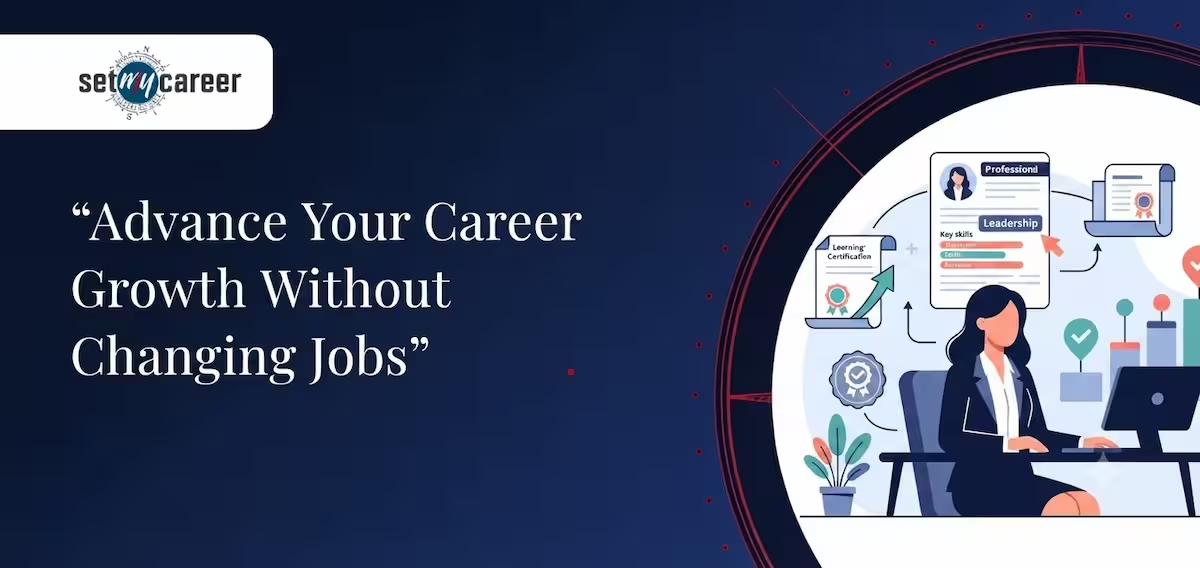
The Hidden Power of Staying Put: How to Advance Your Career Without Changing Companies
There is a widespread misconception in the modern professional world: to move up, you have to move out. We watch colleagues update their LinkedIn profiles with new companies and assume that job-hopping is the only valid strategy for accelerating a career trajectory. This creates an artificial pressure to constantly look for the next external opportunity.
While a change of scenery is sometimes necessary, automatically assuming you need to leave your current organization to find success can cause you to miss massive opportunities right in front of you. Think about the capital you have already accumulated. You have invested significant time understanding your company’s unique culture, navigating internal processes, and building a professional reputation. You possess institutional knowledge—a highly valuable asset that simply cannot be acquired overnight.
Starting fresh somewhere else means rebuilding that foundation from scratch. This article isn’t about climbing a completely new corporate ladder; it’s about strategically building higher on the one you are already standing on using simple, highly effective internal mobility strategies.
Why Growing in the Same Job Can Be a Strategic Masterclass
Switching jobs frequently might grab headlines, but staying and evolving within your current role offers distinct, often overlooked advantages. When you choose to invest in your current environment, you unlock several unique benefits:
- You possess institutional knowledge: You already know the internal systems, the key decision-makers, and the unspoken rules of how work actually gets done. This makes you an immediate asset for complex problem-solving.
- You can take calculated risks: Because you have an established track record and psychological safety within your team, you can experiment with new ideas without the intense pressure of proving yourself during a probationary period.
- You have a broader definition of growth: Career advancement isn't solely defined by a new title. It includes leading high-stakes projects, mastering emerging technologies, mentoring junior staff, and becoming the definitive subject matter expert in your department.
You absolutely can achieve substantial professional growth without handing in a resignation letter. Often, choosing to stay and expand your influence is the smartest, most sustainable career move you can make.
Speak Up: Advocate for Your Own Ambitions
No matter how observant your manager is, they cannot read your mind. If you want to take on more responsibility, you have to explicitly ask for it. Many professionals sit back and wait to be noticed, assuming their hard work will naturally result in a promotion. In reality, career growth requires active self-advocacy.
Start vocalizing your goals during your one-on-one meetings. Frame these conversations around how your personal development can directly benefit the team. For example, instead of simply saying you want a promotion, tell your manager you are interested in developing your leadership skills and would love to take the lead on an upcoming quarter-end initiative. Taking this kind of initiative demonstrates executive presence and marks you as someone prepared for the next level.
Learn Sideways: Build Lateral Skills
We are conditioned to view career progression as a strictly vertical climb. However, lateral growth—expanding your skill set across different disciplines—is often the quickest way to increase your internal value. Becoming a "T-shaped professional" (having deep expertise in one area and broad knowledge across others) makes you indispensable.
Look for skills that naturally complement your primary responsibilities. A customer support executive who takes the time to learn basic CRM data analysis can suddenly provide actionable insights to the product team. A content writer who learns basic SEO strategy instantly becomes more valuable to the marketing department. This cross-functional knowledge opens entirely new career avenues without requiring you to switch teams.
Be Proactive: Design and Lead Your Own Projects
Highly successful employees do not wait around for their next assignment; they actively identify operational gaps and step in to fill them. Every organization has inefficiencies, outdated documentation, or recurring bottlenecks that frustrate the team. Find them, and more importantly, fix them.
Instead of just pointing out a flaw in a workflow, approach your manager with a proposed solution. Whether it is building a new onboarding template for new hires, automating a repetitive weekly report, or organizing a team knowledge-sharing session, proactive problem-solving forces leadership to view you as a strategic partner rather than just a task executor.
Get Noticed: Make Your Work Visible
Doing exceptional work is only half the battle; ensuring the right people know about it is the other. There is a distinct difference between arrogant bragging and factual self-advocacy. If leadership doesn't know what you are achieving, they cannot reward you for it.
Find organic ways to make your contributions visible. Share key wins and project metrics during team updates. Post helpful industry insights on internal company communication channels like Slack or Teams. Connect with department heads outside of your immediate circle. Consistent, professional visibility ensures you are top-of-mind when special projects or promotional opportunities arise.
Build Relationships: Find a Mentor or Become One
Professional relationships are the currency of internal career growth. Engaging in mentorship benefits everyone involved. Finding a mentor within your company—ideally in a slightly different department—gives you an unfiltered perspective on company dynamics and a sounding board for your career plans.
Conversely, offering to mentor a junior employee solidifies your own knowledge and demonstrates your leadership capacity. Teaching others forces you to reflect on your own processes, refine your communication skills, and strengthen your position as a trusted pillar within the workplace community.
Ask for Feedback: Regularly and Specifically
Feedback is the fuel for professional evolution. Do not wait for your annual performance review to find out how you are doing. Annual reviews are often too infrequent to prompt meaningful, real-time behavioral changes.
A comprehensive Gallup study revealed that employees who receive weekly feedback are 3.2 times more likely to be motivated to do outstanding work. Make it a habit to ask for constructive criticism after major presentations or project wrap-ups. Ask specific questions, such as, "What is one thing I could have done to make that report clearer?" This demonstrates humility, a desire for continuous learning, and a deep commitment to personal excellence.
Align With Broad Company Goals
To maximize your impact, you need to lift your head out of your daily tasks and look at the macro perspective. What are the core objectives your CEO and executive board care about right now? Is the company focused on aggressive user acquisition, reducing churn, cutting overhead costs, or launching a new product line?
Once you understand the overarching mission, align your daily work to support it. If your company is trying to cut costs, find a way to streamline a vendor process in your department. When you can clearly draw a line between your individual output and the company’s bottom-line priorities, your perceived value skyrockets.
Improve Soft Skills: The Differentiators That Matter Most
Technical expertise and hard skills will get your foot in the door and help you keep your job. Soft skills, however, are what get you promoted. As you move up within an organization, your ability to write code, design graphics, or balance spreadsheets becomes less important than your ability to manage human behavior.
Traits like active listening, emotional intelligence, adaptability, and conflict resolution dictate how far you will go. Most promotions aren't handed to the smartest person in the room; they are given to the most reliable, communicative, and emotionally resilient person. Being someone who is genuinely easy to work with during high-stress situations is an incredibly rare and highly compensated skill.
Conclusion
Career advancement is not strictly geographical; you don't need a new corporate campus or a different employer to experience meaningful professional growth. By intentionally advocating for yourself, building cross-functional skills, taking proactive ownership of new projects, and mastering the nuances of emotional intelligence, you can dramatically reshape your current reality.
The key is to treat your current role not as a holding pattern, but as a fertile training ground. When you operate with curiosity and visibility, the opportunities will naturally present themselves. If you are struggling to identify the best internal path forward, or need help navigating complex workplace dynamics, SetMyCareer is here to provide the strategic guidance you need. Reach out to our expert career coaches today, and let’s architect a growth journey that maximizes your true potential right where you are.