






Most professionals will eventually hit a career plateau. You master your daily responsibilities, the learning curve flattens, and suddenly, you aren't entirely sure what comes next. Whether you are actively seeking a promotion, considering a major industry pivot, or simply trying to regain your professional momentum, relying on hope is rarely an effective strategy.
Career coaching provides structured strategies for developing an effective career development plan.
To navigate the complexities of the modern workforce, you need a structured approach. A well-defined career development plan is the framework that bridges the gap between where you are today and where you want to be tomorrow. Rather than reacting to organizational changes or waiting for someone else to recognize your potential, a strategic plan puts you in the driver's seat of your professional trajectory. It aligns your daily actions with your long-term ambitions, ensuring that every project you take on and every skill you acquire serves a distinct purpose.
The Importance of Setting a Strong Career Foundation
Before you begin mapping out a five- or ten-year trajectory, you must establish a solid baseline. Like any major strategic initiative, career planning requires precise preparation. If you build a career roadmap based on what you think you should do—rather than what actually aligns with your strengths and values—you risk working incredibly hard to achieve a goal that ultimately leaves you unfulfilled.
Setting this foundation requires radical honesty about your current professional standing. You need to identify the tasks that energize you, the environments where you thrive, and the specific skill gaps holding you back. Beyond internal reflection, a strong foundation also requires external market awareness. Gaining a deep, realistic understanding of your target industry allows you to identify emerging trends, recognize which technical skills are in high demand, and make highly informed decisions about your next move.
What Is a Career Development Plan?
A career development plan (CDP) is a comprehensive, personalized roadmap detailing your professional goals and the exact tactical steps required to achieve them. It acts as a customized blueprint, guiding you through every critical phase of your professional lifecycle—from initial skill acquisition and credentialing to targeted networking and executive advancement.
The primary function of a career plan is to provide absolute clarity. By articulating your exact aspirations on paper, you transform vague career dissatisfaction into a focused, intentional growth strategy. This document forces you to identify the specific milestones required to reach your ultimate destination.
More importantly, a highly effective career development plan is not a static document that you write once and forget. It is a living, adaptable framework that evolves alongside your expanding skill set, shifting personal priorities, and unexpected market opportunities. Regularly returning to this plan fosters continuous self-awareness, allowing you to measure your progress objectively and course-correct long before you veer off track.
Step-by-Step Guide: How to Create a Career Development Plan
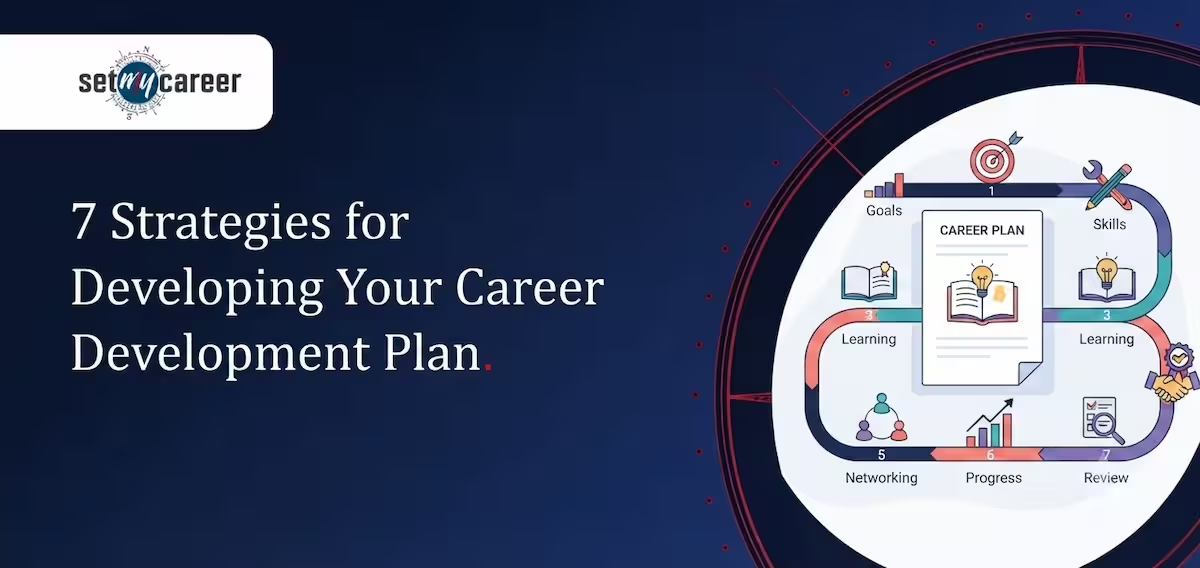
Drafting an actionable professional growth plan requires focused introspection, market research, and a commitment to continuous execution. Follow these essential steps to build a strategy that actually drives results:
1. Conduct a Comprehensive Self-Assessment
You cannot chart a path forward without knowing exactly where you are starting. A thorough self-assessment provides the data you need to make intelligent career choices.
- Identify your core drivers: Pinpoint your highest-priority values, intrinsic interests, technical skills, and natural personality traits.
- Leverage objective data: Complete validated behavioral or psychometric assessments to gain unbiased insights into your working style, communication preferences, and inherent strengths.
- Audit your professional history: Critically reflect on your past accomplishments, recurring challenges, and specific areas where you consistently struggle or need improvement.
2. Define Clear, Actionable Career Goals
Vague ambitions produce vague results. Your objectives must be sharply defined so you can measure your progress accurately over time.
- Visualize your ideal trajectory: Outline exactly what your target role looks like and establish SMART (Specific, Measurable, Achievable, Relevant, Time-bound) goals to get there.
- Separate your timelines: Clearly differentiate between immediate, short-term objectives (e.g., earning a specific certification in six months) and long-term milestones (e.g., reaching a director-level role in five years).
- Check for alignment: Ensure every goal you set actively supports your broader personal values and lifestyle aspirations.
3. Research Industry Trends and Market Opportunities
Your goals must be grounded in the reality of the current job market. Operating blindly will lead to wasted time and effort.
- Analyze market demand: Conduct deep industry research to understand macroeconomic trends, emerging technologies, and the specific skill sets employers are actively seeking.
- Conduct informational interviews: Network strategically with professionals already working in your target roles to gather unfiltered insights about the daily realities of the job.
- Identify high-ROI environments: Pinpoint specific organizations, startup ventures, or internal departments that strongly align with your professional objectives.
4. Develop a Targeted Skill-Building Strategy
Growth requires the continuous acquisition of new competencies. Your plan must detail exactly how you will close the gap between your current abilities and your future role.
- Audit role requirements: Map out the exact technical and soft skills required for your next desired position.
- Map out a learning curriculum: Create a structured approach to acquiring those skills through formal education, specialized training, industry certifications, or stretch assignments at your current job.
- Diversify your learning channels: Take advantage of online course platforms, intensive workshops, one-on-one mentorships, and cross-departmental volunteering opportunities.
5. Outline a Tactical Action Plan
A goal without a deadline is simply a wish. You need to break your overarching strategy down into executable daily or weekly tasks.
- Deconstruct major goals: Break massive, intimidating objectives down into small, highly specific steps that you can tackle one at a time.
- Assign strict deadlines: Prioritize your tasks and attach realistic but firm timelines to maintain momentum and a sense of urgency.
- Anticipate friction: Identify potential roadblocks—such as a lack of funding for a course or time constraints—and develop proactive contingency plans to bypass them.
6. Build a Robust Professional Support Network
No successful professional climbs the ladder entirely alone. The relationships you cultivate will directly impact the speed of your advancement.
- Curate an advisory board: Surround yourself with a diverse network of experienced mentors, peer advocates, and industry sponsors who can offer objective feedback and hold you accountable.
- Engage with industry communities: Actively participate in professional organizations, trade groups, or specialized mastermind networks.
- Leverage digital platforms: Utilize LinkedIn, industry-specific Discord servers, or professional Reddit communities to find like-minded professionals and stay visible in your field.
7. Review, Calibrate, and Adjust Regularly
The job market changes rapidly, and your career plan must be agile enough to change with it.
- Establish a review cadence: Treat your career plan as a living document. Schedule quarterly check-ins with yourself to evaluate your progress and adjust your tactics.
- Embrace strategic pivoting: Do not be afraid to alter your goals if you discover a new passion or if an unexpected high-value opportunity presents itself.
- Recognize your wins: Take the time to celebrate specific milestones and successful skill acquisitions to maintain your motivation over the long haul.
Expert Strategies for Executing Your Career Development Plan
Creating a highly detailed career roadmap is a massive accomplishment, but the true test of your potential lies in execution. Many professionals draft excellent plans only to abandon them when their daily workload gets heavy. Use these expert strategies to maintain your momentum and turn your plan into a reality.
Cultivate a Resilient Growth Mindset
Your ability to adapt will dictate your long-term success. Embrace the reality that your skills and cognitive abilities are not fixed traits; they can be systematically expanded through focused effort. When you adopt a growth mindset, you stop viewing critical feedback or temporary career setbacks as personal failures. Instead, you process them as valuable data points that highlight exactly what you need to learn next.
Master Self-Discipline and Time Management
Career development rarely happens on company time. You have to carve out the space for it. Establish a strict routine that dedicates specific blocks of time—even if it is just three hours a week—exclusively to your professional growth goals. Break massive undertakings into micro-tasks to prevent choice paralysis. Use techniques like time-blocking or the Pomodoro method to ensure that when you sit down to upskill or network, you are operating with absolute focus.
Seek Accountability and Constructive Feedback
Working in a silo makes it incredibly easy to let deadlines slip. Share your career development plan with a trusted mentor, a former manager, or a highly driven peer. By externalizing your goals, you create a layer of psychological accountability. Consider joining a structured professional cohort or partnering with a career coach who will ask tough questions when your progress begins to stall.
SMC Expert Tip: Maintain absolute strategic agility. The most successful professionals do not cling stubbornly to a career plan that no longer serves them. Be hyper-receptive to market shifts. If a new technology disrupts your industry or a unique lateral opportunity emerges, pause, reassess your broader goals, and confidently pivot your roadmap to capture the new advantage.
The Takeaway: Take Control of Your Professional Future
Crafting and relentlessly executing a strategic career development plan is one of the highest-leverage investments you can make in your own future. It transitions you from a passive participant in your career to an active architect of your professional destiny. By conducting honest self-assessments, defining precise milestones, and remaining adaptable in the face of market changes, you empower yourself to navigate the modern workforce with absolute confidence. Armed with a clear strategy and a commitment to continuous execution, you are fully equipped to unlock your potential and build a highly rewarding, sustainable career on your own terms.