




If you find yourself staring at your screen, wondering if you chose the wrong professional path, you are far from alone. Navigating the modern job market without a clear sense of direction is a fast track to burnout and dissatisfaction. Choosing a fulfilling career that genuinely aligns with your natural strengths and interests is the foundation of long-term job satisfaction. However, with thousands of unique occupations existing today, trying to pinpoint your perfect fit can feel entirely overwhelming.
Before choosing a career test, consider consulting with career counselling professionals for expert advice.
This is precisely where a high-quality career test provides invaluable clarity. Rather than relying on guesswork or external pressure, career assessments offer a data-driven approach to understanding your hidden talents, soft skills, core values, and working preferences. The right assessment acts as a personalized roadmap, pointing you toward industries and roles where you are naturally wired to succeed.
With hundreds of different assessments flooding the market, narrowing down the right option requires a bit of strategy. In this guide, we break down exactly what these tools measure, the different categories available, and the most critical factors you must consider before investing your time and money into a career test.
What Are Career Tests and Why Do They Matter?
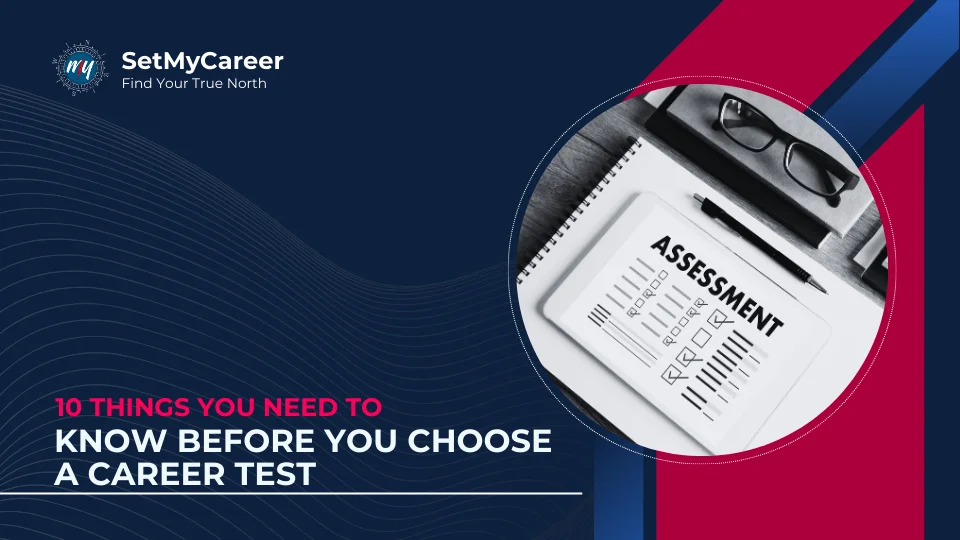
Career tests, frequently called psychometric career assessments, are structured evaluation tools designed to decode your professional DNA. They help you uncover the intersection between your innate abilities, personality traits, and workplace values, mapping those variables to viable career paths.
These tools typically rely on a series of carefully calibrated questions, scenarios, or cognitive activities. By analyzing your responses, the assessment builds a comprehensive profile of your natural strengths, intrinsic motivations, and preferred working environments. The ultimate objective is to match your unique psychological and cognitive makeup with specific occupations where you are most likely to thrive.
For high school and college students, utilizing these assessments early on is a massive advantage. It streamlines the career exploration journey, significantly reducing the likelihood of wasting years—and tuition money—pursuing a mismatched degree. Scientifically validated career tests bypass the subjective, often biased opinions of well-meaning family members or peers, replacing external pressure with objective psychological insights.
Adult professionals benefit just as much. For those feeling unfulfilled mid-career, these assessments serve as a diagnostic tool to identify exactly why their current role feels draining and which adjacent industries might offer a more rewarding transition.
The 3 Primary Categories of Career Assessments
Not all career tests measure the same metrics. Depending on the tool you choose, you might be evaluated on your cognitive abilities, your personal interests, or your behavioral tendencies. Most high-quality assessments fall into one of three main categories:
1. Aptitude and Skills Assessments
- What they measure: These tests evaluate your inherent cognitive abilities, hard skills, and natural talents in specific structural areas.
- Why they matter: They pinpoint exactly what you are naturally good at, guiding you toward professions that leverage your baseline proficiencies rather than fighting against them.
- Skills assessed: Numerical reasoning, spatial awareness, verbal proficiency, logical deduction, and technical problem-solving capabilities.
2. Interest and Value Inventories
- What they measure: Interest inventories focus on your personal preferences, your core beliefs, and the types of day-to-day activities you genuinely enjoy.
- Why they matter: You might be highly skilled at accounting, but if you hate repetitive data analysis, you will eventually burn out. These tests ensure your future career aligns with what actually brings you joy and fulfillment.
- Elements assessed: Personal passions, workplace values (e.g., autonomy vs. collaboration), preferred daily activities, and intrinsic motivations.
3. Personality Assessments
- What they measure: These evaluations analyze your behavioral traits, temperament, and how you naturally interact with the world around you.
- Why they matter: Understanding your personality profile helps predict how you will handle workplace stress, collaborate with team members, and respond to leadership responsibilities.
- Traits assessed: The Big Five personality traits (openness, conscientiousness, extraversion, agreeableness, neuroticism), communication styles, and decision-making frameworks.
10 Crucial Factors to Consider Before Choosing a Career Test
Before you commit to an assessment, you need to ensure the tool you select will actually provide actionable, accurate insights. Keep these ten factors in mind to find the best fit for your needs.
1. Define Your Specific Purpose
Start by identifying exactly what you need clarity on. Are you a high school student trying to pick a college major, or a seasoned professional looking to pivot into a completely new industry? If you need a broad overview, a general personality-interest hybrid test works best. If you want to know if you have the analytical chops for software engineering, a targeted aptitude test is the better choice.
2. Verify Test Validity and Reliability
The internet is flooded with quizzes that offer little more entertainment value than a horoscope. Look for psychometrically validated assessments backed by peer-reviewed psychological research. Check the organization’s credentials, read independent reviews, and look for transparency regarding how their testing algorithms were developed. A reliable test should produce consistent results if you take it multiple times.
3. Understand the Assessment's Scope
Some career tests paint with broad strokes, suggesting general fields like "Healthcare" or "Technology." Others get highly granular, matching you with specific job titles like "Clinical Trial Coordinator" or "UX Researcher." Decide whether you need a high-level directional nudge or a highly detailed occupational roadmap before making your selection.
4. Explore Multiple Testing Methodologies
You do not have to rely on a single data point. The most accurate career guidance usually comes from triangulation—taking an interest inventory, a personality test, and an aptitude assessment, then looking for the overlapping patterns. Combining different testing methodologies provides a much more holistic, multidimensional view of your professional potential.
5. Consider the Format and Your Learning Style
Not everyone performs well on standard multiple-choice exams. If text-heavy questionnaires cause you test anxiety, look for modern assessments that incorporate gamified elements, visual scenarios, or interactive problem-solving tasks. Choosing a format that feels natural to you will yield far more accurate responses.
6. Be Mindful of Cultural and Demographic Bias
Historically, many psychological assessments were normed on very narrow demographics, which occasionally skewed results for individuals from diverse backgrounds. Reputable testing organizations actively update their tools to eliminate cultural phrasing biases. Ensure the test you choose has been validated across diverse global populations so your results reflect your true capabilities.
7. Assess the True Cost and Accessibility
While there are helpful free resources available, highly sophisticated psychometric tests usually require a fee. View this as an investment in your future. Free quizzes often lack the depth, scientific backing, and personalized reporting found in premium assessments. Be clear on your budget, but recognize that a comprehensive test can save you years of lost income in the wrong profession.
8. Check for Industry Recognition
Certain assessments carry significant weight within specific fields. For example, tests designed by certified organizational psychologists or heavily utilized by corporate HR departments (like the CliftonStrengths or the Strong Interest Inventory) offer highly respected frameworks. Choosing an industry-recognized tool ensures the language in your results translates easily into your resume and job interviews.
9. Demand Comprehensive Reporting and Feedback
A career test is only as valuable as the report it generates. Avoid tests that simply spit out a list of three job titles and leave you to figure out the rest. Quality assessments provide deep, personalized debriefs that explain why certain careers are a match, highlight your potential blind spots, and offer a step-by-step action plan for your next career move.
10. Evaluate Long-Term Applicability
The best career assessments provide insights that grow with you. Rather than just telling you what entry-level job to take today, a robust personality and strengths profile will help you navigate leadership challenges, team dynamics, and communication hurdles five or ten years down the road. Look for tools that offer enduring value.
Final Thoughts on Finding Your Professional Path
Choosing a career that aligns with your unique psychological makeup is the most effective way to ensure you reach your highest professional potential. Instead of relying on trial and error, a high-quality career test facilitates powerful self-discovery, highlighting the exact environments where your natural talents will be recognized and rewarded.
By applying these strategies to select the right assessment, you equip yourself with the objective data needed to make highly informed decisions about your future. Treat your test results not as a rigid set of rules, but as an empowering framework. Armed with a clear understanding of your strengths and values, you can confidently navigate the job market and build a career that offers both financial stability and genuine personal fulfillment.